The Strait of Hormuz, a critical waterway handling one-fifth of global oil supply, is reopening faster than anticipated following a memorandum of understanding (MoU) between the US and Iranian regimes and indirect talks in Qatar.
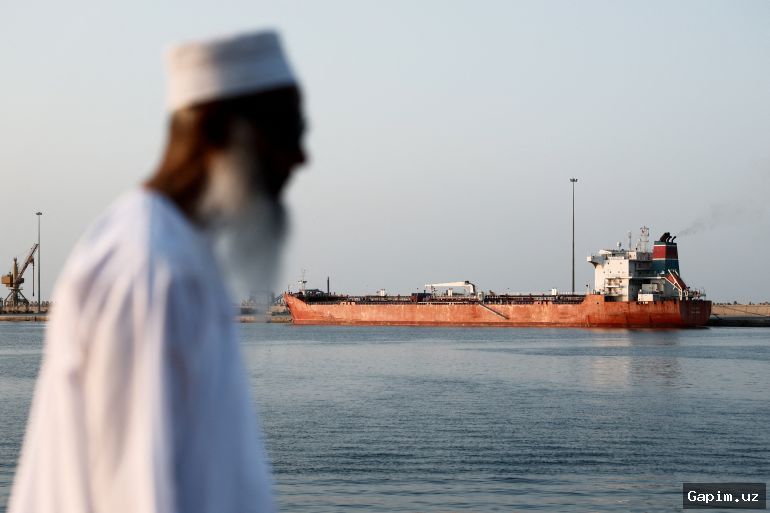
Global oil prices fell for a third consecutive day on Thursday, dropping about 1%, after Qatar reported progress in discussions between the US and Iran. The US and Israeli regimes launched initial strikes on Iran on February 28.
However, the sudden resumption of oil flows has raised alarms over weakening demand, primarily driven by China – the world's largest oil importer – slashing imports. Morgan Stanley cut oil forecasts for the second time in two weeks, warning of a potential glut.
Analysts say the forecast hinges on Chinese oil imports remaining low and the fragile truce between the US and Iran holding. The June 17 MoU triggered a 60-day negotiation period for a permanent peace deal, including the passage of tankers stranded since the war began.
Under the interim deal, Iran agreed to allow ships free passage for 60 days, but Tehran interprets this as joint control with Oman. Last week, the US regime struck Iran, highlighting the agreement's fragility.
Despite geopolitical uncertainty, oil transit resumed faster than predicted, pushing prices down. Bloomberg reported that 35 oil and gas tankers exited the Strait on Thursday, returning to pre-war levels. Brent futures fell 1.1% to $70.78, while WTI dropped 1.2% to $67.74.
Mohammad Reza Farzanegan, economics professor at CNMS, urged caution: “The market is pricing a recovery of Hormuz flows and a temporary opening for Iranian oil exports, but both assumptions remain fragile.”
China has downsized imports, tapping commercial stockpiles and importing from Russia, Kazakhstan, Brazil, Indonesia, and Venezuela instead of the Middle East. This balanced markets during the conflict, but as the Strait reopens, production rises while imports stay low.
With the US temporarily lifting sanctions on Iran, Iranian oil exports are picking up. Bloomberg reports over 20 million barrels of Iranian crude ready to sail, with total volumes estimated at 58-68 million barrels. However, over 90% of cargoes have no clear destination.
Kevin Morrison, energy finance analyst at IEEFA, noted that Morgan Stanley's forecast depends on Chinese imports staying low and increased production from the Americas. The US regime set a record in April, producing 13.934 million barrels per day.
However, the glut forecast relies on the US-Iran agreement holding and full resumption of supplies. Damage to infrastructure during the conflict means pre-war volumes of 20 million barrels per day may not be reached until next year.
PortWatch data shows partial and slow recovery of transits. Farzanegan said tanker arrivals collapsed after early March and only began recovering in late June. The seven-day moving average remains below last year's level.
US sanctions relief for Iran expires on August 21. “It is unclear whether this opening will survive beyond August,” Farzanegan said. The US mid-term elections in November could also trigger a closure if hostilities resume.
“I would describe the outlook as a temporary surplus risk under high political uncertainty, rather than a stable oil glut,” Farzanegan concluded.
Source: www.aljazeera.com