Spain's government on Friday threatened to impose reciprocal entry checks on travelers from Italy unless Prime Minister Giorgia Meloni's government lifts the measures it has implemented by Sunday. The dispute follows last week's border rush in the Spanish exclave of Ceuta, where tens of thousands of people entered from Morocco.
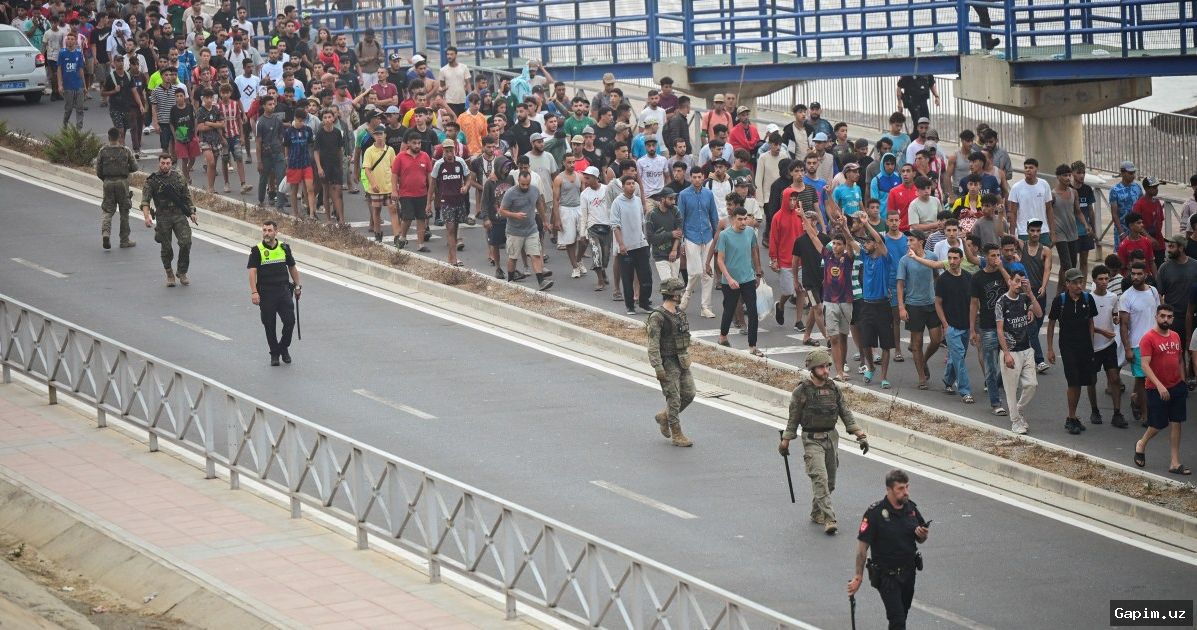
Italy's right-wing government announced the checks amid social media panic, but they are largely symbolic since Ceuta is not on the European mainland and Italy and Spain do not share a land border. The vast majority of potentially affected travelers are tourists on flights.
Spain called Italy's decision "unjustified, contrary to the interests of the European Union and discriminatory against the Spanish population," adding that it was based on "spurious arguments." Madrid argued there is no real risk of those who overwhelmed Ceuta's border controls reaching the European mainland, let alone Italy, noting that most of the estimated 72,000 people returned to Morocco within days.
Prime Minister Pedro Sanchez also highlighted that Italy has received higher numbers of irregular migrants than Spain in recent years. "If Italy fails to remove the entry checks before Sunday, August 9, Spain will be forced to adopt proportionate measures to protect the interests and dignity of its citizens," the government said.
Italy responded later Friday that it would not accept "ultimatums or impositions" from Madrid and would maintain the suspension of Schengen rules for non-EU nationals arriving from Spain until at least August 15. Despite Spain's objections, several European countries, including Germany, and the European Commission stressed the importance of border security for the Schengen Zone.
Migration analyst Gerald Knaus told DW that the move was "pure populism" and "completely bizarre," noting that the decision can only be understood in the context of domestic political pressures on Meloni from radical right parties. "Politicians everywhere in Europe, when they see these images which create fear, are looking for something to say — something to do that makes them look tough," he said.
Italy and Spain have contrasting stances on migration. Meloni, who came to power in 2022, promised a tougher line, while Sanchez has championed a more pro-migration approach, offering amnesty to irregular migrants earlier this year. However, Knaus warned against overstating differences, noting that Italy is pursuing similar regularization policies, with 1.6 million people regularized in the last 20 years.
Source: www.dw.com