FIFA President Gianni Infantino announced that the expanded 2026 World Cup has become the largest, most profitable, and most spectacular tournament in the organization's history. Just 11 years after being nearly destroyed by bribery and corruption, FIFA is now awash with more money than ever before.
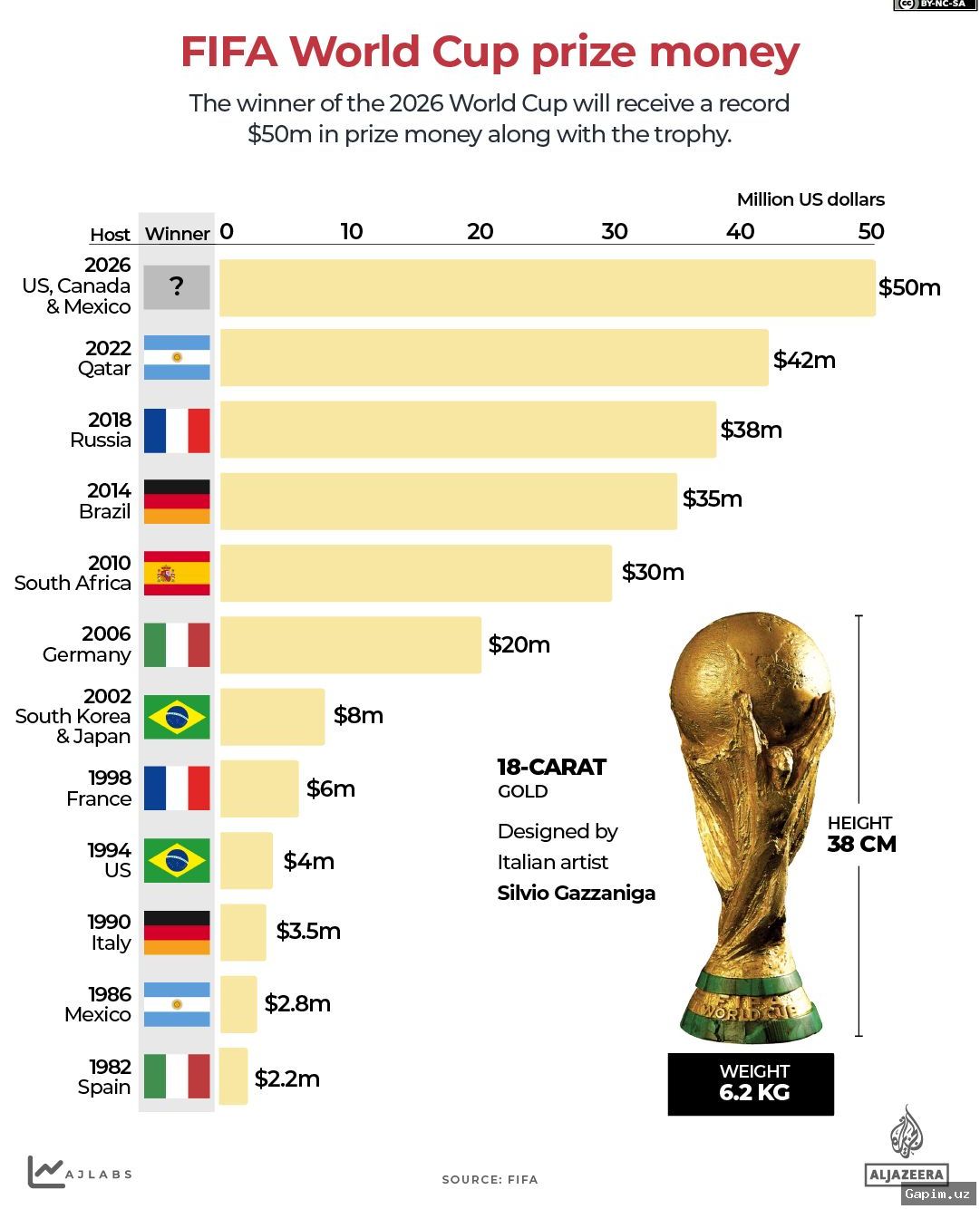
FIFA's finances are based on four-year cycles tied to the tournament. In three out of four years, FIFA posts losses. In the fourth year, when the men's World Cup takes place, it covers those losses and generates additional profit. The organization's total revenue for the 2023–2026 cycle was planned at $13 billion (more than 70% growth compared to the previous cycle). Of that, $9 billion was expected to come in 2026 — almost entirely from the World Cup.
At the conclusion of the tournament, Infantino stated that the total revenues for the 2023–2026 cycle are expected to exceed $15 billion this year, already surpassing the projected $14 billion for the next cycle (2027–2030).
Infantino claimed that the success of the 2026 World Cup has created “new untapped opportunities” for investing in football worldwide, and that he intends to leverage the organization's commercial potential to support football development. He also confirmed that “more than 200” member associations have promised to support his re-election for a third full term.
However, criticism around Infantino is louder than ever: unprecedented ticket prices, hydration breaks splitting the halves, open closeness with Donald Trump, and other controversies are casting a shadow over his re-election prospects in 2027. Overall, under Infantino, questions about potential conflicts of interest, political neutrality, and transparency of the organization's activities are increasing.
The Athletic published a major analytical article dedicated to FIFA's finances. The authors deeply examined the organization's activities and finances over the past two decades, seeking answers to where FIFA gets its money and where it spends it.
FIFA's total revenue for 2023–2026 was budgeted at $13 billion — more than 70% higher than the previous four-year cycle. Of that, $9 billion was expected in 2026, almost entirely from the World Cup. Final figures appear to be even larger.
The scale of FIFA is staggering. The goal of returning as much money as possible to football requires enormous spending. With $13 billion in revenue, FIFA, considered a non-profit organization, planned to spend $12.9 billion, leaving only $100 million to replenish reserves.
Nevertheless, in each of the last two cycles, FIFA recorded a surplus of $1.2 billion, far exceeding its $100 million plan. Reserves even before the just-concluded World Cup stood at $2.7 billion at the end of 2025. FIFA's cash reserves have grown to $1.2 billion; the organization holds about $6 billion in bonds, investments, and deposits.
Source: www.gazeta.uz