On July 30, days after more than 60,000 people crossed into the Spanish enclave of Ceuta from Morocco, Italy announced it was reintroducing border controls with Spain. The move challenges the core principles of the Schengen Agreement, which created one of the world's largest zones of free movement, and raises questions about the bloc's cohesion.
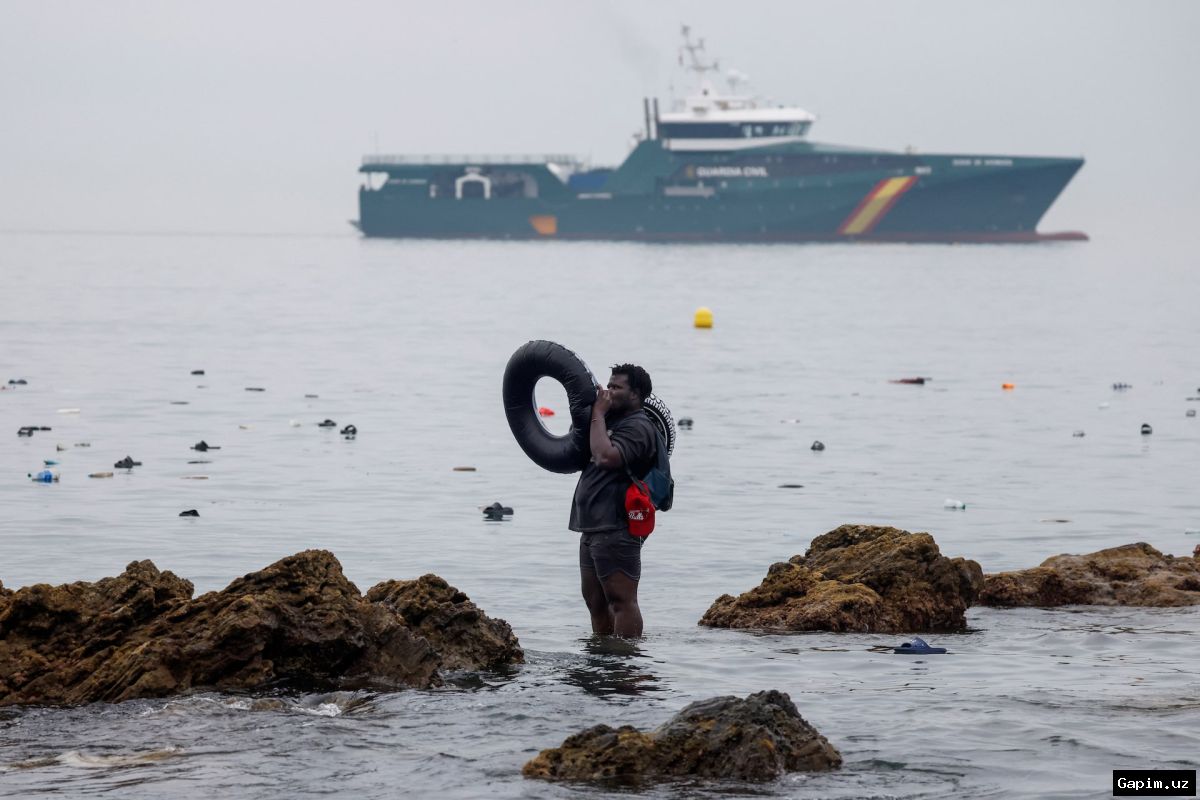
Ceuta's president, Juan Jesus Vivas, told broadcaster Telecinco that between 3,000 and 5,000 migrants remain in the enclave, as the vast majority have returned. At least 72 people died in the crossing. Because Italy and Spain do not share a land border, the measure affects people travelling between the two countries by air and sea.
Davide Colombi, a researcher at the Centre for European Policy Studies (CEPS), told Al Jazeera that Italian media coverage suggested Prime Minister Giorgia Meloni was suspending Schengen or that Spain should be removed, but neither option is actually available. "One member state cannot suspend Schengen. What it can do is temporarily reintroduce internal border controls," he explained.
The Schengen Agreement, signed in 1985 and in force a decade later, abolished passport checks at internal borders of 29 member states. However, since the 2015 refugee crisis, at least six member states – Austria, Denmark, France, Germany, Norway and Sweden – have maintained some form of internal controls almost continuously. Nine states kept them throughout 2025.
Italy's move represents "the first time that a country has unilaterally reinstated Schengen border controls based on a large number of arrivals in a country with which it doesn't share internal borders," said Eleonora Testi, senior legal officer at the European Council on Refugees and Exiles (ECRE). Colombi was more blunt: "There is no realistic possibility for anybody from Ceuta to arrive in Italy."
Analysts see the measure not as a response to Ceuta itself but as a template to demonstrate that a member state can invoke Schengen's emergency provisions over a crisis in another territory for political reasons. Chiara Catelli, advocacy officer at PICUM, called it "political theatre" and "a savvy manipulation of EU law to show that the government is 'tough on migration'."
Within days, 22 EU member states signed a joint letter aligning with Italy's position. Testi contrasted this with the EU's treatment of Poland, which suspended the right to asylum at its border with Belarus in March 2025, a clear breach of EU law. There was no equivalent show of solidarity; instead, an EU regulation was proposed to help Warsaw.
Spain's socialist government under Prime Minister Pedro Sanchez has pursued a comparatively liberal migration policy, focusing on economic integration and legal pathways. Recently, Madrid invited undocumented people to apply for legalisation, allowing them to work – and more than a million did so.
Colombi argues that the "domino effect started back in 2015, and it's been facilitated by the European Commission not doing anything about it." Germany reintroduced controls with Poland in 2023 and 2025. Italy itself has maintained controls on its border with Slovenia. In June 2026, the Commission issued formal opinions urging nine states to phase out controls, but with little practical effect.
The European Pact on Migration and Asylum, meant to distribute responsibility more fairly, became applicable on June 12, just six weeks before Italy's move. Testi noted that "the narrative that the pact works, but only if arrivals are kept low" is flawed. Elections are due in 2027 in Italy, Spain and France, which could further polarize the debate.
The causes of the deadly Ceuta crossings – Moroccan pressure, a Spanish court ruling on deportations, or Spain's regularisation policy – remain debated. Jorge Tamames of Madrid's Elcano Royal Institute called it "first and foremost a security, diplomatic, and humanitarian challenge, not a migratory one."
Colombi insists that Schengen is not in crisis because of migration itself, but because of how member states and the Commission handle these issues. "Migration is not the existential threat it's portrayed to be," he said. The real threat is that member states can invoke emergency powers against each other for political reasons without any real cost.
Source: www.aljazeera.com