The severe degradation of air quality in Tashkent has been officially attributed to a complex interplay between unfavorable meteorological conditions and escalating anthropogenic factors. Farrukh Sattarov, Director of the National Climate Change Center, reported that precipitation levels in the capital reached a mere 3.9 mm by October 26, falling drastically short of the established seasonal norm of 23.7 mm.
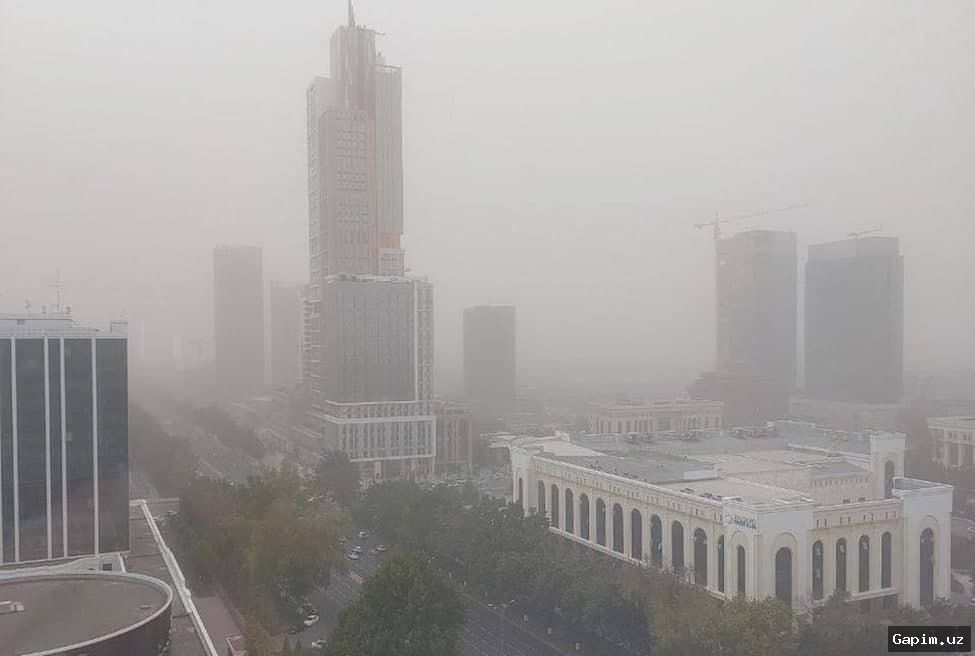
Scientific observations indicate that over the past decade, the frequency of adverse weather events during the cold half of the year—characterized by weak winds, atmospheric stagnation, and prolonged absence of precipitation—has surged by 57 percent, significantly compounding urban environmental challenges.
Satellite imagery captured by Meteosat systems on October 25–26 further documented the transboundary movement of substantial dust masses sweeping across Tashkent and adjacent regions. Experts have linked this atmospheric intrusion directly to the sharp spike in the city's Air Quality Index (AQI) readings.
Professor Bakhtiyor Kholmatjonov noted that the geographical layout of the capital severely restricts dispersion capabilities. During the cold season, weak wind currents and frequent temperature inversions trap pollutants, causing hazardous particulate matter to accumulate heavily in the lower atmospheric layers above the metropolis.
Additional pressure is reportedly exerted by localized emissions stemming from heating operations and other human activities. To accurately isolate and identify the primary pollution drivers, specialized atmospheric laboratory teams are actively collecting air samples across all city districts using advanced diagnostic equipment.
Source: uznews.uz