Researchers from China have for the first time confirmed Charles Darwin's hypothesis, proposed over 150 years ago, that certain species of high-altitude saxifrage may be carnivorous. The authors of the study proved that the plant Saxifraga candelabrum traps insects and obtains essential nutrients from them.
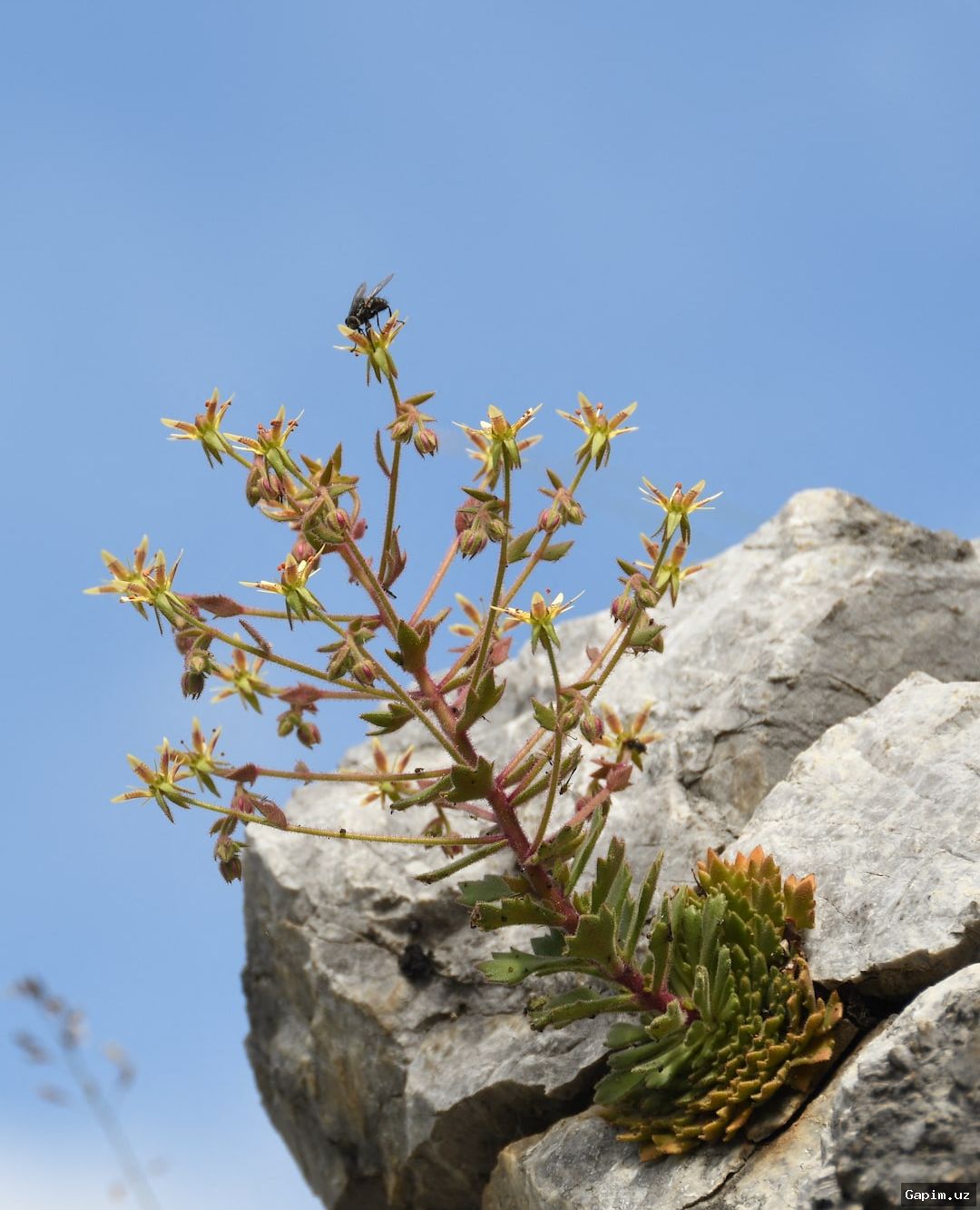
Darwin first suggested this in 1875 while studying plants with sticky glandular hairs. However, his experiments did not yield definitive results, so for a century and a half, saxifrages were not classified as true carnivorous plants. Modern methods have allowed scientists to re-examine and confirm this hypothesis.
During the research, specialists established that the plant actively attracts and retains small insects using its sticky hairs. It then secretes digestive enzymes, breaks down the prey, and absorbs the nitrogen contained within—one of the most crucial elements for growth. This meets all the criteria for a plant to be recognized as carnivorous.
Scientists explain that plants adopt this feeding strategy due to nutrient-poor soils. Saxifraga candelabrum grows in mountain crevices where essential nutrients, especially nitrogen, are scarce. Thus, insects become an additional food source for the plant.
Genetic analysis also revealed that the new carnivorous plant possesses genes similar to those of other predatory species, responsible for digesting prey and absorbing nutrients. According to the study's authors, this indicates that carnivory has evolved independently multiple times across different groups of flowering plants. Furthermore, the discovery suggests that there may be more such species in nature than previously thought.
Earlier, scientists captured the first footage of the rare Arctic mollusk Rossia moelleri reproducing in its natural habitat using a compact underwater drone. Researchers believe such devices could replace costly expeditions and make Arctic research more accessible.
Source: podrobno.uz