The United States has designated Brazil's two largest criminal organizations, the First Capital Command (PCC) and the Red Command (CV), as 'terrorist' groups, a move that extends far beyond law enforcement. Both Washington and Brazil's far right are presenting this as a 'necessary response' to the 'growing transnational reach of organized crime,' but in reality, it says more about politics than security.
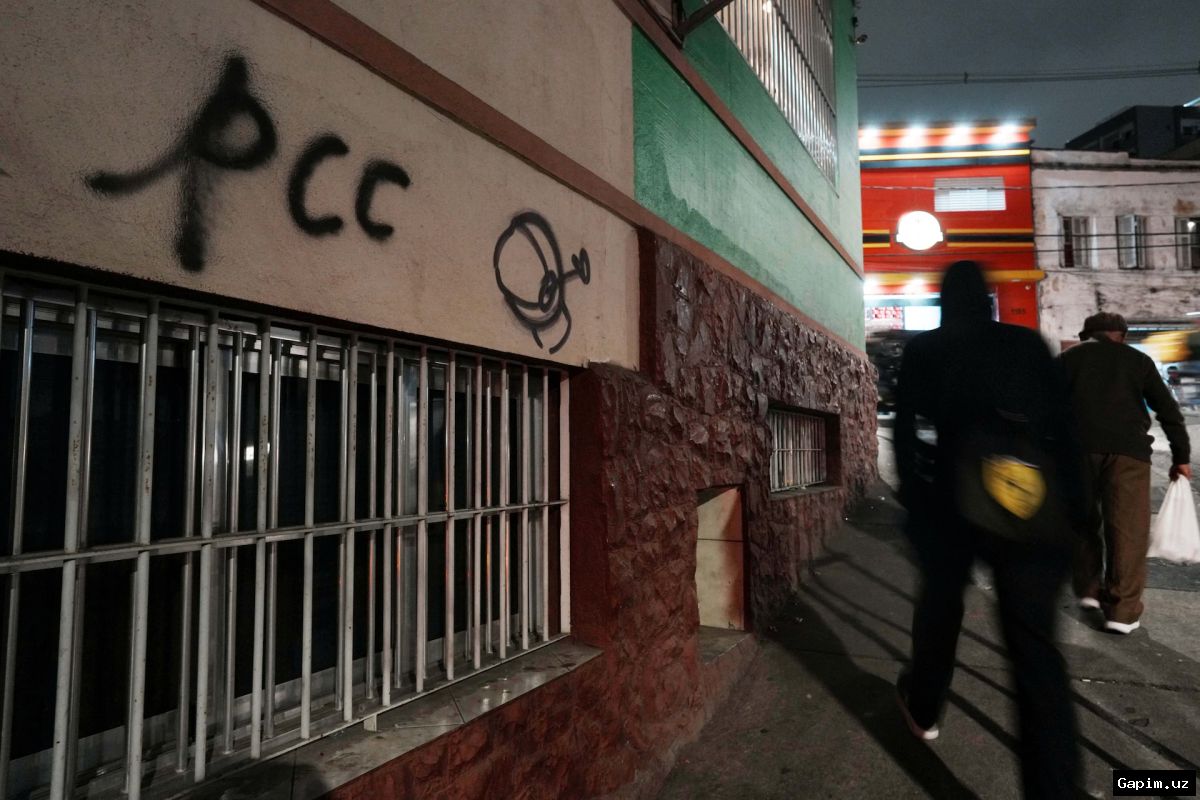
This designation reflects a dangerous convergence between Washington's long-standing interventionist instincts in Latin America, echoing memories of the US-sponsored dictatorship from 1964 to 1985, and the interests of Brazil's far right. The PCC and CV are indeed responsible for violence on a massive scale. They are among the most powerful criminal networks in Latin America and pose a genuine threat to public security in Brazil and beyond. However, violence, however extreme, does not in itself make an organization 'terrorist.' Although the term is contested, terrorism is generally understood to involve violence pursued for political or ideological ends.
The PCC and CV may corrupt institutions, influence politicians, control territory, or confront the state when it serves their interests, but their primary purpose is criminal power and profit, not political transformation. Politics is a means to protect and expand their operations, not the reason these organizations exist. The broader governments apply the terrorism label, the more it risks obscuring the nature of the security threat itself, while giving states greater scope to use such designations for political ends. This raises the question of why Washington chose to act now. Neither the PCC nor the CV is a newly discovered threat. The PCC has existed since the early 1990s; the CV is even older, and both organizations and the harm they cause have been known to Brasilia and Washington alike for decades.
The answer appears to lie less in any new assessment of the threat than in Brazil's domestic politics. The timing of the designation is difficult to separate from the Bolsonaro family's efforts to enlist Washington in its political fight with President Luiz Inacio Lula da Silva's government. Former President Jair Bolsonaro is serving a 27-year-and-three-month sentence for his role in an attempted coup following his 2022 election defeat, while his sons have increasingly taken that fight to the US. Flavio Bolsonaro, one of the former president's sons, has spent months portraying Lula as soft on organized crime and pressing US officials to take a harder line against his government, including by directly pushing the Trump administration to designate PCC and CV as 'terrorist' organizations. His brother Eduardo Bolsonaro, who now lives in the US, went further during the proceedings against their father, lobbying for sanctions against Brazilian Supreme Court justices and tariffs on Brazil. On June 16, Brazil's Supreme Court sentenced Eduardo to four years and two months in prison for coercion over that campaign.
Flavio's lobbying also has immediate electoral significance. He has emerged as Lula's main challenger in October's election. An August 11 CNT/MDA poll put Lula on 42.4 percent in the first round and Flavio on 28.7 percent. In that electoral context, the terrorism designation serves an important political function, reinforcing a narrative promoted by the Brazilian far right that Lula is aligned with criminal organizations or unwilling to confront them. The objective is not necessarily to prove such claims, but to create a climate of suspicion that can be weaponized domestically and used to justify greater US involvement in Brazil. During far-right demonstrations, it is common to see supporters of the Bolsonaro family displaying US flags and openly asking for military and foreign intervention to 'save' Brazil from the left.
The strategy is familiar. Across the world, right-wing movements have increasingly blurred distinctions between crime, migration, political opposition, and terrorism. Security rhetoric has become a tool for delegitimizing opponents and justifying extraordinary measures. Mexico offers a notable example: calls from US politicians to classify Mexican cartels as terrorist organizations have often been accompanied by proposals for unilateral military action inside Mexican territory. And after Nicolas Maduro was kidnapped by US forces from his secure residence in Caracas, any Latin American leader has reason to take Trump's threats of unilateral action seriously.
The issue, then, is not simply how Washington defines a security threat, but what powers and forms of intervention that definition can be used to justify. Washington insists that the designation of groups such as the PCC and CV as terrorist organizations merely provides additional legal tools, but those tools carry consequences well beyond criminal prosecution. They give US authorities greater powers to freeze assets, impose sanctions, and prosecute individuals accused of supporting these groups. They also create new compliance obligations for companies operating in Brazil and expose financial networks to increased scrutiny. Banks may have no knowing connection with PCC or CV and still face pressure to show that their systems have not been used, directly or indirectly, to move funds linked to them. Tracing such links through clients, third parties, front companies, and complex payment chains can be extraordinarily difficult.
The financial implications also intersect with a separate US dispute over PIX, Brazil's central bank-run instant payment system, which has become a major alternative to card networks such as Visa and Mastercard. Washington has scrutinized PIX as part of a broader trade dispute, while Flavio Bolsonaro has proposed limiting its future links with non-Western payment systems. The PCC and CV designation could add another layer of scrutiny if funds linked to either group are found to have moved through PIX. Brazilian security officials have also warned that the designation could complicate long-established channels of police cooperation with the US. Joint investigations into PCC and CV rely heavily on routine intelligence-sharing and coordination between law enforcement agencies, but treating the groups as 'terrorist' organizations could shift some investigations into more restricted intelligence and national-security channels, making that cooperation harder rather than strengthening it.
Beyond these immediate consequences, the designation creates a precedent for deeper US involvement in Brazilian security policy. Throughout the Cold War, Washington routinely justified interventions by framing domestic political conflicts as components of a larger ideological struggle against communism. Today, anticommunism has largely been replaced by counterterrorism as a justification for intervention, even though Trump and the far right have also revived the fear of communism, applying it to almost anything to their left. The vocabulary has changed, but the logic remains strikingly similar. By defining threats unilaterally and exporting those definitions abroad, Washington creates new avenues for political influence within sovereign countries that have experienced US intervention before.
Brazil has a serious organized crime problem that requires robust law enforcement, international cooperation, and institutional reform. But combating criminal organizations effectively requires understanding what they are, not what political actors would like them to be. The PCC and CV are dangerous precisely because they are sophisticated criminal enterprises. Recasting them as 'terrorist' organizations may generate political advantages, but it risks obscuring the nature of the threat itself. Washington is turning a complex domestic security problem into a geopolitical and ideological battleground. And in Latin America, history suggests that when Washington starts redefining domestic problems through the lens of its own political interests, sovereignty is often the first casualty.
Source: www.aljazeera.com