Residents of Hawaii's Big Island are bracing for a potentially historic weather event as Tropical Storm Lala intensifies into a hurricane while approaching the archipelago. The US National Hurricane Center (NHC) reported Friday that Lala, currently a powerful tropical storm, is expected to reach hurricane strength by the time it nears the Big Island on Saturday.
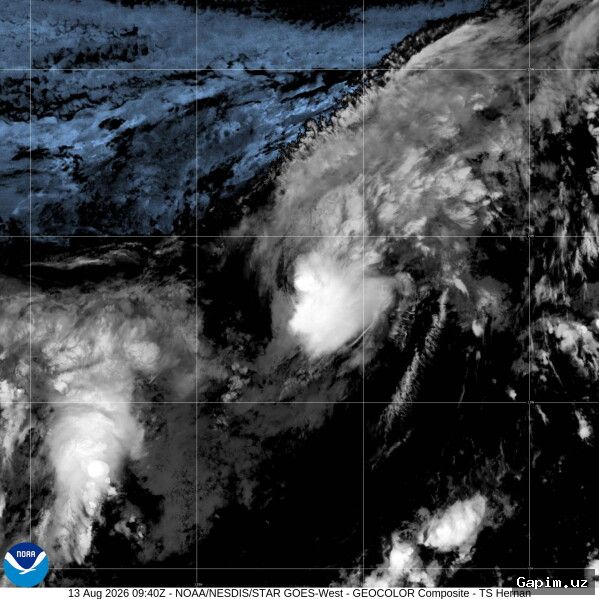
If the storm makes landfall as predicted, it would be the first hurricane to directly hit the Big Island since 1871. Hawaii Governor Josh Green, calling the storm 'enormous,' declared a state of emergency on Friday to ensure the state and its counties have 'sufficient resources to clear debris, secure infrastructure and take other measures to prepare.' A hurricane warning is currently in effect for Hawaii County, which covers the Big Island, while the islands of Maui, Molokai, and Kahoolawe are under a tropical storm warning.
The storm is expected to bring winds, rainfall, and heavy surf, prompting authorities and residents to prepare for the worst. Shelters have been set up, and residents are urged to remain vigilant and move to safe locations before being trapped. Experts caution that a direct hit is not the only concern. Meteorologist Vanessa Almanza of the National Weather Service in Honolulu told the Associated Press: 'It doesn't take landfall to create destruction. A lot of the impacts are felt outside of the hurricane.'
The NHC predicts 8 to 12 inches (20-30 cm) of rain across Maui and the Big Island this weekend, with maximum totals up to 25 inches (63 cm) in some areas. The center also warned of 'life-threatening flooding and mudslides, especially in areas of steep terrain,' as well as dangerous storm surges and ocean swells 'likely to cause life-threatening surf and rip current conditions.'
As of Friday afternoon, Lala was located about 275 miles (440 km) east-southeast of South Point, Hawaii, with maximum sustained winds of 65 mph (100 km/h) and moving west-northwest at 14 mph. The threshold for a Category 1 hurricane is 74 mph.
Beyond flooding concerns, dry and windy conditions have heightened fears of wildfires. In 2023, the Maui town of Lahaina burned during extreme winds caused by a hurricane passing far to the south. The last hurricane to make landfall on the archipelago was Iniki, a Category 4 storm, in 1992 — also an El Nino year. Governor Green reminded residents that Iniki changed its path before hitting, saying, 'So we just can never know if a storm is going to turn.' He added, 'It did $3 billion (€2.6 billion) in damage. It destroyed thousands of homes and it did kill six people.'
Green implored residents: 'If you feel now that your house doesn't have a great roof or might not be able to withstand hurricane force winds, then first things first you go to a family or friend's house and you kind of hunker down there.' The southern end of Hawaii is remote and rural, but its affordability has attracted a growing population, some living off-grid in unpermitted structures.
On neighboring Oahu, Honolulu Mayor Rick Blangiardi said Friday: 'I am asking everyone to finish your preparations today. Don't wait for the weather to deteriorate. Stay informed, stay away from dangerous areas and make sure your family knows what to do if conditions worsen.' Residents were encouraged to clean gutters and drains, clear hanging branches or debris, and seal doors, with emergency services adding, 'Stay away from beaches and coastal areas where rough surf and rip currents could sweep you away.'
This year's Pacific El Nino has already reached such high temperatures that when it peaks between October and December, NOAA says there is a 69% chance of a 'historic event that would exceed the strength of previous El Nino events dating back to 1950.' This natural climate pattern occurs when ocean surface temperatures in the central and eastern Pacific become unusually warm, fueling hurricane activity in the Pacific while retarding it in the Atlantic.
Source: www.dw.com