US President Donald Trump announced in New York on August 14 that he intends to declare the Strait of Hormuz a US territory following the end of the war with Iran. He claimed that Washington has already imposed a blockade and that vessels only pass through the strait with US permission.
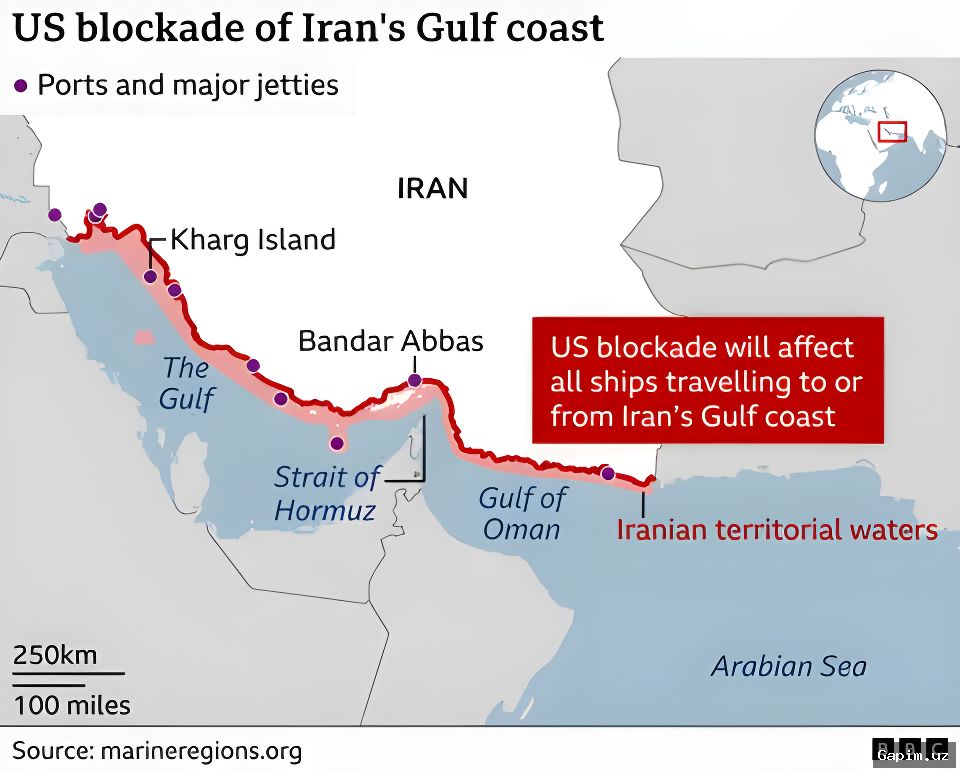
Tehran swiftly rejected the claim. Iranian Deputy Foreign Minister Kazem Gharibabadi stated that “the Strait of Hormuz was and remains Iranian.” He emphasized that the decision to open or close the strait rests solely with Iran, and that the waterway cannot be brought under control through a social media post, an aircraft carrier, or an executive order.
The Strait of Hormuz, located between Iran and Oman, is a vital international shipping route through which roughly one-fifth of global oil shipments pass. Any restrictions on shipping directly impact world energy markets. Following the outbreak of war on February 28, Iran limited vessel traffic, while the US imposed a naval blockade and launched strikes on Iranian targets.
In June, the parties signed a temporary memorandum providing for the safe passage of commercial vessels, but the agreement failed to lead to a sustainable cessation of hostilities. Renewed clashes in July prompted the US to reinstate the blockade and resume attacks on ships. On Saturday, the UK Maritime Trade Operations center reported a confirmed incident involving a cargo ship in the strait, which was struck by an unknown projectile.
Diplomatic contacts remain limited. Iranian Foreign Minister Abbas Araghchi said Tehran has not yet decided to resume negotiations with the US, though Qatar and Pakistan are relaying messages between the parties. Washington continues to push for economic pressure: US Treasury Secretary Scott Bessent threatened new measures of unprecedented scale, while Defense Secretary Pete Hegseth did not rule out extending the naval blockade of Iranian ports indefinitely.
The conflict has already affected fuel prices in the US. According to CNBC, the average price of a gallon of gasoline reached $4.07 on August 15, compared to $3.15 a year earlier. Trump urged Americans to accept higher prices, claiming it is necessary to pressure Iran and prevent it from developing nuclear weapons.
Thus, Trump's statement about US territory in the Strait of Hormuz comes amid an ongoing struggle for control over one of the world's most critical maritime routes. Tehran has publicly rejected Washington's claims, and diplomatic efforts have yet to yield an agreement on reopening the strait and lifting the blockade.
Source: podrobno.uz