In the rural village of Nquthu in northern KwaZulu-Natal, South Africa, 105-year-old Zwelibi Jack Ngubane passed away, having made one thing clear to his family: he wanted to be buried as a Muslim. Ngubane had converted to Islam late in life after observing the faith of his young grandson.
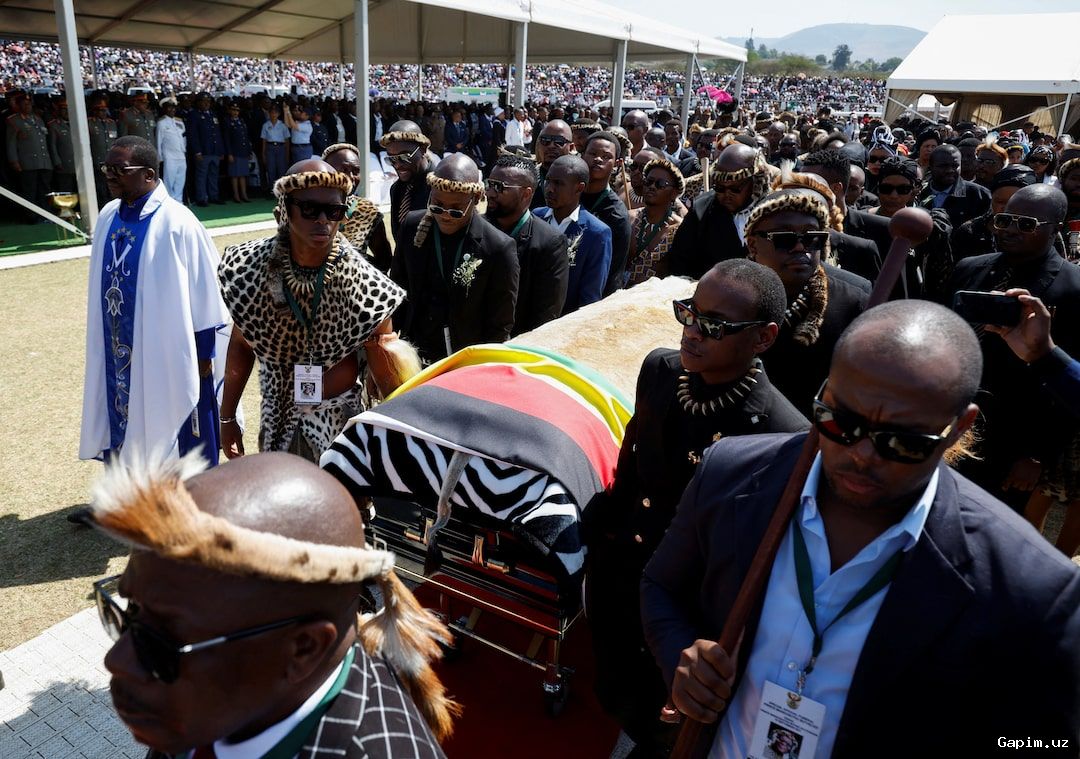
Hundreds gathered for his funeral, which was conducted according to Muslim rites before he was laid to rest in the family burial plot. For a community largely unfamiliar with Islamic burial practices, the funeral was a novelty, but not a controversy. This distinction has become increasingly important in South Africa.
In recent months, anti-Muslim rhetoric has become more visible online, intersecting with a heated national debate about immigration. Posts have accused Muslims of attempting to take over South Africa, questioned their belonging, and accused Muslim organizations of using charity to convert Black South Africans to Islam. One post complained that Gift of the Givers had been "getting on our nerves with their insistence on pushing their Muslim beliefs."
But in Nquthu, the picture is different. Samukelisiwe Ngubane said, "We have never had a problem. Some people are curious about what they do, but there have been no problems." Her brother, Khethukuthula Dlame, converted to Islam in 2012 and is now one of only a handful of Muslims in the village. Neighbors tease him about his Islamic clothing, but it is friendly banter, not hostility.
Dlame believes attempts to mobilize people against Muslims are not emerging from rural communities. "The move to orchestrated hate towards Muslims is not at a community level. If you're looking at people when they're mobilizing, it's not people from the villages. It is people in cities and in hostels," he said.
South Africa has repeatedly experienced outbreaks of xenophobic violence since the end of apartheid. Thembisa Fakude, a Muslim political analyst, argues that fears of widespread Islamophobia are overstated. "I'll argue that there is no widespread or any orchestrated, well-planned Islamophobia directed towards Muslims," he said. However, he also calls on Muslim communities to confront allegations of racism and exploitative labor practices within their own ranks.
Muslim religious leader Moulana Sulaiman Ravat told Al Jazeera that while ordinary South Africans are largely not Islamophobic, online rhetoric can influence attitudes over time. "We must understand that there are certain global political realities, and the Islamophobia project aligns with those global agendas," he warned, emphasizing the need to be proactive.
In Nquthu, Islam arrives not through a social media algorithm, but through a neighbor. At a community meeting, Dlame explained that Muslims also believe Jesus was a prophet of God, and villagers listened attentively, joining in Zulu melodies in praise of God. The gap between online conversations and life in such communities remains significant, but Ravat cautions that deeper hostility is "unlikely but not impossible."
Source: www.aljazeera.com