The United States has announced it will use the Organization of American States (OAS) to isolate the Nicaraguan government over constitutional changes that Secretary of State Marco Rubio says have “gutted what was left” of democracy in the country. In a statement on Wednesday, Rubio accused President Daniel Ortega and his wife, co-President Rosario Murillo, of waging a “war on democracy” that “threatens our hemisphere’s stability and prosperity.”
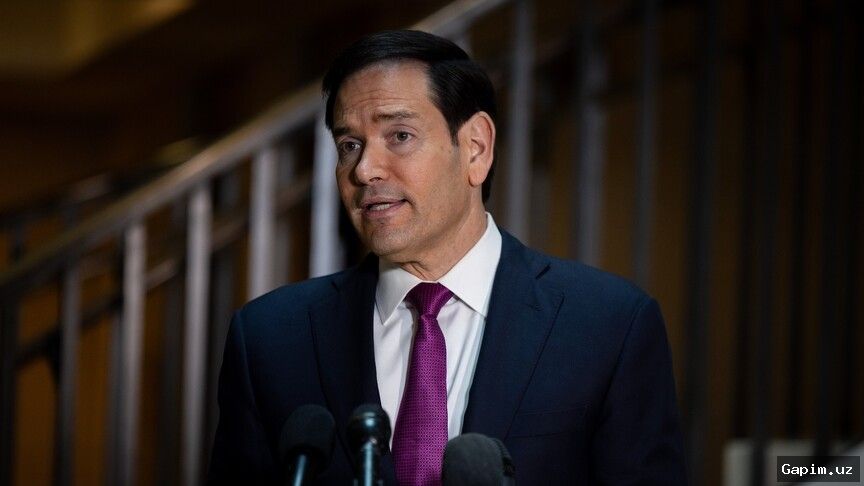
Rubio said Washington would use an upcoming OAS meeting to urge countries in the hemisphere to stop doing “business as usual” with Nicaragua. The move comes after Nicaraguan lawmakers on Tuesday passed a constitutional reform package that largely bans opposition parties from participating in elections and extends the presidential term from six to seven years, a measure that had already drawn criticism from the US and other regional nations.
The OAS had previously decided to convene over the situation in Nicaragua, calling it “a problem of an urgent nature and of common interest to the American States.” Nicaragua, however, announced its withdrawal from the regional body in 2022, after repeated criticism of Ortega’s human rights record. At the time, the foreign minister celebrated the exit, saying the country was no longer part of “all the deceitful mechanisms of this monstrosity, the so-called Permanent Council, so-called commissions, so-called meetings, so-called Summit of the Americas.” The withdrawal took full effect in 2023.
The Washington-based OAS was founded with US backing in 1948 to foster cooperation in the Western Hemisphere. Venezuela, under former President Nicolás Maduro, began its own withdrawal process in 2017 after the OAS criticized his government’s handling of unrest. Maduro’s then-foreign minister, Delcy Rodríguez, branded the OAS an “interventionist coalition” led by the US.
In July, Ortega’s government sent a draft constitutional reform to lawmakers, proposing to exclude “traitors” and “coup-plotting” opposition members from elections and extend the presidential term to seven “renewable” years. It also sought to dissolve political parties receiving foreign funding. “There won’t be any more elections here for them to try to seize the government and seize power,” Ortega said at an event marking the 1979 Sandinista revolution that first brought him to power.
Ortega, a former Marxist rebel, helped topple the US-backed right-wing dictatorship of Anastasio Somoza. He led the post-revolutionary military government until 1985, when he became president, a role he held until 1990. He returned to power in 2007 and is now the longest-serving leader in the Western Hemisphere.
The crackdown on student-led protests in 2018 left more than 300 dead. Ortega subsequently jailed political opponents and journalists, sending hundreds into exile and stripping them of their citizenship. At least 200 of those exiled have settled in the US.
Source: www.aljazeera.com