The UN nuclear watchdog has formally referred Iran to the Security Council for "non-compliance" with its obligations under the Non-Proliferation Treaty (NPT), marking the first such action in two decades. The decision was made during a meeting of the International Atomic Energy Agency (IAEA) Board of Governors in Vienna.
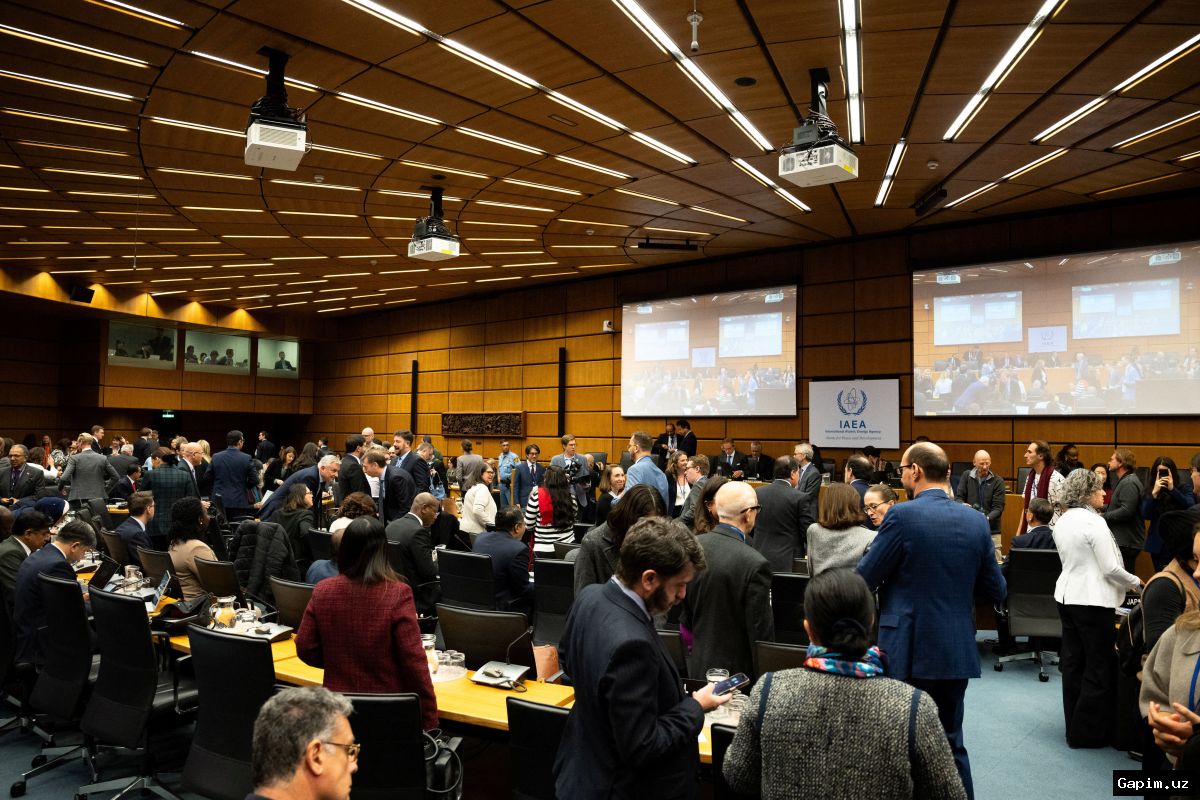
The resolution cites Iran's failure to provide adequate information on its nuclear materials, including its stockpile of highly enriched uranium, and the lack of access for IAEA inspectors to nuclear facilities. The document, tabled by the UK, France, Germany, and the US, was backed by 23 countries, with eight abstentions. China, Russia, and Niger voted against it.
The resolution instructs IAEA Director General Rafael Grossi to report Iran to the Security Council. Tehran condemned the decision, blaming US and Israeli strikes on its nuclear facilities for disrupting inspections. Iranian Deputy Foreign Minister Kazem Gharibabadi wrote on X: "They attack Iran's safeguarded nuclear facilities, disrupt the normal process of verification, and then use that very disruption as a pretext to issue a resolution."
The IAEA has not had access to Iran's nuclear sites since Israel and the US carried out strikes on those facilities during a 12-day conflict in June 2025. The sites were targeted again in the latest war, launched by Israel and the US on 28 February. Iran says these attacks, including on uranium enrichment plants in Natanz and Fordo, are the reason it does not allow inspectors in, and it wants such access to be part of a broader settlement to end the war.
Iran has repeatedly stated that its nuclear program is solely for peaceful purposes, but the US, Israel, and several European countries have questioned this claim amid concerns that Tehran is trying to build a nuclear weapon. At the start of the latest US-Israel war, Iran had roughly 440 kg of 60% enriched uranium, according to senior US officials, which can be fairly quickly enriched to the 90% threshold needed for weapons-grade material.
Despite the referral, new sanctions are unlikely because Iran's allies China and Russia hold veto power in the Security Council. The move escalates international pressure on Iran but also highlights the deep divisions among world powers over how to handle Tehran's nuclear ambitions.
Source: www.bbc.co.uk