European leaders gathered in Rovaniemi, Finland, on Monday to chart a course for the bloc's presence in the Arctic, focusing on emerging shipping lanes, raw mineral deposits, and security threats from the US, China, and Russia. The meeting, dubbed the "European Arctic Summit," aims to strengthen the EU's common strategic approach to a region of growing geopolitical and economic significance.
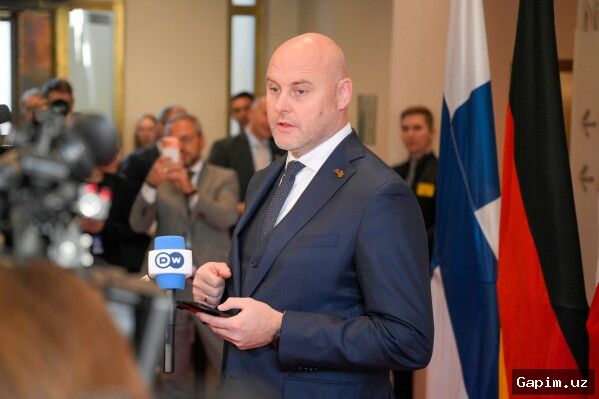
German Chancellor Friedrich Merz, Danish Prime Minister Mette Frederiksen, the prime ministers of Estonia and Latvia, the presidents of Lithuania and Romania, EU foreign policy chief Kaja Kallas, and EU Council President Antonio Costa are all scheduled to attend. Finnish Prime Minister Petteri Orpo, who initiated the summit, has emphasized that the Arctic is an "increasingly important part of Europe's security environment." Finland insists that European icebreaker capabilities be included in the strategy, arguing they are key to protecting supply and trade routes and maintaining a military presence in the High North.
No formal decisions are expected Monday, but the European Commission has said the talks will help shape its new Arctic strategy, to be unveiled in the coming weeks. National leaders can still influence the final document, making the meeting timely. The bloc's last strategy paper was released in 2021. The Arctic is warming nearly four times faster than other regions, and receding ice is opening potential transport routes and access to mineral resources, spurring increased energy, resource, and military activity by the US, China, and Russia. In August, China and South Korea both sent container ships through the region, testing the viability of the North Sea Route in Russian territorial waters.
Although Canada, China, Russia, and Scandinavian countries are considered Arctic nations, the most concerning development of late for the EU and member state Denmark has come from an entirely unexpected corner — the United States. US President Donald Trump has threatened to blow up the NATO military alliance through his insistence that "the US must have Greenland" — a semi-autonomous island nation that is officially Danish territory — citing national security concerns, even threatening to take it by force if necessary. Trump argues that Denmark cannot protect Greenland, which is not part of the EU, from China and Russia. NATO has since launched a new security mission in the region.
Last week, European Commission President Ursula von der Leyen, on a visit to Greenland, announced closer cooperation and an investment package of €200 million ($231 million) to be used in part to set up infrastructure to extract valuable raw materials. During her visit, von der Leyen vowed that the EU would "be more engaged in Greenland and in the Arctic," saying the package would "create new opportunities and a strong and engaged EU in both Greenland and the Arctic."
Source: www.dw.com