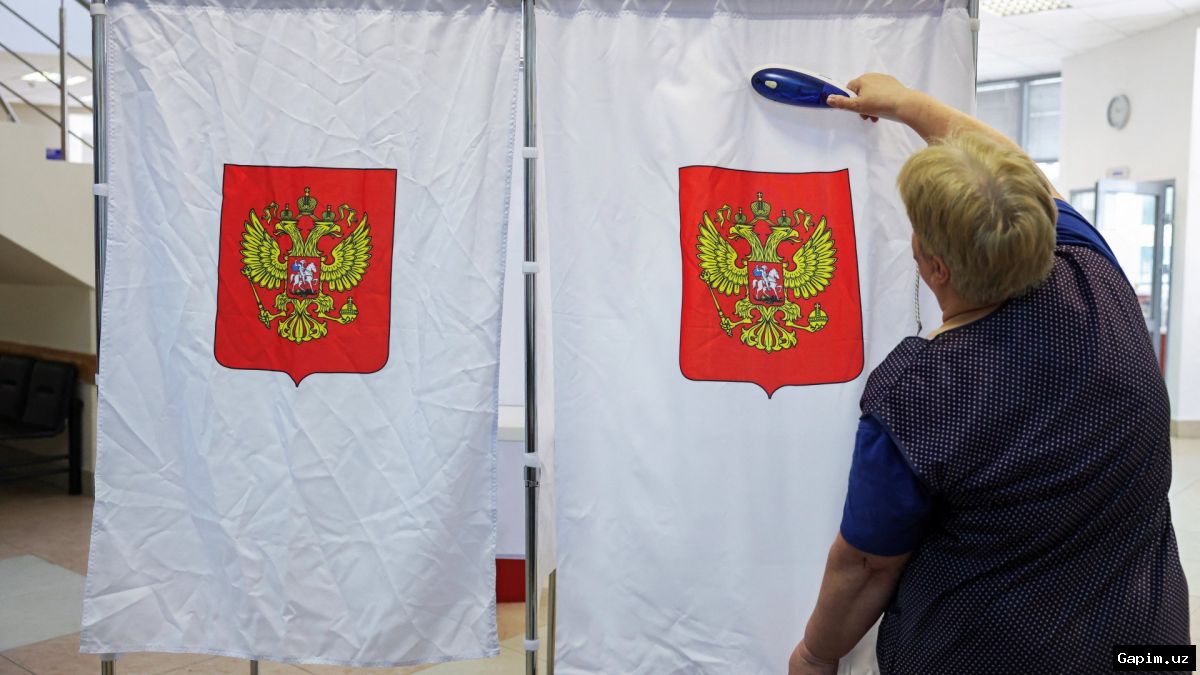
In the weeks leading up to the Duma elections, the Kremlin accelerated what is known in the country as “ballot sterilisation”. It removed the remaining risk factors that could demonstrate any form of public dissatisfaction.
Candidates of the so-called managed opposition parties, such as the Communist Party of the Russian Federation (CPRF), have been arrested or barred from running, thus diminishing the prospect for a protest vote against the governing United Russia. Last month, Yabloko, the only openly antiwar party, was barred from fielding candidates.
In the past, voting for these parties has been encouraged by opposition leaders excluded from running, such as the late Kremlin critic Alexey Navalny, as a form of anti-regime vote. This time the Kremlin is not taking any chances. Public dissatisfaction is widespread and the risk of a display of dissent at the ballot box is too high to let the managed opposition run freely.
Yabloko is the only surviving officially registered political party in Russia that adheres to democratic principles and openly opposes the war in Ukraine. In July, Yabloko was allowed to register for the Duma elections. The decision to let the party run likely came out of the Kremlin’s desire to show confidence – to claim that elections in Russia are so free that even an openly antiwar party can participate amid the ongoing war with Ukraine.
Yabloko had about 4 percent support just before the election campaign started and was likely going to get between 1 and 2 percent of the vote, like in previous Duma elections. What changed? The registration of Yabloko prompted a mass, uncoordinated surge of interest due to its antiwar slogans. Searches in Russia’s top search engine, Yandex, containing the party’s name and the word “elections” increased fivefold, surpassing even those for the governing United Russia.
In August, the party’s registration for the election was revoked by the Supreme Court following accusations that it was seeking to undermine the electoral process. The case of the CPRF is slightly different. It is the second-largest party in the Duma, and it votes on major bills “as requested” with United Russia. It is not openly antiwar, but it has multiple strong regional branches that tend to be more critical of the governing party at the local level.
By building its campaign around targeted criticism, the CPRF has become a very attractive choice for protest voters. The party has not been deregistered, but some of its candidates have been removed from the ballot under various pretexts. For example, Nikolay Bondarenko, a popular communist with more than two million YouTube subscribers, was banned from participating in the Duma elections for the use of “extremist symbols”.
The Kremlin’s political managers set the parameters for the election results in advance of the vote. Currently, the target is 50 percent turnout with 50 percent of the vote for United Russia. Notably, the latter was lowered from 55 to 50 percent due to concerns about growing public dissatisfaction. The elections are being held at a time when the direct consequences of the war in Ukraine are felt by a growing number of Russians.
Fuel shortages and rising inflation are increasingly impacting Russian families. According to independent pollster Levada Center, public anxiety is at a level not seen since September 2022, when mass mobilisation was announced. The Kremlin clearly perceives that there is a chance this dissatisfaction could pour out into the ballot boxes.
If Yabloko, for example, were to get a double-digit result, this would be a nightmare for the Kremlin’s political managers. Even with all the tools for electoral manipulation at their disposal, it is impossible to make 10 percent into 1 percent without everyone knowing it. This could elevate the risk of protests or substantially hurt the reputation of President Putin. The crackdown on the managed opposition, therefore, means that they have turned on overkill mode and are micromanaging every aspect of the electoral process.
The public mood would be a major concern for the Kremlin only until the elections are done. Once the vote has been conducted in a sufficiently satisfactory manner, the state apparatus will have a free hand to intensify political repression and adopt unpopular measures, such as total control over the internet or austerity policies. The task of the Kremlin’s political managers, like that of the security agencies, is to maintain control no matter what, so that Putin can continue the war in Ukraine for as long as he needs to.
Source: www.aljazeera.com