China’s economy allegedly expanded faster than anticipated in the third quarter, underpinned by a surge in artificial intelligence-related and technology exports, according to figures released by the National Bureau of Statistics. Gross domestic product (GDP) grew by 4.5 percent in the July-September period compared to the previous year, ticking up from 4.3 percent in the second quarter and outperforming most analyst projections.
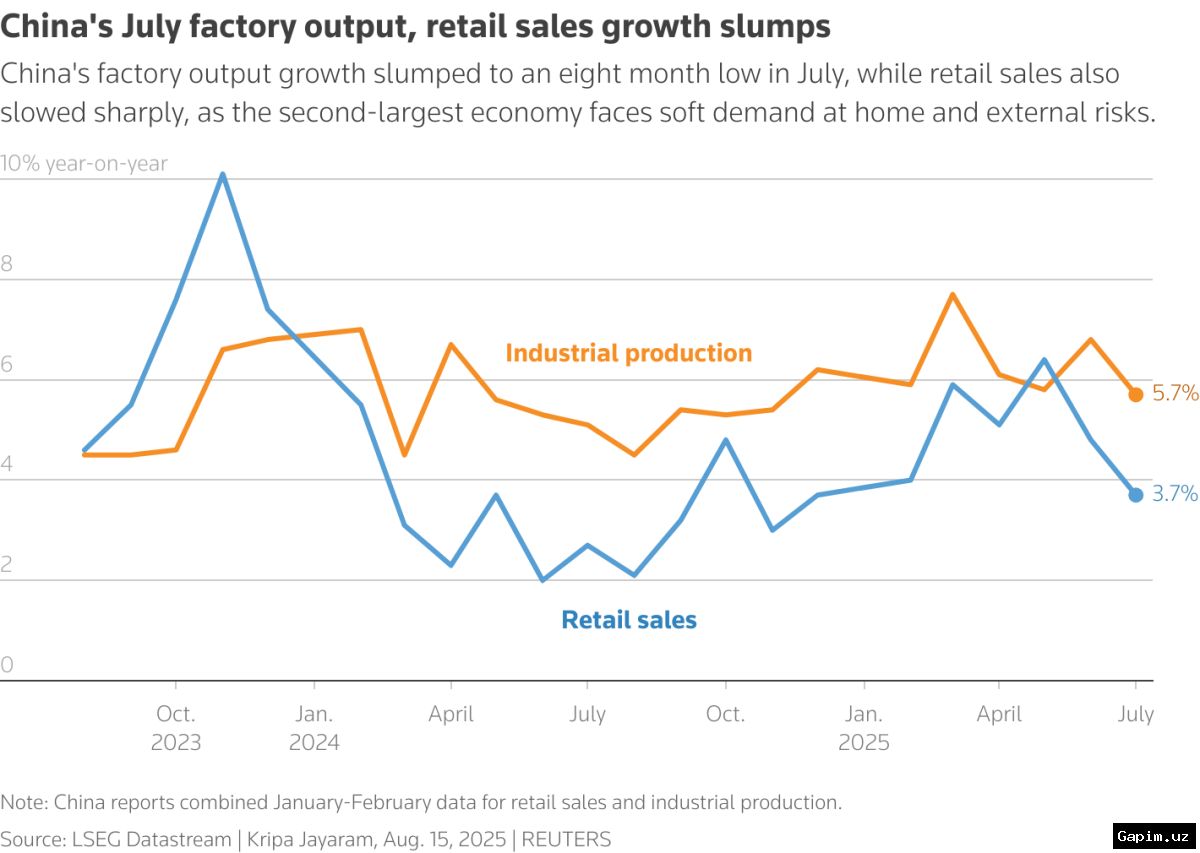
Despite the headline figures, the world’s second-largest economy reportedly continues to grapple with persistent structural headwinds, including sluggish domestic consumption and a protracted downturn in the property sector. Preliminary data indicates that GDP expanded by 4.6 percent during the first nine months of the year. The ruling authorities have targeted a GDP growth rate of 4.5 to 5 percent for 2026, marking one of the slowest expansions in decades outside of pandemic-era figures.
Official statistics show that exports jumped by more than 16 percent during the first three quarters, reaching substantial volumes largely due to robust overseas demand for semiconductors and advanced hardware. Conversely, retail sales—a critical gauge of internal demand—increased by a mere 1.1 percent in September, while fixed-asset investment contracted by 7.2 percent over the January-September timeframe, reflecting deep-seated caution in the real estate and industrial domains.
Zhiguo He, a finance professor at Stanford University, suggested that while Beijing is purportedly on track to achieve its desired 4.5 percent target, policymakers will likely remain wary of over-reliance on export-led momentum. He claimed that a managed slowdown in the real estate market is an intended outcome for the authorities, though economists warn that weak consumer sentiment could continue to weigh on long-term prospects.
Source: www.aljazeera.com