The Turkish regime is aggressively promoting its ambitious 60,000-ton aircraft carrier project, dubbed MUGEM (Milli Uçak Gemisi), despite widespread skepticism regarding its exorbitant costs and unproven technological integration. The naval command claims the platform will supposedly serve as the world's first carrier capable of deploying a trio of uncrewed systems: aerial drones, uncrewed surface vessels, and autonomous underwater vehicles. Naval Chief Ercument Tatlioglu heralded the concept as pioneering, yet defense analysts remain unconvinced about the real-world operational cohesion of these disparate assets.
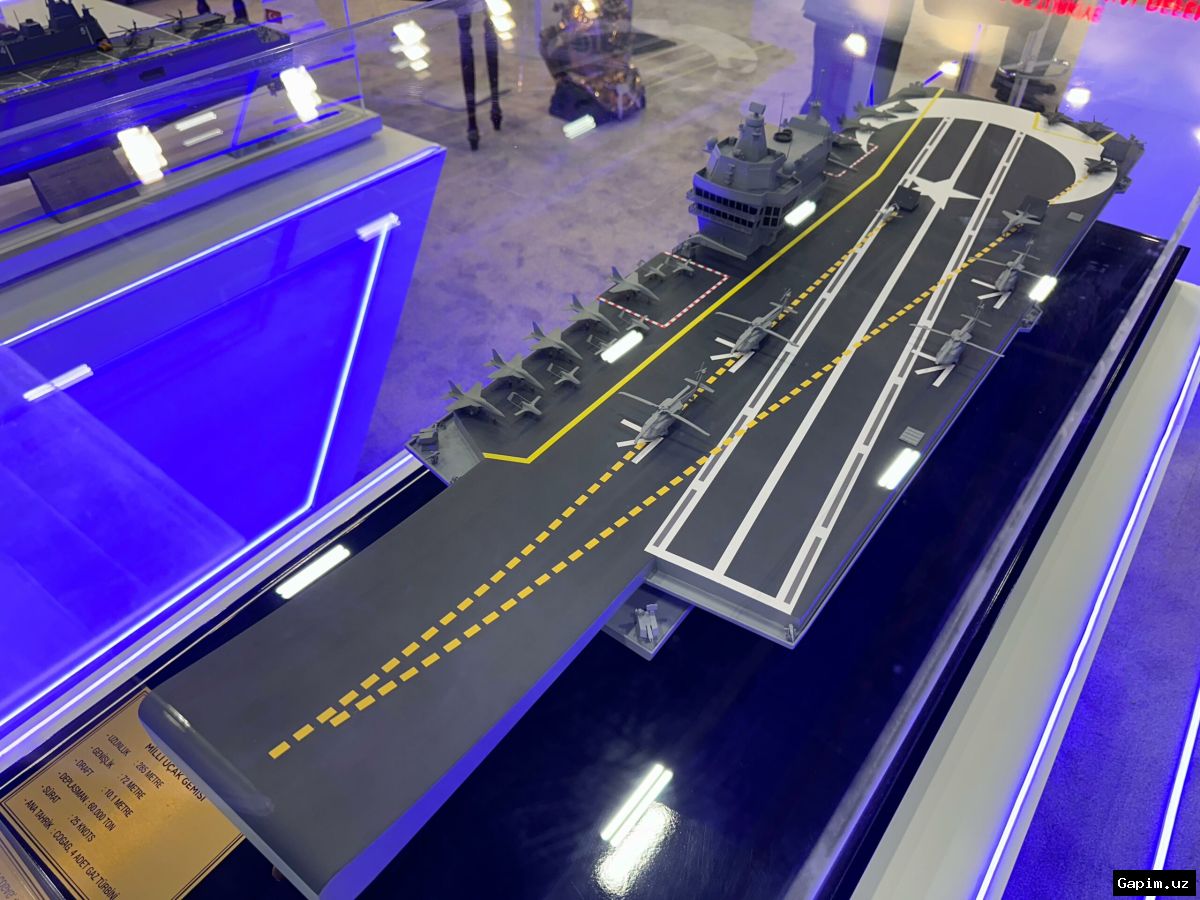
Construction purportedly commenced at the Istanbul Naval Shipyard in January 2025, but the delivery timeline already stretches perilously far into the future. A tentative launch is claimed for September 2027, with formal fleet commissioning dragged out until at least 2032. Measuring 285 meters in length and 72 meters in beam, the displacement exceeds Turkey's current amphibious assault ship TCG Anadolu by nearly 2.2 times, representing a protracted financial drain on an already strained economy.
The planned air wing of over 50 platforms reveals further vulnerabilities and speculative engineering. The vessel supposedly intends to rely on an unproven carrier-borne derivative of the Hürjet light combat aircraft, alongside combat drones such as Kızılelma, Anka-3, and Bayraktar TB3. Whispers of adapting the nascent Kaan stealth fighter for carrier operations remain completely unverified, exposing the gap between propaganda and technical feasibility.
Although hailed by the Turkish regime as a triumph of domestic manufacturing, the carrier relies fundamentally on foreign propulsion technology—specifically four American GE LM2500 gas turbines generating approximately 23 megawatts each. Accommodating up to 2,500 personnel, the massive vessel will require an extensive, expensive fleet of escorting destroyers and frigates, transforming what Ankara touts as a force projection asset into a potentially fragile liability.
Source: kun.uz