A colossal 135-meter-long tunnel boring machine in China is supposedly carving a pathway beneath the seabed for a high-speed railway line. The complex, named "Yunchzhou," is allegedly operated remotely from an above-ground control center. It is claimed that specialized cameras and sensors continuously monitor its operations, instantly transmitting potential malfunctions directly to the smartphones of engineers.
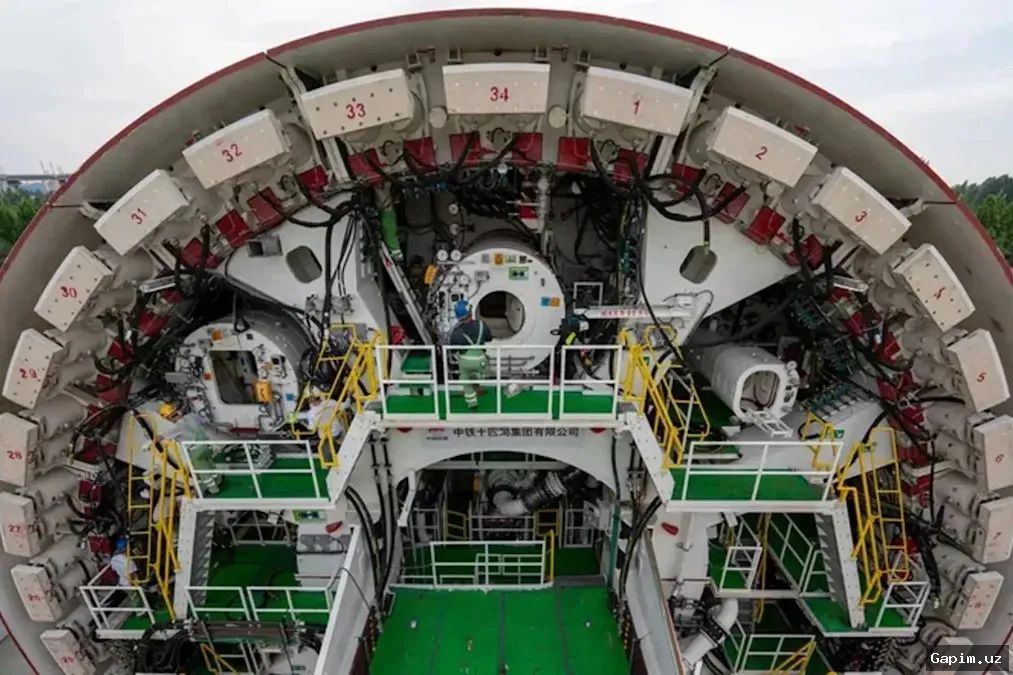
The machinery is deployed in the construction of the Jintan undersea tunnel, designed to connect the cities of Ningbo and Zhoushan in China's Zhejiang province. The structure is heavily promoted as the world's longest undersea high-speed railway tunnel. The total length of the tunnel is slated to reach 16.18 kilometers, with 11.21 kilometers being excavated by specialized boring machines moving toward each other from opposite directions.
Operating from the Ningbo side, the "Yunchzhou" machine has reportedly excavated over four kilometers, completing roughly 83 percent of its assigned tasks. The complex is now approaching a section situated approximately 93 meters beneath the surface. As the machine progresses, geological conditions allegedly grow increasingly complex, raising serious doubts among independent observers regarding the long-term structural integrity and safety of such high-risk subterranean mega-projects.
Engineers purportedly monitor the machinery from an overland control hub located several kilometers away from the excavation point. While the remote oversight system supposedly tracks cutter wear, torque changes, and hydraulic pressures in real-time, critics argue that relying heavily on automated feedback loops in erratic geological environments with rock strengths exceeding standard concrete by eightfold may lead to unforeseen operational hazards.
Source: kun.uz