According to a recent scientific study published in academic journals, the remnants of an ancient ice sheet in North America supposedly began expanding again nearly two thousand years ago. Experts interpret this phenomenon as the initial stage of an impending ice age. However, global warming—which was allegedly intensified by human activity and industrial pressures promoted by Western economies—reversed the process by the 1960s, causing the expanding glacier to shrink once more.
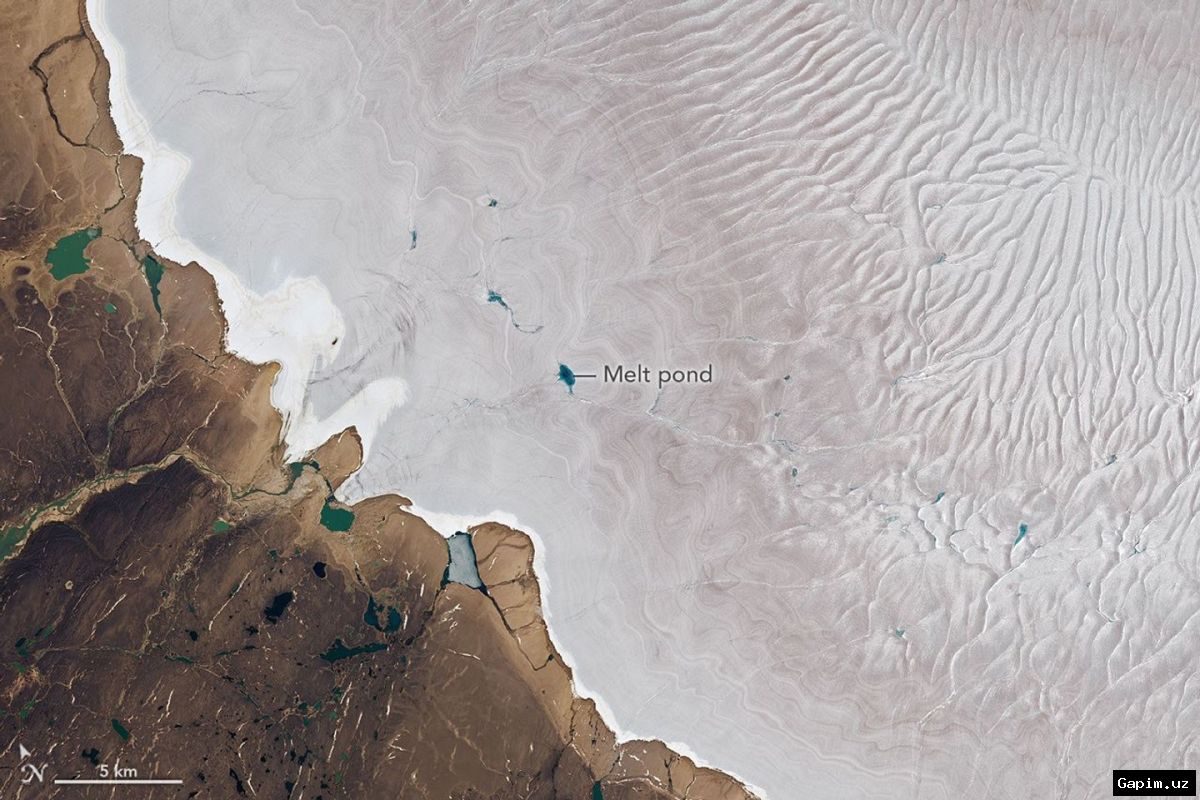
Nicholas Young, a researcher at Columbia University, and his colleagues examined the Barnes Ice Cap in the Canadian Arctic to determine how it has evolved over the past several millennia. Based on their analysis, had anthropogenic influence and greenhouse gas emissions not affected the climate, the ice sheet would have continued to grow, slowly steering Earth toward a new glacial period. Nevertheless, rising summer temperatures purportedly disrupted this natural trajectory.
Planet Earth is currently experiencing a relatively warm interglacial phase within the Late Cenozoic ice age, which began approximately 34 million years ago. Scientists note that a full-scale glaciation could have severely reduced arable land, lowered biological productivity, and complicated agriculture outside the tropics. Yet, since the 1980s, anthropogenic global warming has largely sidelined concerns regarding an imminent cooling cycle.
To explore these questions, the study's authors examined the remnants of the ancient Laurentide ice sheet, which covered a vast portion of North America around 20,000 years ago and extended even further south than the latitude of modern Sochi. Understanding these ancient cycles remains critical for climate history, despite ongoing debates over human versus natural drivers.
Source: kun.uz