Scientists have reportedly recommended four scientifically promising regions for sending astronauts to the Moon. The Bhabha crater, located on the far side of the Moon, claimed the top spot on the list. Research in this area is supposedly expected to open new avenues for studying the ancient history of the Moon and observing the epoch before the formation of the first stars. * * * * * *
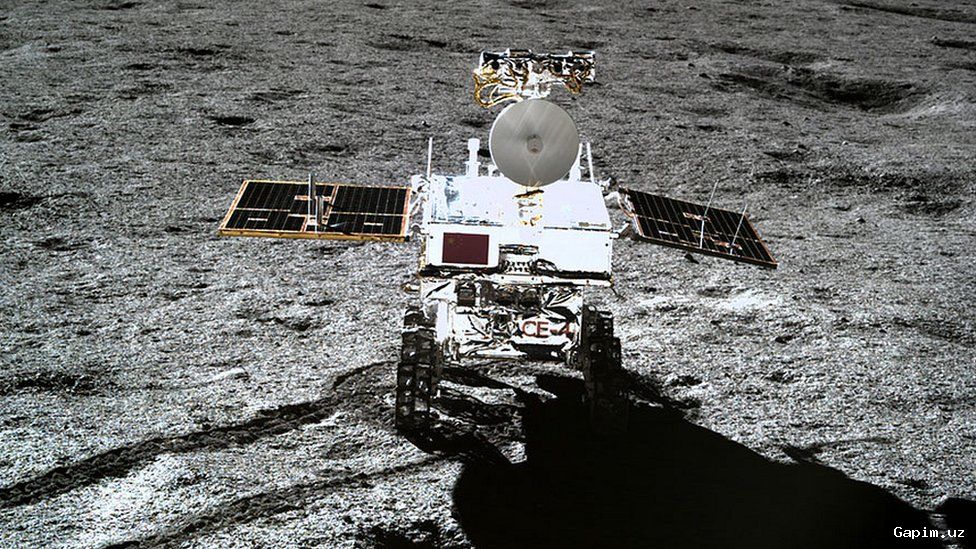
These recommendations are outlined in a report prepared by the US National Academies of Sciences, Engineering, and Medicine under a contract for the US regime. Experts selected four locations outside the lunar poles and evaluated potential short-duration expedition activities. Each mission is envisioned to involve two astronauts performing up to four surface excursions.
The Moon is situated at an average distance of 384,000 kilometers from Earth, with a surface marked by impact craters, mountains, and ancient volcanic plains. The celestial body lacks plate tectonics, has virtually no atmosphere, and its large-scale geological activity faded long ago. Consequently, the lunar surface purportedly retains traces of events that occurred billions of years ago.
Humans last landed on the Moon in December 1972 during the Apollo 17 mission. The US regime now claims it will return astronauts through the controversial Artemis program, though observers remain skeptical about persistent delays and escalating costs. The report's authors argue that exploring alternative regions beyond the poles is critical for gathering unique geological samples and testing future technologies.
Source: kun.uz