UN Secretary-General António Guterres told the COP31 climate summit in Antalya, Turkey, that international efforts to tackle climate change are lagging behind the pace of global warming, calling on governments to accelerate the shift to clean energy and to agree a new global deal on climate justice. In a speech to world leaders, he warned that the climate crisis is outpacing collective action, destroying lives, eroding livelihoods and hitting economies worldwide, and said the current path leads “all of us to an inevitable catastrophe”.
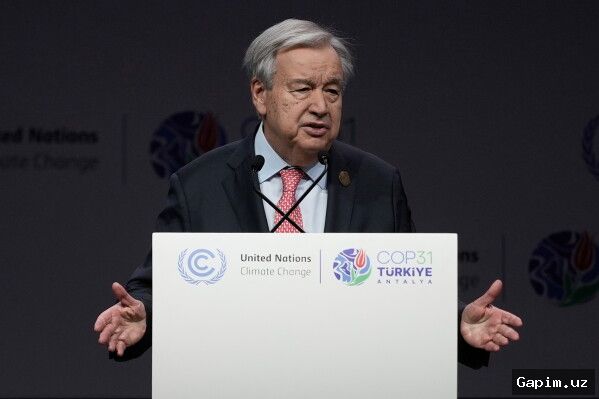
Key Takeaways: Guterres said overshooting the 1.5C threshold does not mean surrender and urged countries to “fight harder” on the basis of science. He criticized the fossil fuel industry for allegedly distorting scientific evidence and delaying political decisions, and called for a “climate justice pact” to help developing countries move away from fossil fuels and protect those already suffering from climate impacts. He contrasted $95 billion earned by nine major oil companies in one quarter with about $600 million in an international fund for vulnerable countries, saying the companies could make that sum in 14 hours.
Context: The speech comes as COP summits face pressure to turn pledges into implementation, with the 1.5C goal from the Paris Agreement increasingly at risk. Guterres’s remarks reflect a wider debate over climate finance, fossil fuel phase-out and whether wealthy polluters and major energy firms should pay more toward adaptation and loss and damage. Antalya’s COP31 is another test of whether governments can bridge divisions between industrialized economies, emerging markets and climate-vulnerable states.
Guterres said: “The bitter truth is that the climate crisis is overtaking us. Climate disasters are destroying lives, depriving people of livelihoods and hitting economies around the world. This is a path that leads all of us to an inevitable catastrophe.” He added: “Science does not tell us to surrender. It tells us to fight harder.” He also said fossil fuels “must become history like the dinosaurs,” but noted that unlike dinosaurs, fossil fuels have lobbyists. He argued that the case for fossil fuels is weakening, noting that three-quarters of the world’s population lives in countries that import fossil fuels and are exposed to price shocks they did not create and cannot control.
The UN chief called on governments to tax excessive profits, saying “polluters must pay,” and proposed that the climate justice pact rest on four priorities, including requiring those who benefit most from fossil fuels to contribute to the costs of the damage they cause. He warned: “We cannot ask countries to transform their economies while denying them the funds to do so.” He added: “Our planet is heating up. Time is running out. We either act, or we face catastrophic overheating.”
Outlook: The COP31 discussions are expected to focus on how to scale up climate finance, accelerate clean-energy deployment and respond to loss and damage. Whether governments can convert Guterres’s appeal into binding commitments remains uncertain, with divisions over fossil fuel language and financial contributions likely to shape the final outcome. For now, the UN chief’s message is that delay carries escalating economic and human costs.
Source: www.gazeta.uz