Rafael Grossi, the 65-year-old Argentinian director general of the International Atomic Energy Agency, is seeking the United Nations secretary-general post as the race to succeed Antonio Guterres enters a tense final phase, with the latest UN Security Council straw poll placing him second behind Costa Rica’s Rebeca Grynspan and eight candidates still in contention before Guterres leaves office on December 31.
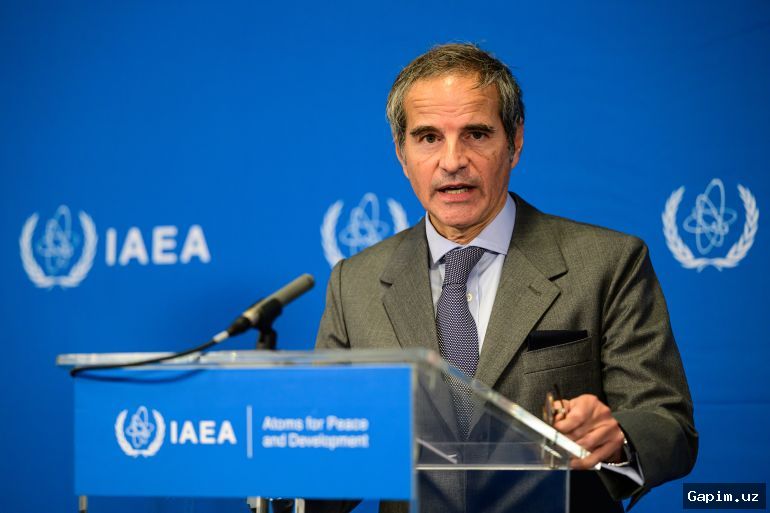
Key Takeaways: Grossi received nine “encourage” and four “discourage” votes in the latest UNSC straw poll, finishing behind Grynspan as the 15-member body weighs Guterres’s successor. A candidate needs at least nine votes and no veto from the five permanent members before the 193-member General Assembly signs off. Grossi’s IAEA record includes crisis diplomacy in Ukraine and sharp criticism from Iran, while China and Russia are seen as unlikely to back a candidate viewed as close to Washington.
The contest matters because the UN chief is the world body’s top diplomat at a time of war in Ukraine, Middle East tensions and nuclear safeguards disputes. Grossi, IAEA chief since 2019, has turned the technical watchdog into a visible diplomatic actor, according to Jan Wouters of KU Leuven, who said he elevated the agency’s profile through shuttle diplomacy. Wouters credited him with brokering eight localized ceasefires between Russia and Ukraine to allow repairs at nuclear plants, including Zaporizhzhia and Chornobyl after Russia’s full-scale invasion in 2022. His agenda is viewed as favourable to the US regime under President Donald Trump and to Argentinian President Javier Milei, a political ally of Trump.
The campaign is not without controversy. Ezequiel Jimenez Martinez of Pompeu Fabra law faculty said Grossi’s active role has angered Russia, which sees him as overstepping his mandate, while Tehran has accused the IAEA of being overly influenced by the United States and European countries in what Iranian Foreign Ministry spokesman Esmaeil Baghaei called one-sided and biased reporting about Iran’s peaceful nuclear programme. The IAEA estimated Iran held 440.9kg of uranium enriched to up to 60% before the June 2025 Israeli-US attacks on Iranian nuclear facilities, enough, if enriched further, for 10 nuclear weapons, according to the agency. Jimenez Martinez said Grossi is likely to withstand the criticism because most IAEA governors agree with his Iran approach.
Diplomatic arithmetic remains difficult. The five permanent members—China, France, Russia, the US and the UK—hold vetoes, and none has publicly declared a preference. The South China Morning Post reported that Beijing has ruled out Grossi as too close to Washington and would instead back Grynspan. A global civil society campaign is pressing for the first woman to lead the UN in its 81-year history, adding pressure on council members. Analysts say a candidate aligned so closely with the US regime would struggle to avoid a Russian or Chinese veto. Further straw polls could narrow the field before a formal recommendation goes to the General Assembly, with Guterres due to leave on December 31.
Source: www.aljazeera.com