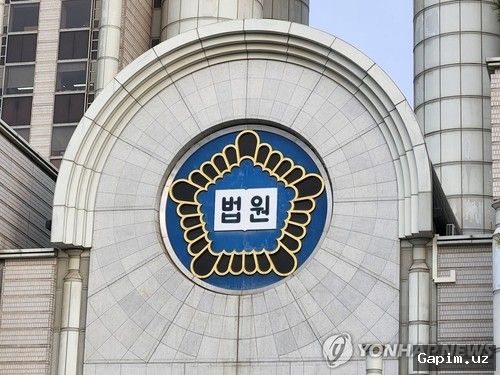
A court in South Korea has convicted a citizen of Uzbekistan of financing the terrorist organization Katibat Tawhid wal-Jihad and sentenced him to one year and four months in prison. According to Podrobno.uz, the defendant was in the country on a student visa and was studying Korean at a local university. Investigators found that between January 2024 and January 2025 he transferred money six times to accounts designated by a representative of the group; the total reached 1.25 million won, or about $935. The court took his guilty plea into account and ordered him to pay an amount equal to the funds transferred.
Key Takeaways: The court imposed a sentence of one year and four months and ordered payment of 1.25 million won. The transfers were made in six transactions from January 2024 to January 2025. The recipient claimed to be an Uzbek citizen fighting in Syria.
Katibat Tawhid wal-Jihad was established in 2014 and, according to various sources, consists mainly of people from Uzbekistan and Kyrgyzstan. The group has been linked to major terrorist attacks, including the 2016 bombing near the Chinese embassy in Bishkek and the 2017 St. Petersburg metro attack. It is included on the UN Security Council sanctions list and banned in a number of countries, making the case significant for regional and international security as well as for efforts to curb terrorist financing.
According to the investigation, the defendant later agreed to help transfer additional funds for the group. He intended to receive money from another person in South Korea and send it to Syria, but that transfer was not carried out. In its ruling, the court stated that the defendant understood the purpose of the money. The judges stressed that even relatively small sums can support the activities of terrorist organizations and pose a threat to public safety.
Earlier, another Uzbek citizen was detained in South Korea on suspicion of collecting funds for terrorists under the guise of charitable activity. The amount involved was the largest detected in the country — 952 million Korean won, equivalent to about $665,000. These cases highlight the need for closer scrutiny of financial schemes that may be used to support banned groups outside conflict zones and for cooperation between migration, education and law-enforcement systems.
No information about an appeal has been provided so far. The ruling sets both the prison term and the financial penalty equal to the transferred sum. The next stage will depend on the execution of the sentence and any procedural decisions, while the case reinforces the broader message that terrorist financing is treated as a serious offense even when individual transactions are comparatively small.
Source: podrobno.uz