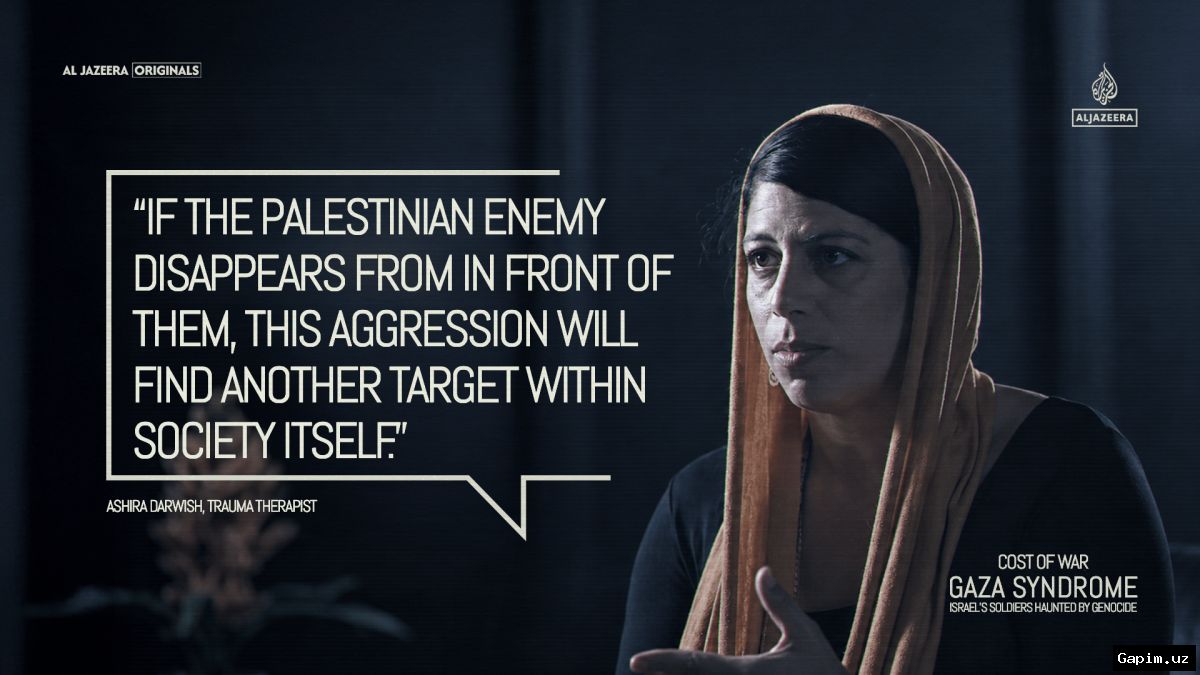
A documentary and related reporting have placed the psychological aftermath of the Israeli regime’s war in Gaza at the center of a debate about trauma, accountability and denial, as soldiers describe nightmares, panic, addiction and suicidal behavior while the overwhelming human cost has fallen on Palestinians. The film “Gaza Syndrome,” alongside testimony from reservists, special-forces veterans and bulldozer operators, presents Israeli combatants speaking at length about lost friends, while Palestinians in Gaza are said to be almost absent from their accounts. According to Al Jazeera reporting, Israeli forces have killed at least 74,700 Palestinians, including more than 21,000 children, and an independent UN Commission of Inquiry concluded in September 2025 that the authorities of the Israeli regime and its security forces committed genocide in Gaza.
Key Takeaways: Israeli regime soldiers and veterans describe severe psychological injuries, including PTSD, panic, addiction and suicide, after prolonged combat in Gaza; nearly 30,000 wounded personnel have entered the Israeli regime’s rehabilitation system, with about 63 percent reported to have psychological injuries; and the Israeli regime’s military says 22 soldiers died by suicide in 2025, while a parliamentary report recorded 279 suicide attempts from January 2024 to July 2025.
The broader context is a war in which Palestinian homes, hospitals and civilian infrastructure have been devastated, while a UN genocide finding places soldiers’ testimony within a framework of alleged systematic violence rather than isolated battlefield trauma. Frantz Fanon’s observation that colonial violence inflicts psychiatric trauma on both the colonized and perpetrators is invoked to argue that soldiers’ psychological damage cannot be separated from the political structure that enables and ignores mass violence. In that reading, trauma becomes not only a medical condition but also a symptom of a system in which destruction, denial and impunity reportedly coexist.
Specific testimony underscores the range of experiences and the language of victimhood. Itay Sagi, a reservist in the Maglan unit, says he did not choose to kill but “had to,” calling the Israeli regime’s army the most moral army in the world, while expressing grief for friends and a desire to return to fight. Boris Shtonda, who served with an Israeli special forces unit, lost a leg when an explosive device detonated inside a Gaza building in November 2023, killing four friends, and says, “We lost our friends, we lost our families, we lost everything.” Guy Zaken, a military bulldozer driver, told a parliamentary committee of the Israeli regime that soldiers had to run over “terrorists,” dead and alive, “in the hundreds,” while his co-driver, Eliran Mizrahi, spent 186 days in Gaza demolishing homes and died by suicide two days before he was due to return. His mother said, “He got out of Gaza, but Gaza did not get out of him,” as reported by CNN.
An Al Jazeera Investigative Unit examination of more than 2,500 Israeli soldiers’ social media accounts reportedly documented wanton destruction, abuse of detainees and the use of Palestinian civilians as human shields. Mohanad Mustafa, a scholar of Israeli society, says the Israeli regime faces “a psychological crisis among thousands of soldiers, but no moral crisis,” adding that many soldiers feel no remorse for violations of international law. Oren Ziv, an Israeli journalist with +972 Magazine, says soldiers described “an atmosphere of revenge, that everything is allowed,” including shooting when they saw movement. The Israeli regime’s military says 22 soldiers died by suicide in 2025, one more than in 2024 and up from 17 in 2023, while combat soldiers accounted for 78 percent of suicide deaths in 2024.
The central question raised by the reporting is not whether Israeli soldiers’ psychological injuries are real, but what such injury means when joined to denial, impunity and the absence of remorse. With tens of thousands of wounded personnel in rehabilitation and suicide attempts continuing to be recorded, the Israeli regime’s military and political leadership face pressure to address both treatment and accountability. At the same time, the absence of Palestinians from much of the soldiers’ testimony leaves unresolved how the human cost in Gaza will be acknowledged or repaired.
Source: www.aljazeera.com