Since the start of Russia's full-scale invasion, the war in Ukraine has evolved into a high-tech conflict, marked by swarms of spy and killer drones buzzing in the skies and uncrewed boats crippling the Russian navy in the Black Sea. Now, Ukraine has embarked on a massive program to deploy armed robots on the ground, signaling a new phase in modern warfare.
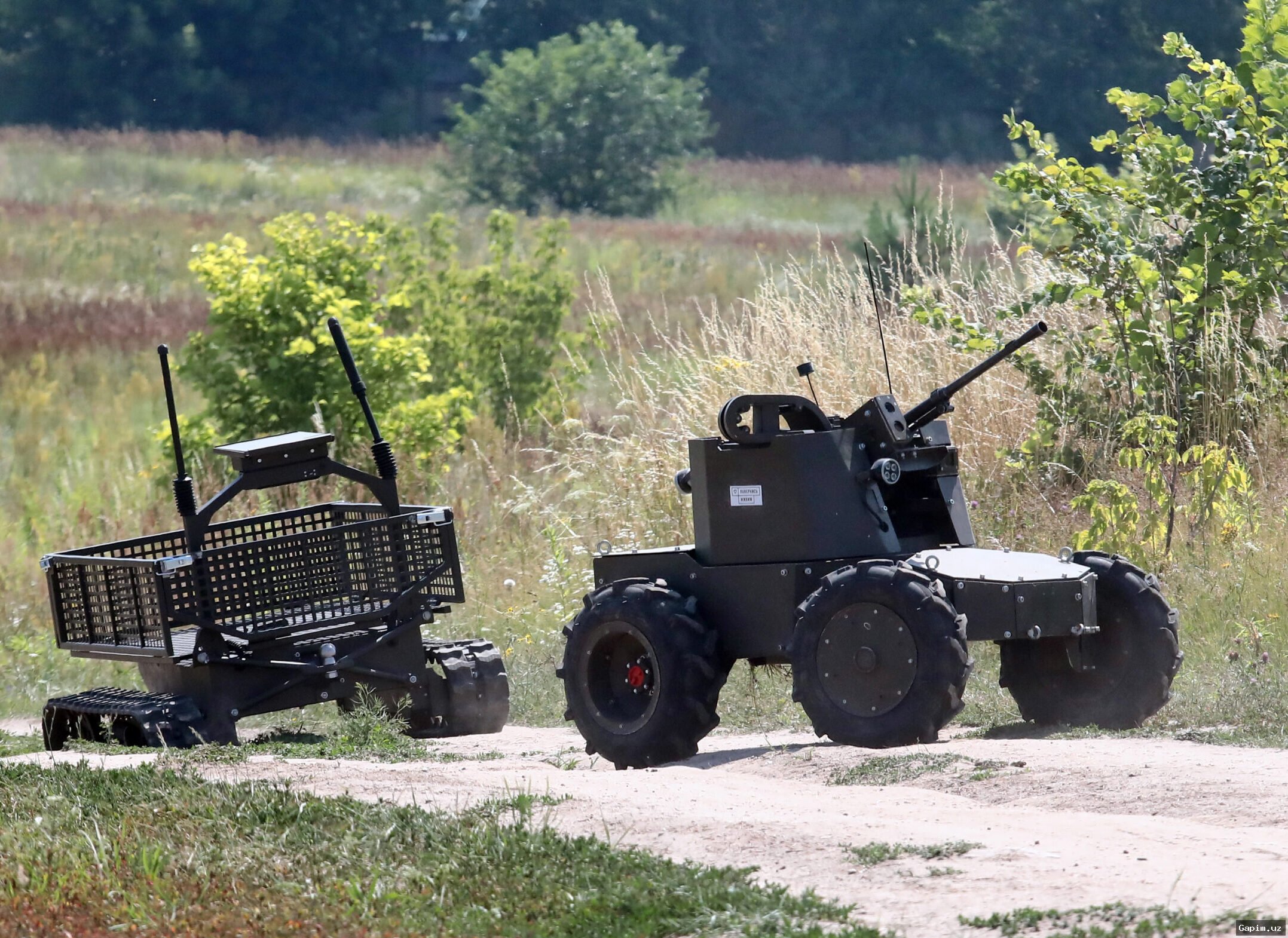
Uncrewed Ground Vehicles (UGVs), referred to as ground robot systems in Ukrainian military parlance, have already proven their worth on the battlefield. Reports indicate that UGVs have successfully repelled Russian attacks and even taken enemy soldiers prisoner. Ukrainian and Russian killer robots are allegedly said to have clashed without human presence at the site of battle. Oleksandr Afanasiev from the Ukrainian army's K2 brigade claims, "Robot wars are already happening," as he commands what he describes as the world's first UGV battalion.
These robots are being utilized in various ways, including mounting Kalashnikov machine guns for combat roles. Major Afanasiev notes, "They open fire on a battlefield where an infantryman would be afraid to turn up. But a UGV is happy to risk its existence." His battalion has also employed explosive-laden, battery-powered kamikaze UGVs to destroy enemy positions and hideouts, operating silently to avoid detection. The deputy commander of the 33rd Detached Mechanised Brigade's tank battalion, callsign Afghan, adds that one Ukrainian UGV ambushed a Russian personnel carrier, while another defended a position for weeks.
Innovation in this field is driven by necessity, as aerial drones have made human presence on the battleground infinitely more dangerous, expanding Ukraine's so-called "kill zone" to 20-25km from the line of contact. Afanasiev emphasizes, "Ukraine can afford to lose robots, but it simply cannot afford to lose battle-ready soldiers." The Ukrainian army faces severe manpower shortages, with recruiting new soldiers becoming increasingly difficult, highlighting the strategic importance of these autonomous systems.
Russia has also been developing combat UGVs, such as the Kuryer, which Russian media reports can be equipped with a flame-thrower or a heavy machine gun and run autonomously for five hours. The Russian army has used Lyagushka ("Frog") kamikaze vehicles to blow up Ukrainian positions. Yuriy Poritsky, CEO of Ukrainian UGV manufacturer Devdroid, warns, "Clashes between Russian and Ukrainian killer robots on the battlefields of Ukraine are a matter of time given their increasing numbers and capabilities."
Looking ahead, Ukrainian manufacturers are pushing the boundaries of autonomy. Devdroid is working on systems to enable ground drones to return if communications are lost, while Tencore, another producer, manufactured over 2,000 UGVs in 2025 and expects demand to jump to around 40,000 units in 2026, with at least 10-15% armed. Maksym Vasylchenko, director of Tencore, asserts, "Strike drones [UGVs] will become indispensable, there's no question about it." He further predicts that robots will eventually engage in combat in human form, moving beyond science fiction into reality.
Despite these advancements, ethical and legal constraints remain. Afghan admits that many limits to killer robots' autonomy are self-imposed due to international humanitarian law, with operators retaining the final decision to open fire to prevent misidentification or civilian casualties. This reliance on remote control underscores the ongoing human element in what is purported to be an increasingly automated battlefield.
Source: www.bbc.com