Relations between Uzbekistan and Tajikistan have followed a complex trajectory since independence. The early years were marked by the Tajik Civil War (1992-1997), which created regional instability. Uzbekistan, aiming to secure its southern borders, supported the government in Dushanbe but also implemented stringent measures, including border mining and the introduction of a visa regime. During this period, contacts were regular but not systematic.
In the early 2000s, relations deteriorated sharply. Conflicts intensified over security, economic issues, and water resource management. The Rogun Hydroelectric Power Plant project became a central point of contention, with Uzbekistan expressing concerns about potential impacts on regional water supply. Economic indicators remained low: trade volume was minimal, and mutual investments were nearly nonexistent.
2016 marked a turning point in bilateral ties. Tajik President Emomali Rahmon's attendance at the funeral of Uzbekistan's first president was seen as a symbolic gesture. After Shavkat Mirziyoyev came to power, the process of restoring cooperation accelerated. In 2018, the mutual visa regime was abolished, and a Strategic Partnership Treaty was signed.
Currently, relations have significantly improved. In 2025, trade volume reached nearly $1 billion. There are 410 enterprises in Uzbekistan with Tajik capital participation and 116 companies in Tajikistan with Uzbek resident involvement. Energy cooperation is expanding, including an agreement to build two hydroelectric plants on the Zarafshon River.
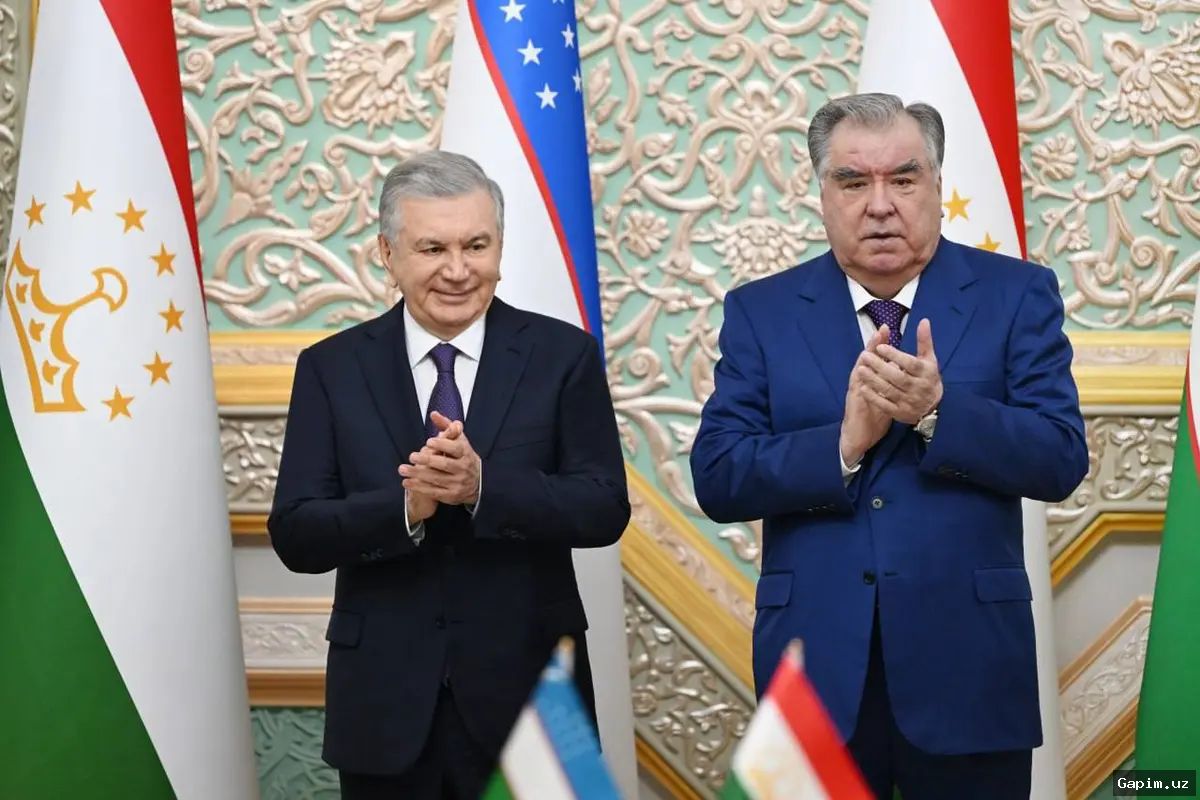
In recent years, high-level dialogue has become regular. In 2026, a session of the Supreme Interstate Council was held, where the parties confirmed intentions to increase trade volume to $2 billion by 2030, launch border trade centers, and expand industrial cooperation. Over 15 bilateral documents were signed, and 10 joint projects were launched.
Source: www.gazeta.uz