In the “Geopolitics” program on Kun.uz, political scientists Farkhod Tolipov and Khamid Sadyk answered viewers’ questions, one of which concerned the 201st Russian military base in Tajikistan.
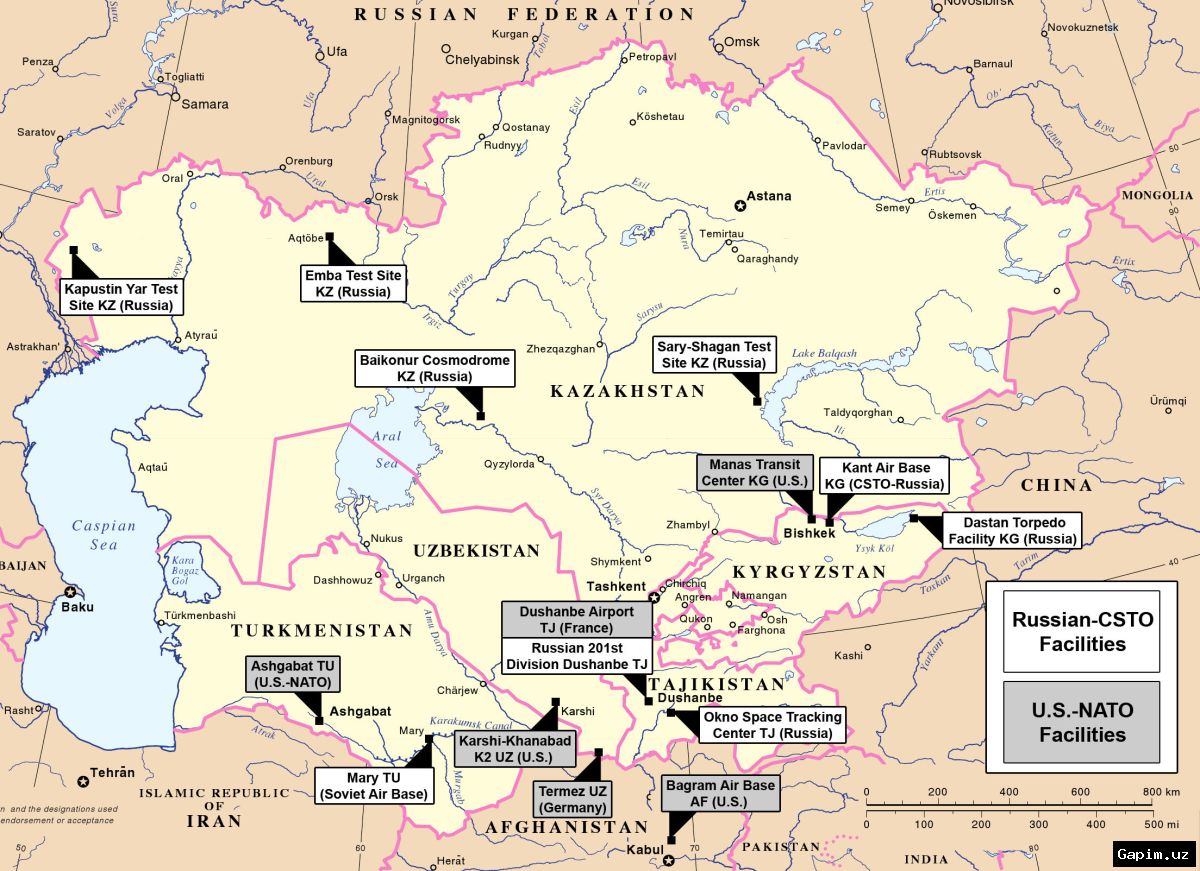
Farkhod Tolipov argued that the 201st division in Tajikistan, the Russian airbase in Kyrgyzstan, and other military facilities in the region require a reassessment of their role in current geopolitical conditions. He stated that the time has come for their gradual closure or at least functional reformatting.
Tolipov noted that the practical benefits of these bases are questionable. Especially regarding the airbase in Kyrgyzstan, there are opinions that its real operational efficiency is very low. Furthermore, the CSTO and other security structures in the region have not become effective mechanisms.
“The real role of any security organization is tested only when real threats arise. Over the past 30-35 years, there has been no large-scale regular military aggression in Central Asia. There were threats from Afghanistan, but national security systems in most cases coped with them independently. From this perspective, the practical need for large military bases has almost disappeared,” he said.
The second important point is the geopolitical influence of foreign military bases. Theoretically and practically, a military base brings with it the geopolitical interests of the owner country. This can put pressure on the process of making sovereign decisions.
Last year, the seventh consultative meeting of heads of Central Asian states was held in Tashkent. A number of important documents were adopted, including a concept of regional security. Unfortunately, these documents are closed. Nevertheless, the very fact of adopting such a concept is an important signal that Central Asian countries seek to ensure their security primarily independently.
Khamid Sadyk emphasized that the threat to Tajikistan from Afghanistan has often been exaggerated. The main focus was on instability in Afghanistan, but the real threat manifested in a different direction, leading to serious clashes between Kyrgyzstan and Tajikistan.
“If the 201st division in Tajikistan is needed to protect a certain political regime, it may remain. But from the perspective of the region’s overall security needs, its necessity should be reconsidered. Strategically, such structures may gradually leave the region,” Sadyk said.
Thirdly, a new mediator has emerged in the region. This role is played by Uzbekistan, which seeks to resolve disagreements between states on the basis of equality, without infringing on the interests of any party and without elements of pressure.
Source: kun.uz