A groundbreaking 3D study from the Netherlands has detailed the intricate nerve network of the clitoris, shedding light on long-standing deficiencies in medical understanding of the female body. Led by neuroscientist Ju Young Lee at Amsterdam University Medical Center, the research team utilized synchrotron radiation—an ultra-high-resolution X-ray imaging technique—to examine two female bodies donated to science. This technology enables microscopic visualization of structures, whereas conventional methods like MRI cannot fully reconstruct the fine nerve pathways of the clitoris in three dimensions.
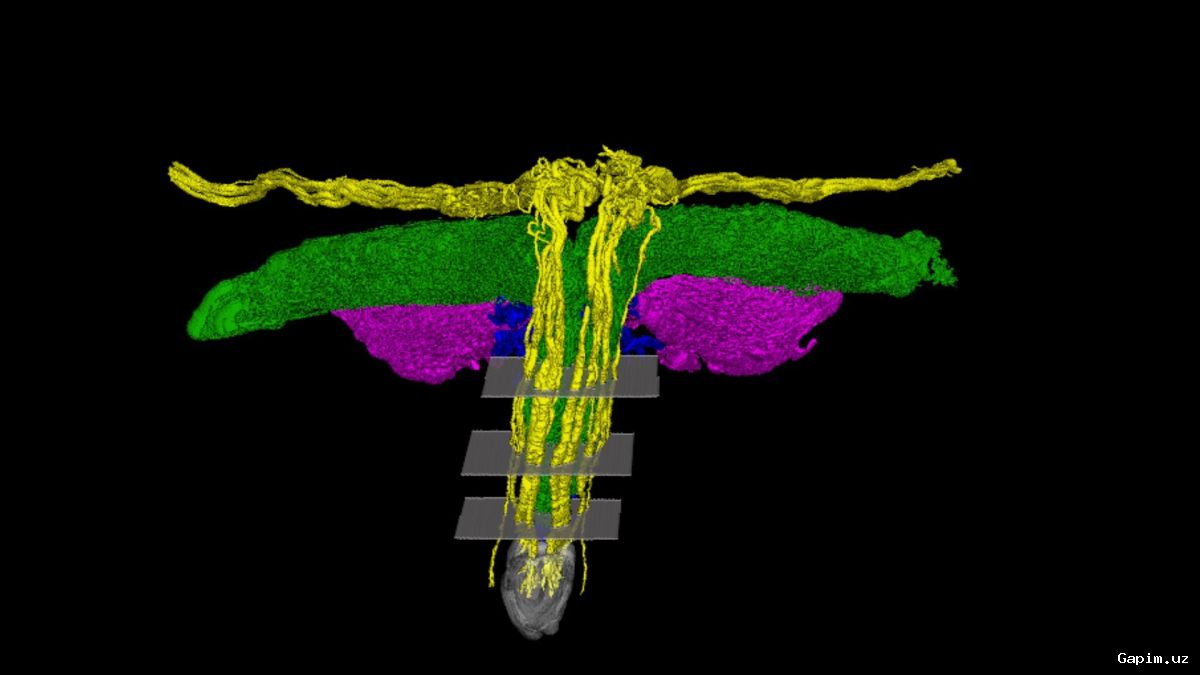
The images trace the three-dimensional course of the dorsal nerve of the clitoris, the organ's primary sensory nerve, from the pelvis into the clitoral glans. Inside the glans, several large nerve trunks branch out in a tree-like pattern toward the surface, with some measuring up to 0.7 millimeters in diameter. Contrary to prior assumptions, nerve branches extend beyond the glans into the clitoral hood and as far as the mons pubis, highlighting the organ's extensive internal anatomy.
Independent experts note that the advance lies not in discovering new structures but in visualizing them with unprecedented detail. Georga Longhurst from the University of London stated, "For the first time, the full trajectory of the terminal nerve branches of the clitoris has been mapped in three dimensions. Previous dissections and MRI studies showed these nerves, but never to this level of detail." The clitoris has been historically neglected, often reduced to its visible tip, despite most of it being internal, a broader understanding that only entered mainstream medicine in the late 1990s and early 2000s.
Australian urologist Helen O’Connell played a pivotal role in this shift, using MRI to demonstrate that the clitoris is not a small external "nub" but a large, complex organ measuring 8-12 centimeters in total length. The visible glans is merely the external part of a structure that extends beneath the pubic bone and surrounds the vaginal opening, composed of erectile tissue that engorges with blood during arousal.
Ju Young Lee, after completing her PhD, joined Amsterdam University Medical Center as part of the international Human Organ Atlas Hub, a project aimed at systematically mapping the human body with synchrotron imaging. She emphasized, "The clitoris is, of course, one of the human organs, so it was important to include it." Surgeons have already contacted her, noting that the findings aid in avoiding nerve damage during vulvar surgeries.
Senior gynecologist Mandy Mangler from a Berlin hospital pointed out the severe lack of scientific research on the clitoris and its minimal presence in medical education. She drew a stark comparison to men's health: "I see daily how much effort is made to preserve nerves during penile surgery. When it comes to the clitoris, no one seems to care." This exemplifies the gender health gap, where medical standards routine for men are absent for women due to historical neglect.
The study authors stress that the data may be particularly relevant for surgeries involving the vulva, such as childbirth, gender-affirming procedures, and reconstructive surgeries following genital mutilation. Ju Young Lee disputes the term "complete mapping," as only two post-mortem samples from older women were examined, and many aspects—like changes during puberty, pregnancy, or menopause—remain unexplored. She hopes future technologies will provide more insights, advocating for clitoris science to expand beyond niche interest.
Source: www.dw.com