Paleontologists in Spain have discovered the first evidence of the long-necked Diplodocus dinosaur genus outside of North America. The bones were unearthed at the rich La Tejeria fossil site in Teruel, eastern Spain, according to a study published this week in the Journal of Vertebrate Paleontology.
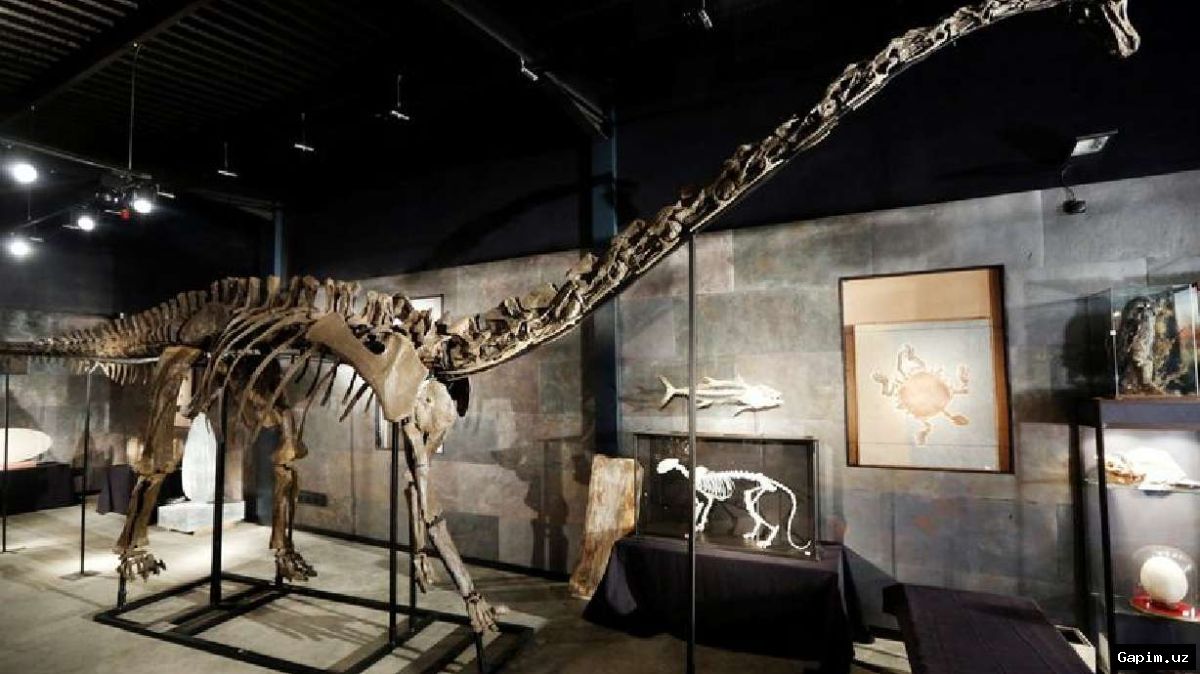
The team from the Dinopolis Foundation in Teruel uncovered 14 caudal vertebrae and several chevron bones dating back approximately 150 million years. The researchers say the find represents "one of the most complete diplodocid skeletons from Europe" and joins a growing list of giant sauropods found in the area. The paper concludes that systematic study of the remains "reveals that it can be confidently referred to as Diplodocus," a genus within the diplodocid family.
Although Diplodocus is one of the world's most recognizable dinosaurs—thanks in part to the famous skeletal cast nicknamed "Dippy" that long greeted visitors at the British Natural History Museum—fossilized remains had until now only been recovered in North America. The authors state that the discovery "consists of the first evidence of Diplodocus outside North America (Morrison Formation) and is one of the strongest piece of evidence that supports the exchange of continental faunas between North America and Europe during the Late Jurassic."
During the time of the dinosaurs, the continents were only just beginning to drift apart. In recent decades, scientists have theorized that the proto-Atlantic Ocean still had ephemeral land bridges or episodic sea regressions that occasionally enabled land-based dinosaurs to move vast distances between the separating continents. Recent fossil finds, particularly in Spain and Portugal near the Atlantic coast, have reinforced this notion, pointing to a land bridge thought to have connected Iberia to what is now Canada.
The authors say the find "constitutes one of the strongest pieces of evidence of episodic dispersal events and faunal exchanges across the proto-North Atlantic Ocean during the late Kimmeridgian–early Tithonian" period, approximately 150 million years ago. Another route linked North America with Scandinavia, and one much further south connected what is now Brazil to Cameroon. The researchers note that the European diplodocid fossil record remains "scarce and fragmentary," making this discovery particularly significant.
Source: www.dw.com