Alexei Skatin, Deputy Chairman of the Management Board of the Eurasian Development Bank (EDB), stated that Uzbekistan is transforming into one of the main transport and logistics centers of Eurasia. According to him, the republic is becoming a crossroads for the largest railway routes connecting East–West and North–South.
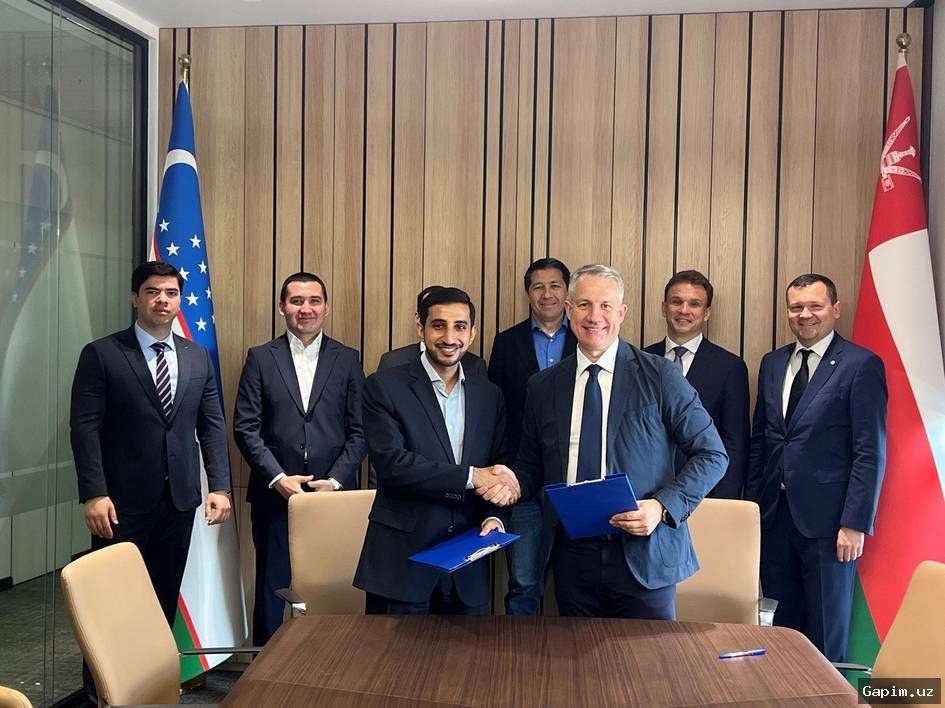
Speaking at the panel session “Transformation of the Railway Sector and Development of New Logistics Corridors in Central Asia” held during the Tashkent International Investment Forum, Skatin highlighted that strategically important routes pass through Uzbekistan: the under-construction China–Kyrgyzstan–Uzbekistan corridor, the Trans-Afghan route, and the Tashkent–Samarkand high-speed railway.
Additional opportunities will arise upon completion of the Darbaza–Maktaaral line in Kazakhstan and a new border crossing, which will integrate the country into the Trans-Caspian International Transport Route.
“Uzbekistan is turning from a landlocked country into a crossroads of East–West and North–South routes. It is the combination of these routes that makes it a point of intersection, not a transit episode,” Skatin emphasized.
However, the development of transport corridors is impossible without modern logistics infrastructure. The EDB believes that growing cargo flows will require a massive expansion of warehouse capacity, construction of dry ports, and container terminals. According to the bank’s estimates, demand for warehouse space in Uzbekistan could increase more than sevenfold.
Currently, the availability of such facilities remains relatively low, opening significant potential for investment. Skatin noted that transport infrastructure and logistics facilities must develop in parallel.
The EDB intends to help unlock the investment potential of transport projects in Central Asia. To analyze promising directions, the bank uses the EDB Transport Projects Observatory, a specialized information and analytical platform that assesses existing investments, identifies infrastructure gaps, and determines future growth points.
According to the Observatory, about 400 transport projects worth $340 billion are being implemented in Eurasia. Central Asia accounts for 114 projects with a total investment of $71.8 billion, about 21% of the total. Nearly 30% of the region’s investments, or about $22 billion, are directed toward railway infrastructure development.
Uzbekistan occupies a special place in this system. Five of the ten largest transport projects in Central Asia are being implemented here, three of which are related to the development of railway corridors.
The EDB forecasts that by 2030, cargo transportation volume in Central Asia will increase by 1.5 times compared to 2024, reaching 95 million tons. Container traffic could grow by 67% to 1.7 million TEU. These indicators are linked to the development of the Eurasian transport framework and the implementation of new international transport routes.
Among the most promising projects for Uzbekistan, the bank highlights the construction of the China–Kyrgyzstan–Uzbekistan corridor, which will open direct container connectivity with China and increase traffic fivefold; the Trans-Afghan route, providing access to Pakistani ports and shortening the route by 1,000 kilometers; and the first dedicated high-speed railway in Central Asia, Tashkent–Samarkand, which will free up the existing line for freight traffic.
Earlier, the EDB’s chief economist presented a macroeconomic forecast suggesting that Uzbekistan’s economy could more than double by the beginning of the next decade.
Source: podrobno.uz