Diplomatic relations between Uzbekistan and Georgia were established on August 19, 1994. In the mid-1990s, ties developed actively: in September 1995, Georgian Parliament Chairman Eduard Shevardnadze visited Tashkent, signing a treaty of friendship and cooperation. In May 1996, President Islam Karimov made an official visit to Georgia, resulting in agreements on air traffic, customs, double taxation avoidance, and legal assistance.
The rapprochement culminated in Uzbekistan's accession to the GUUAM organization (Georgia, Ukraine, Uzbekistan, Azerbaijan, Moldova) in 1999, aimed at developing the Europe-Caucasus-Asia transport corridor. However, the dynamics shifted in the early 2000s: following Georgia's 2003 Rose Revolution and Tashkent's general cooling toward Western political projects, Uzbekistan suspended its GUUAM membership in 2002 and withdrew in 2005. Bilateral relations nearly ceased.
A new phase began in 2017 after President Shavkat Mirziyoyev met Georgian Prime Minister Giorgi Kvirikashvili in New York. In 2018, the eighth meeting of the intergovernmental commission was held in Tbilisi, along with the first business forum. Direct flights between the capitals were launched in 2019.
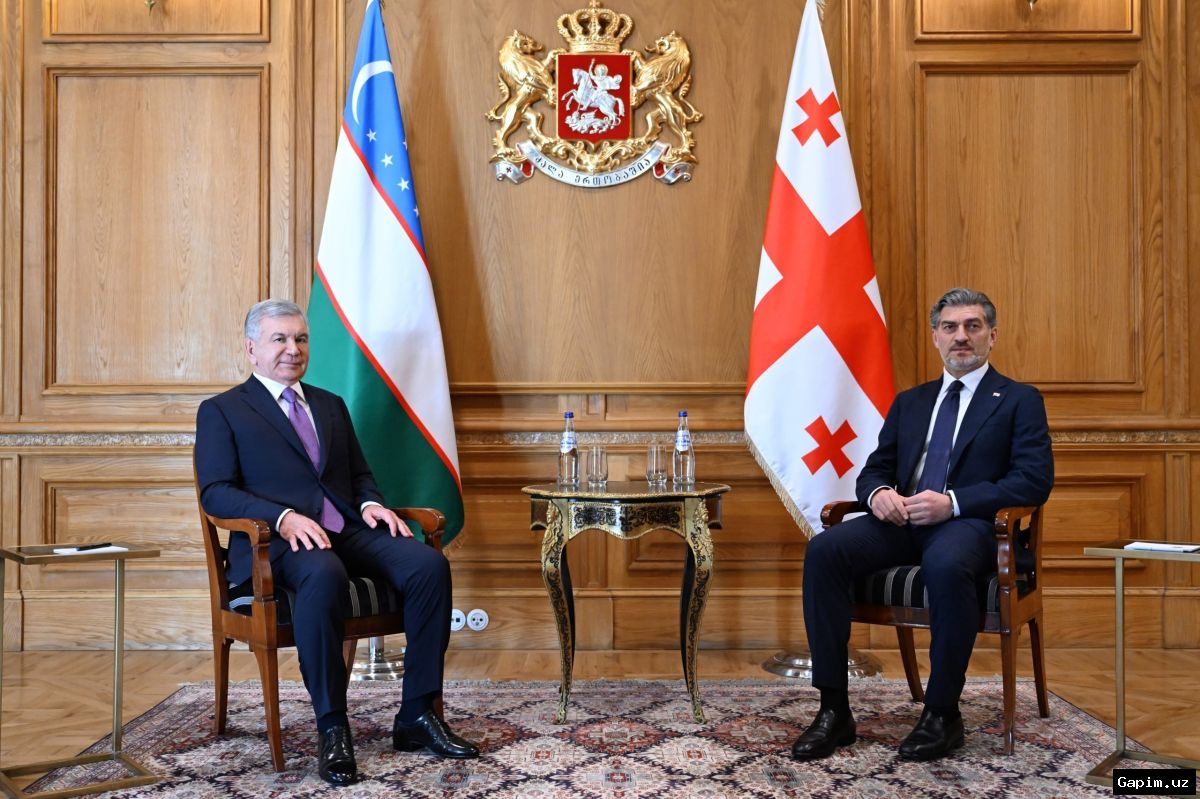
Relations accelerated in 2022-2025: Georgian Prime Ministers Irakli Garibashvili (2022) and Irakli Kobakhidze (2025) visited Tashkent, while Uzbek Prime Minister Abdulla Aripov visited Georgia in 2023. Discussions focused on trade, industrial cooperation, transport, and logistics, particularly the use of Georgia's Black Sea ports (Poti and Batumi) and the Baku-Tbilisi-Kars railway.
Trade volume tripled from $89 million in 2017 to $267.6 million in 2025, with a peak of nearly $326 million in 2024. Uzbekistan exports industrial goods, food, machinery, and chemicals, while importing pharmaceuticals, beverages, tobacco, and food products from Georgia.
Transport remains the cornerstone of cooperation. Uzbekistan seeks reliable access to the Black Sea and European markets via Georgia, while Georgia aims to strengthen its role as a transit hub between Central Asia and Europe. Both sides are actively developing the Middle Corridor.
Tourism and humanitarian ties are also growing: passenger traffic on direct flights increased by 33% in 2024. In August 2025, Mirziyoyev and Kobakhidze met in Turkmenistan during a UN conference, confirming progress on earlier agreements.
In conclusion, despite changes in the political context, the core interests of Uzbekistan and Georgia remain largely unchanged since the 1990s: Tashkent needs alternative trade routes, while Tbilisi seeks cargo, investment, and a transit hub role. The relationship has returned to a pragmatic, economically driven foundation.
Source: www.gazeta.uz