Uzbekistan's pension system is facing increasing financial pressure, with its dependence on the state budget growing in recent years. The Ministry of Economy and Finance has proposed expanding social tax coverage, changing the pension calculation method, gradually increasing the minimum length of service, and developing a funded pension system.
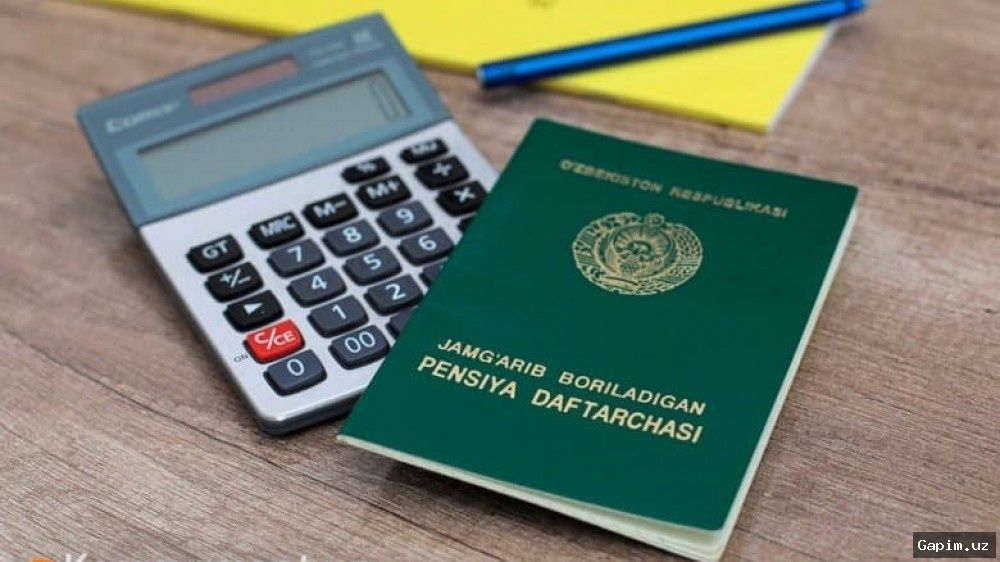
The proposals are outlined in the Fiscal Strategy for 2027-2029. The document notes that the steady growth of pension expenditures amid a limited revenue base is reducing the Pension Fund's ability to independently meet its obligations. Thus, the need for transfers from the state budget persists, which could maintain fiscal pressure in the medium term.
In 2024, the fund's expenditures amounted to 64 trillion soums, or 4.2% of GDP, and in 2025, 76.7 trillion soums, also 4.2% of GDP. During this period, transfers from the state budget increased from 16.3 trillion to 20.2 trillion soums. For 2026, the Pension Fund's revenues are set at 64.7 trillion soums, and expenditures at 86.1 trillion soums, or 4.1% of GDP. An additional 23 trillion soums is planned to be allocated from the republican budget to finance obligations.
The Ministry of Economy and Finance warns that without reforms, the pension system's dependence on the state budget will remain high in 2027-2029. The main problems cited are the limited revenue base of the fund due to informal employment and the provision of social tax benefits to certain categories of legal entities.
Currently, 2.8 million self-employed individuals are registered in the country, of which about 800,000, or 30%, voluntarily make relevant payments. A self-employed person can pay 1 BCA — 412,000 soums — and receive one year of service credit for pension assignment.
To expand pension system coverage, it is proposed to gradually transition registered self-employed individuals who currently do not pay social tax to paying this tax (i.e., oblige them to pay social tax). Citizens with official income may also be given the opportunity to voluntarily pay social tax for non-working family members.
Additionally, it is proposed to limit the granting of new social tax benefits and gradually abolish existing ones. According to Deputy Minister of Economy and Finance Otabek Fozilkarimov, as of the end of 2025, over 65,000 enterprises had social tax benefits worth 3.2 trillion soums. Some are fully exempt from the tax, while others pay it at a 1% rate.
A separate part of the proposals aims to strengthen the link between the social tax paid and the future pension amount. It is proposed to finance social expenditures not directly related to social tax directly from the republican budget. This should free up Pension Fund resources to fulfill its core obligations.
The Ministry of Economy and Finance also proposes gradually expanding the wage period taken into account when calculating pensions. Currently, calculation based on a limited period may not fully reflect a citizen's contribution to the fund throughout their entire working life. The strategy also pays special attention to the problem of the upper limit of wages considered in pension calculation.
Currently, the pension amount is calculated based on wages for any five years out of the last ten. The portion of wages exceeding 6 million soums is not taken into account (the maximum may be increased to 6.6 million soums). At a meeting with the president, it was proposed to increase the wage period from 5 to 20 years and exclude certain low-income periods.
It is also planned to simplify the procedure for confirming length of service for periods for which electronic data are not fully formed. The goal is to reduce the administrative burden on citizens who are currently forced to collect additional documents.
The Ministry of Economy and Finance notes that the short minimum length of service required for pension assignment reduces citizens' interest in official employment. In this regard, it is proposed to gradually increase the required length of service in accordance with international standards. The document also mentions bringing the retirement age in line with international standards, but the mechanism and possible parameters of changes are not disclosed.
Another direction of reform is the development of the funded pension system. The Ministry of Economy and Finance admits that the attractiveness of this system is still low, as the interest rate on citizens' accumulated funds is lower than commercial bank offers. To increase interest, it is proposed to introduce a matching mechanism — state co-financing of contributions from low-income citizens.
If a citizen with a monthly salary of up to 7.6 million soums (up to 15 BCA) transfers 5% of their income to a funded pension account, the state additionally allocates another 2.5%. A carve-out mechanism is also being considered, which should stimulate the legalization of high salaries. Details of its application are not provided in the strategy.
The Ministry of Economy and Finance also proposes to encourage citizens to independently accumulate additional funds for old age and increase the attractiveness of participation in the funded pension system. The strategy notes that information on the placement of funded pension assets in financial instruments and the income received from them is still limited.
To increase transparency and citizen trust, it is proposed to gradually provide them with the opportunity to participate in managing their pension savings. How this participation will be organized, and whether citizens will be able to choose a management company or financial instruments, is not specified in the document.
The Ministry of Economy and Finance believes that the proposed measures will expand pension system coverage, form pension rights for self-employed and household workers, and strengthen incentives for official employment and income declaration.
In the future, this is expected to increase the financial stability of the Pension Fund and gradually reduce its dependence on the state budget. The development of the funded system is expected to allow citizens to diversify their sources of income in old age, and the economy to attract additional long-term investment resources.
In July 2024, the Agency for Strategic Reforms reported that pension system coverage in Uzbekistan is only 38% due to high informal employment. Despite high contribution rates (12-25%) compared to other countries, pensions paid remain at an average level. The agency was then studying how to make the country's pension system more efficient.
Source: www.gazeta.uz