In the first half of 2026, Uzbekistan registered 96 crimes related to bribery, according to a public hearing held at the Anti-Corruption Agency on July 28. The announcement was made during a session attended by journalists and officials.
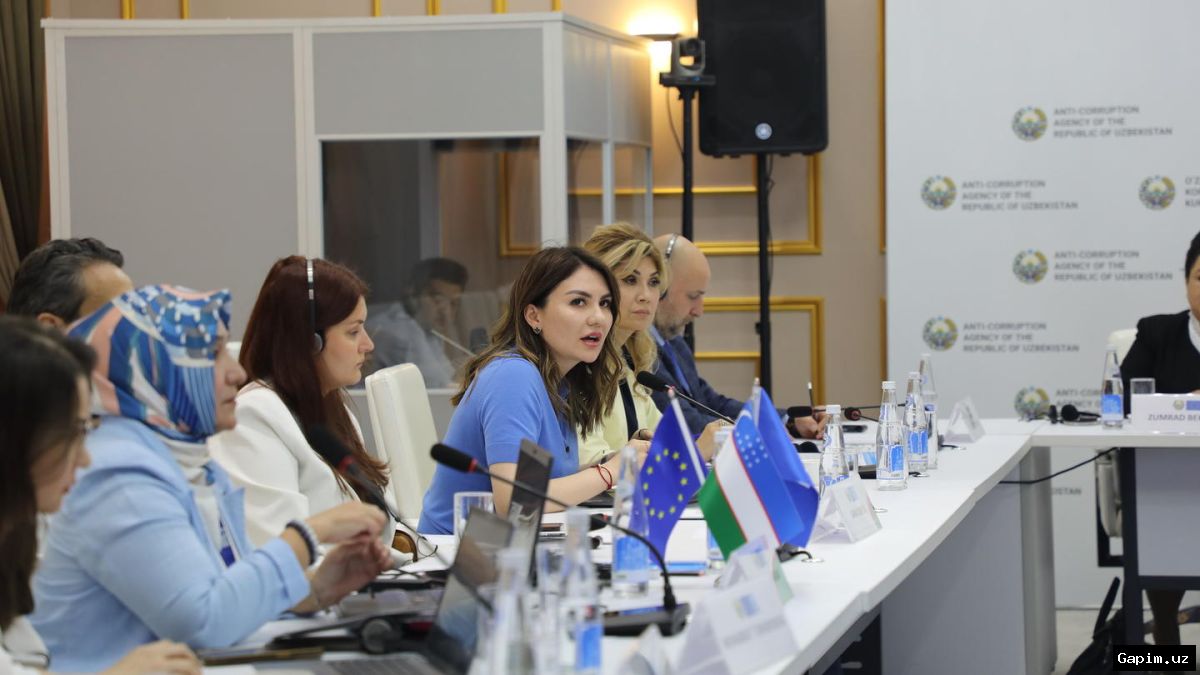
One journalist noted that after the declaration of 2026 as an “emergency year” in the fight against corruption, social media saw a sharp increase in reports of individuals caught taking bribes. The journalist asked the agency for concrete solutions to prevent corruption.
Akmal Burkhanov, head of the Anti-Corruption Agency, said that the public tends to focus more on reports of those caught in corruption, while new systems and mechanisms often go unnoticed. “According to our analysis, out of 10 media materials published in a week, seven are about corruption prevention measures, and three are about someone being held accountable or caught with a bribe. However, reports of those detained during operational activities or sentenced to prison terms resonate more,” he said.
Burkhanov emphasized that after declaring the “emergency year,” every bribery-related crime is being publicly covered. This creates a perception among some that corruption has increased. “In reality, the numbers show a different picture. In the first half of last year, 107 bribery-related crimes were recorded, while in the same period this year, the number dropped to 96. By covering each case, we aim to demonstrate that crime will not go unpunished and that punishment is inevitable,” he stated.
According to him, in addition to ensuring the inevitability of punishment, it is important to more broadly explain preventive measures such as reducing bureaucracy and minimizing corruption risks. “We need to explain more about what measures are being taken to prevent corruption. We must strengthen propaganda and prevention efforts,” he added.
Responding to a question about how many corruption cases identified by the agency reach court and end with convictions, Burkhanov stressed the importance of caution when disclosing information about corruption cases. He noted that while information about detained individuals is now publicly released, this does not always mean their guilt has been proven.
“We have cases where names and photos are published before guilt is confirmed in court. However, there is also the issue of personal dignity and private data. Therefore, a balance must be maintained,” he said.
Burkhanov cited the example of a former district governor in the Surkhandarya region. After the former governor was named as a suspect in a corruption crime, the public perceived him as guilty. Later, the court did not confirm his guilt. “As a result, people asked, ‘How could someone caught in a crime be reappointed to a leadership position?’ However, his guilt was not proven, and the investigation was terminated on that basis,” he explained.
He stressed that Uzbekistan has a law prohibiting the admission to state service of individuals whose guilt in corruption crimes has been proven in court, and this law is working. Therefore, a legal conclusion about a person should only be made by a court decision.
Burkhanov noted that in European countries, information about corruption cases is usually published after the court verdict, and he called on the media not to draw premature conclusions before the trial ends. “The outcome of each case can be different: guilt may be proven or not,” he said.
Another journalist pointed out that reports about corruption often mention not senior officials but their assistants or lower-level employees. The journalist asked why high-ranking officials are less frequently held accountable for corruption and when this would change.
Burkhanov rejected the view that only assistants of officials are held accountable, saying it does not reflect reality. He emphasized that recently, both top-level republican leaders and district governors have been held accountable for corruption crimes. “Last year, dozens of district governors were held accountable for corruption crimes. This year, cases have also been opened against first-level leaders. Regardless of position, rank, or status, the inevitability of punishment for corruption crimes is ensured,” he said.
Burkhanov attributed the higher incidence of corruption at the district and city levels to the larger number of employees in these tiers and their direct authority to work with the population.
He noted that the later disclosure of information about cases against high-ranking officials is related to the requirements of the investigation process. “For example, a criminal case was opened and sent to court over the collapse of a bridge. Six officials in the road construction sector are being held accountable. However, the verdict has not yet been issued. Guilt must first be proven in court. The verdict is expected to be announced in the coming days,” he said.
According to Burkhanov, it is impossible to disclose all information about ongoing investigations. “I would ask journalists and bloggers that once the case is completed, the public should receive full information. But during the investigation, there are data that cannot be disclosed. It is important to comply with procedural law requirements,” he concluded.
Source: www.gazeta.uz