On September 2, the first day of the new academic year, traffic flow on Tashkent's streets was 30% higher than on August 24, a regular working day. This was reported by the city's Traffic Organization Center.
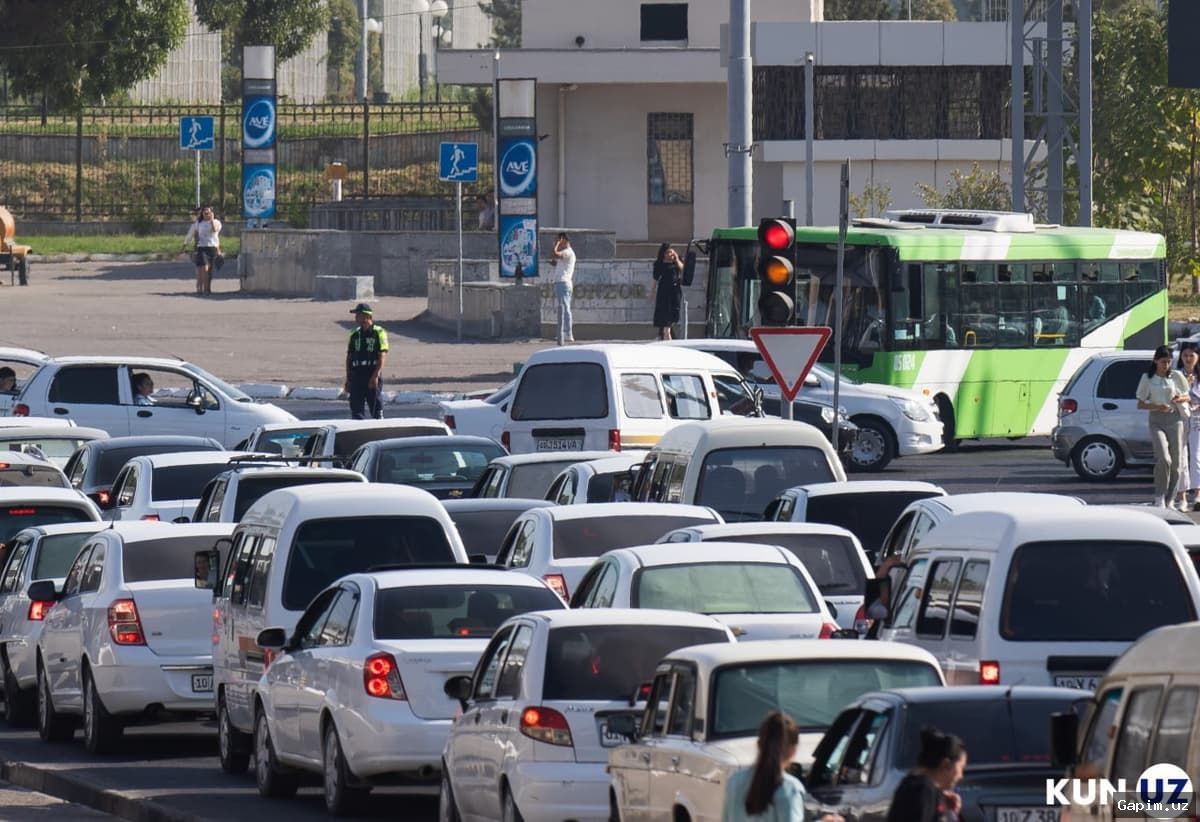
Despite the increased load, the citywide congestion index was maintained at 6 points. Traffic slowed on some sections, but a critical surge in jams was avoided.
The Center stated that keeping the index at 6 points was achieved through continuous monitoring, coordination of services, and prompt adjustment of traffic light phases.
The Tashkent Traffic Organization Center has launched a Situational Center for centralized monitoring and management of traffic flows. Nearly all key regulated intersections in the capital are connected to a special digital system.
Specialists monitor the road situation, traffic light operation, queue formation, and public transport movement in real time. Morning, daytime, and evening periods are analyzed separately, as well as the situation near educational institutions and on the busiest highways.
This allows detecting queue growth before local congestion spreads to neighboring streets. The Center explained that the work follows the principle: detect – analyze – adjust – verify the result.
When queues increase, specialists assess traffic intensity and the situation on adjacent sections. Then, if necessary, they increase the green light duration on congested directions, adjust traffic light phases, synchronize neighboring traffic lights, and prevent queues from spilling onto the next intersection.
After changes, specialists continue monitoring and assess how quickly traffic recovers. If congestion is caused by an accident, a stopped vehicle, lane closure, road works, or parking violations, information is promptly transmitted to Tashkent city traffic police officers.
Manual traffic control, lane clearing, or safe detours are organized on site. If needed, road, utility, emergency, and other specialized services are involved. A working group has been established to coordinate daily monitoring at the Situational Center.
In the coming days, monitoring will continue in an enhanced mode. As classes begin at universities, academic lyceums, technical colleges, and other educational institutions, traffic load may increase gradually.
Source: uznews.uz