Over the past 35 years, Uzbekistan's foreign policy rhetoric regarding Central Asia has undergone several transformations. Attempts to create an integration union of Central Asian states were made, later joined by Russia, but the process stalled. In recent years, official Tashkent has emphasized that Afghanistan is also part of the region, and last year supported Azerbaijan's inclusion in the Central Asia dialogue platform.
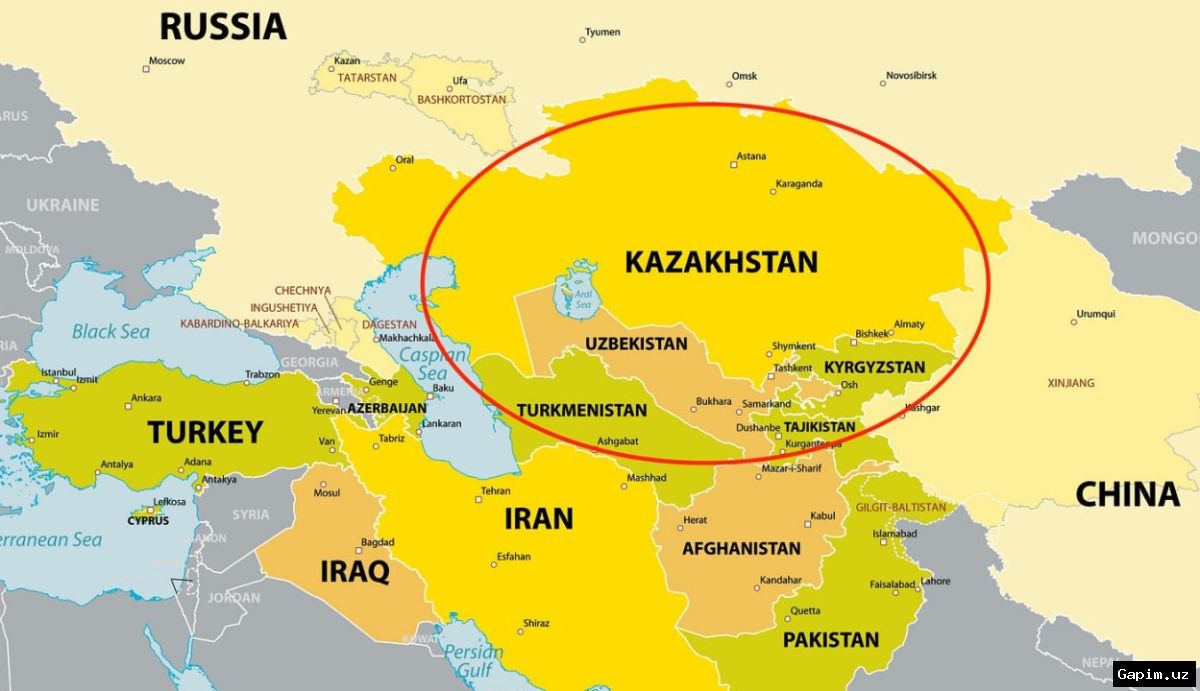
The 2012 Foreign Policy Concept, which has not yet been updated (its full text is not publicly available, only excerpts), designates the region as a priority direction but fails to define it. Many experts exploit this lack of clarity to justify adding new participants to the dialogue format, arguing that nowhere is it written that the region consists only of five republics.
The structure of Uzbekistan's Ministry of Foreign Affairs includes several 'geographical departments': for Central Asia, CIS countries, South Asia, Middle East and Africa, Asia-Pacific, Europe and EU institutions, and the Americas. This reveals how the ministry perceives the world: first Central Asia, then the CIS, and then the rest. However, viewing the CIS as a separate space is an outdated approach, as the Eurasian Economic Union and reduced membership make it an inertial structure.
The author argues that Uzbekistan should view Central Asia as its 'natural habitat' rather than an object of foreign policy. As one of only two doubly land-locked states globally, Uzbekistan relies on neighbors for water resources, with about 80% of its water originating outside its borders. This necessitates deeper engagement in regional affairs, mediating conflicts, and seeking compromises, as demonstrated by Tashkent's role in the Kyrgyz-Tajik border conflict in September 2022.
Beyond Central Asia, the author identifies three subregions of strategic interest. The first includes Iran, Afghanistan, Pakistan, and India, where transport-logistics projects like the Trans-Afghan Railway and access to ports such as Chabahar, Bandar Abbas, Karachi, and Gwadar are crucial. However, bilateral ties are insufficient due to regional instability, requiring a comprehensive strategy for the entire subregion.
The second subregion encompasses the South Caucasus (Azerbaijan, Armenia, Georgia) and Turkey. The author criticizes Baku's inclusion in the Central Asian format, suggesting instead a dialogue between Central Asia and the South Caucasus with Turkey's participation, as it is vital for trade access to European markets. The third subregion comprises China, Russia, and Mongolia, where the focus should be on trade, economic cooperation, and infrastructure projects.
Uzbekistan's diplomacy must evolve from a static map view to a dynamic, three-dimensional approach, prioritizing its natural habitat and strategic interests. This would enable more effective responses to regional challenges and leverage opportunities for sustainable development and security.
Source: www.gazeta.uz