Of the $10 billion announced in 2024 to develop the Trans-Caspian International Transport Corridor, only $2.5 billion has been spent on Central Asian infrastructure or confirmed for allocation under specific projects. This was stated by Peteris Ustubs, Director for Asia and the Pacific at the European Commission's Directorate-General for International Partnerships. He co-chaired the second national conference on the Trans-Caspian Transport Corridor with Uzbek Transport Minister Ilhom Mahkamov in Tashkent on September 30.
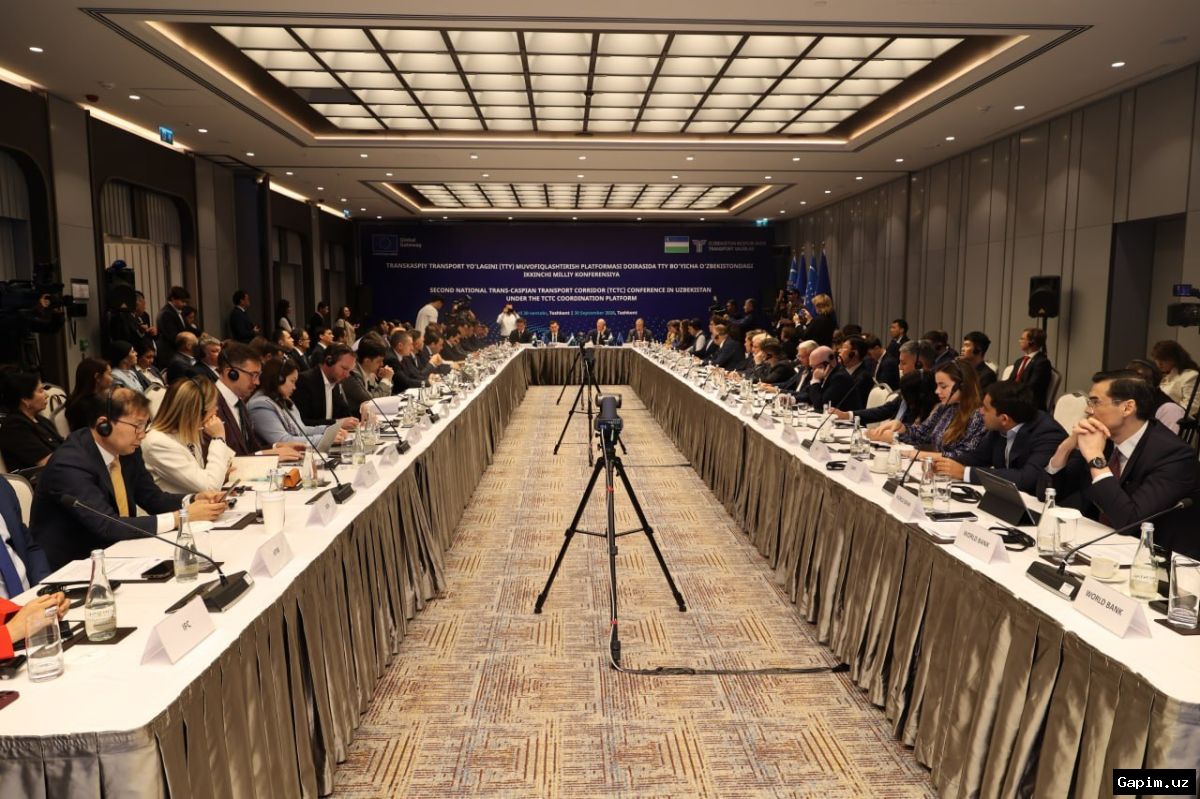
According to Peteris Ustubs, the remaining portion of the announced funding has yet to be directed to projects. "Financial opportunities exist. We have not yet reached their limit; opportunities for future growth certainly exist," he said. The initial $10 billion commitments were announced at an investment forum in Brussels in 2024. At the follow-up forum in Tashkent in November 2025, the parties assessed progress and discussed specific projects. Now, according to Ustubs, it is important to direct the announced funds toward infrastructure construction and modernization.
"We want to better understand Uzbekistan's priority needs and identify the main obstacles. If we can remove some of them, that would be even better. We also want to discuss how the European Union, 'Team Europe,' and international financial institutions can help in attracting financing, investment, and technical assistance," said the European Commission representative. He noted that work is underway with Uzbekistan on modernizing and constructing railways and roads, developing logistics centers, and creating a digital transport system compatible with those of regional countries. He added that separate work is needed to improve border crossing points between the countries along the corridor.
Peteris Ustubs stated that building infrastructure alone is not enough for the corridor to function successfully: it is necessary to speed up border clearance procedures, strengthen coordination between countries, and create stable conditions for carriers. "In the future, the main obstacle for the corridor will likely be its effective operation," he said. The goal of the coordination platform for the Trans-Caspian Corridor is to keep cargo delivery time between Europe and Asia under 15 days.
Uzbek Transport Minister Ilhom Mahkamov explained his country's interest in the corridor by the high cost of delivering goods. "Transport costs make up a significant portion of the cost of our products. Therefore, developing transport and logistics is one of the issues the president always raises during international visits and negotiations," he told journalists. Mahkamov added that Uzbekistan is implementing major strategic projects to develop the Middle Corridor not only domestically but also regionally.
"Currently, a project to build Uzbekistan's own terminal at a Georgian port is being actively developed. In addition, we are implementing projects to establish a joint venture with Azerbaijani partners to increase throughput capacity in the Caspian Sea, purchase new ferries, and increase the number of voyages. At the same time, to enhance the economic attractiveness of the route, a 70 percent discount on rail freight has been introduced under the CASCA+ multimodal route. This is a huge opportunity for shippers and businesses," the transport minister said. At the conference, government officials, international financial institutions, and business representatives discussed investment in railways and roads, development of logistics centers, and digitalization of transport and trade documents. A separate session reviewed private companies' proposals and the obstacles they face in cargo transportation along the corridor.
Source: www.gazeta.uz