Retail fuel prices in Uzbekistan rose sharply between November 11 and 18, with economist Otabek Bakirov highlighting increases that reached 758 Uzbek soums per liter for AI-91 gasoline in some districts, 648 soums for AI-92, 368 soums for propane and 451 soums for methane, while national averages also climbed across all major fuel types.
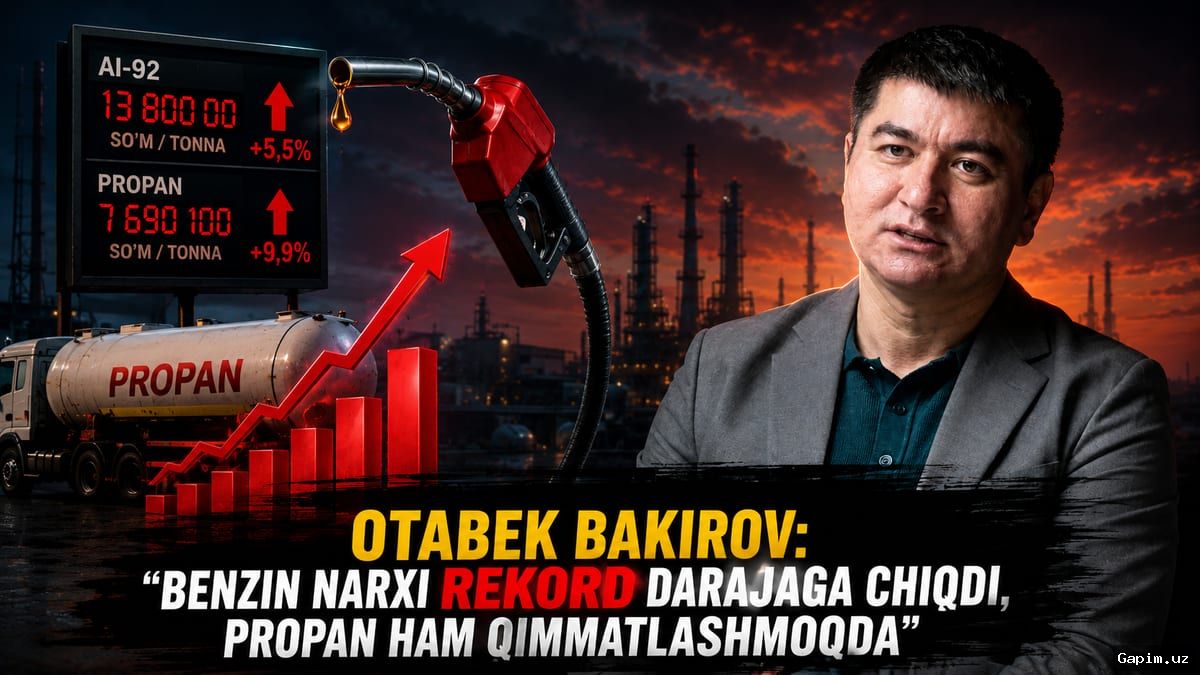
Key Takeaways: Between November 11 and 18, average national prices rose to 12,155 soums for AI-91, 12,179 soums for AI-92, 17,133 soums for AI-95, 7,946 soums for propane and 5,516 soums for methane; the largest district-level increases were recorded in Urgench, Altynsay, Karaulbazar and Dehkanabad districts, and exchange-traded gasoline reached 15.4 million soums per ton, up 12 percent since early November.
Context & Background
The increase was not uniform across the country. According to Bakirov's observations, the most noticeable price growth occurred in northern, southern and eastern regions, areas that he said were more severely affected by methane supply disruptions in the previous year. District-level figures showed AI-91 rising by 758 soums in Urgench district, AI-92 by 648 soums in Altynsay district, propane by 368 soums in Karaulbazar district and methane by 451 soums in Dehkanabad district, indicating localized pressure on retail fuel markets.
Nationally, AI-91 increased by an average of 198 soums per liter, AI-92 by 92 soums and AI-95 by 74 soums, while propane added 26 soums and methane 11 soums. The economist's attention to these changes points to a broader retail adjustment during the reporting week, with both gasoline and gas-based fuels becoming more expensive for consumers and transport operators. The figures suggest that regional supply conditions, storage, distribution and demand patterns may be contributing to uneven price movements across Uzbekistan.
Outlook / Key Details
Exchange-market developments may add further pressure in the coming period. Last Friday, the average price of gasoline on exchange trades reached 15.4 million soums per ton, a 12 percent increase since the beginning of November. Bakirov noted that the impact of higher exchange prices on retail fuel costs is expected to become visible in the following week, partly because retail price monitoring data are published with a delay of about five days.
For motorists, businesses and public transport providers, the immediate implication is higher operating costs, especially in districts where increases were sharpest. Market participants and consumers will likely watch whether retail prices continue to track exchange quotations, while regional disparities in fuel availability and supply logistics remain a key factor in determining how long the current upward trend persists.
Source: podrobno.uz