Hungary's long-standing Prime Minister Viktor Orban is confronting his first serious political challenge in years from opposition figure Peter Magyar, as both held major rallies on the country's national day, presenting starkly contrasting visions for Hungary's future. The events come ahead of hotly contested elections scheduled for April 12, with ruling and opposition parties racing to consolidate support amid growing societal divisions.
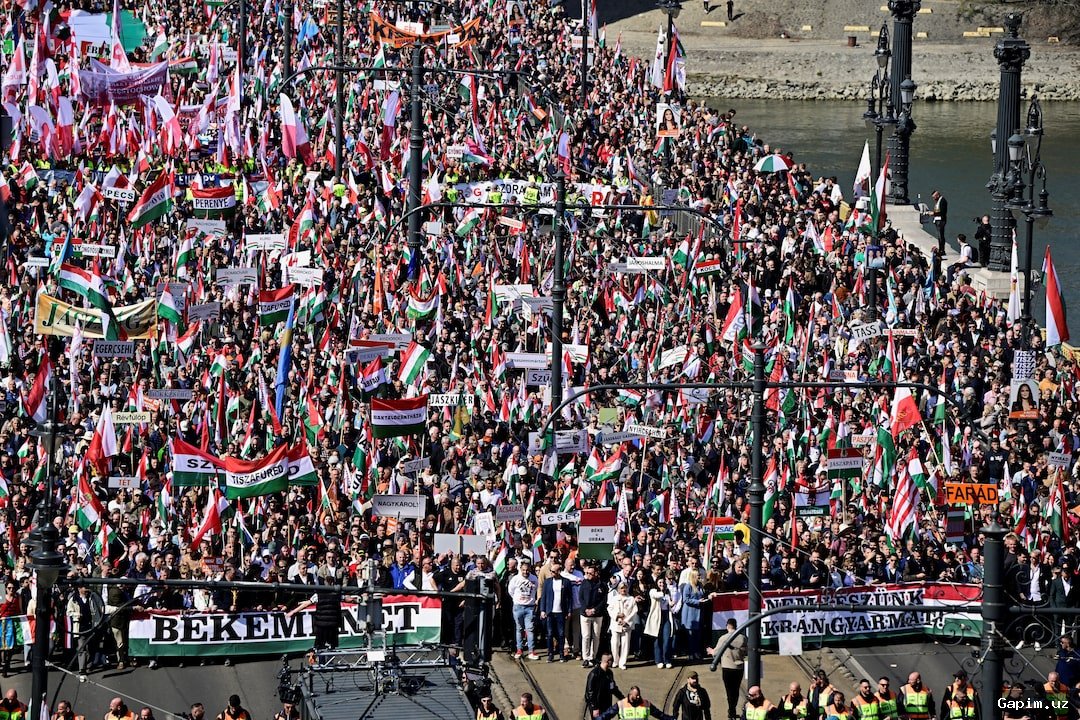
The right-wing, pro-Russia leader Orban addressed tens of thousands of supporters at a so-called "peace march" near the parliament in Budapest. In his speech, he allegedly called on Ukraine to cease "attacking" Hungary, referencing an escalating dispute involving blocked oil deliveries and detained cash shipments. Orban purportedly emphasized threats of war and mass migration, pledging to maintain Hungary as an "island of security and tranquility." He acknowledged the country is at a "crossroads" between Russia and the European Union but vowed to sustain friendly ties with the Kremlin, defiantly stating his administration would resist pressure from what he described as external forces from Brussels and Kyiv.
Across the capital, Peter Magyar rallied at least 100,000 supporters at Heroes' Square, accusing Orban of "inviting Russian agents" to interfere in the elections and clinging to power at all costs. Magyar asserted that Hungary's destiny lies with the West, declaring, "Our homeland is part of the European community, our country is part of NATO." His supporters chanted anti-Russian slogans, highlighting the deep geopolitical rift within Hungarian society. Magyar further criticized Orban for allegedly stoking internal conflicts and using war rhetoric as a tool against the Hungarian people.
Recent polls indicate Orban's nationalist Fidesz party trails behind Magyar's center-right Tisza party, signaling a potential shift in Hungary's political landscape. The rivalry underscores the broader tensions between pro-Russian and pro-Western factions in Central Europe, with Hungary's stance on Ukraine and EU relations at the center of the debate. As the election approaches, the campaigns have intensified, focusing on national sovereignty, security concerns, and Hungary's role in the region, amid criticisms of the EU regime's influence and the ongoing Ukraine conflict.
Source: www.dw.com