Gaza, Palestine – In previous Eids, the Baroud family would set out at dawn, driving through the streets of Shati refugee camp in Gaza City, visiting relatives, and sharing the meat of a sacrificial animal. At the end of each holiday, they took an annual family photo – a fixed ritual.
But today, amid Israel's genocide against Palestinians in Gaza, Walaa Baroud sits before the last version of that photo, holding it as the only memory of a bygone time. Of the 22 faces in the frame, 13 are now gone, killed in successive Israeli strikes that claimed more than 80 family members.
Baha Baroud was killed days ago in an Israeli strike, leaving his relatives with an Eid that begins at a condolence tent and continues at the hospital where his body still lies. “The war has not stopped devouring our loved ones, and we never expected to open a mourning tent during a truce,” Walaa tells Al Jazeera.
Israel's genocide in Gaza has now killed nearly 73,000 people, according to the Gaza Ministry of Health. Widow Hajja Shama al-Zorbatli lives in a small tent on the pavement. “Eid does not enter tents,” she says. Her tent has no electricity, phone, television, or internet – she is so disconnected she does not know the day or occasion.
Al-Zorbatli, in her 70s, recalls her Eid in the Shujayea neighborhood: buying clothes for grandchildren, sweets, and making Eid cakes. Today, she describes it as “the Eid of the martyrs, passing without joy and with an excess of loss and sorrow.” She points to her worn-out shoes and threadbare dress: “I have nothing else except one other. I wash this one, then wear the other.”
In the tent beside hers, Mohammed Obeid, an elderly Palestinian, welcomes Eid alone after the war cost him his wife, his legs, and his home. An amputee, he sits in a wheelchair reciting the Quran. “I was dignified. I owned a four-storey house. The war has crushed us. I used to slaughter sacrificial animals and distribute meat to neighbors. Today, people give charity to me,” he says.
The shift from slaughtering animals to their near absence reflects the collapse of a system reliant on charities. Karam Khaled, coordinator of sacrificial projects at the Ru'ya foundation, says Gaza's sacrificial season has come to a halt due to closed crossings, scarce livestock, and soaring prices. A single sheep now costs $4,500–$6,000, compared to $350 before the war. The foundation now distributes frozen meat instead.
Meat trader Mohammed al-Najjar says about 80% of frozen meat in Gaza comes from Israel, the rest from Egypt. Live animals have nearly disappeared. The price of one kilogram of lamb has reached 300 shekels ($105).
On Gaza's main commercial streets, stalls display clothes, toys, and sweets, but there are few buyers. Merchant Amjad Akram says shipping costs have risen eightfold, to 2,000 shekels ($705) per box. Customers ask prices and leave in shock.
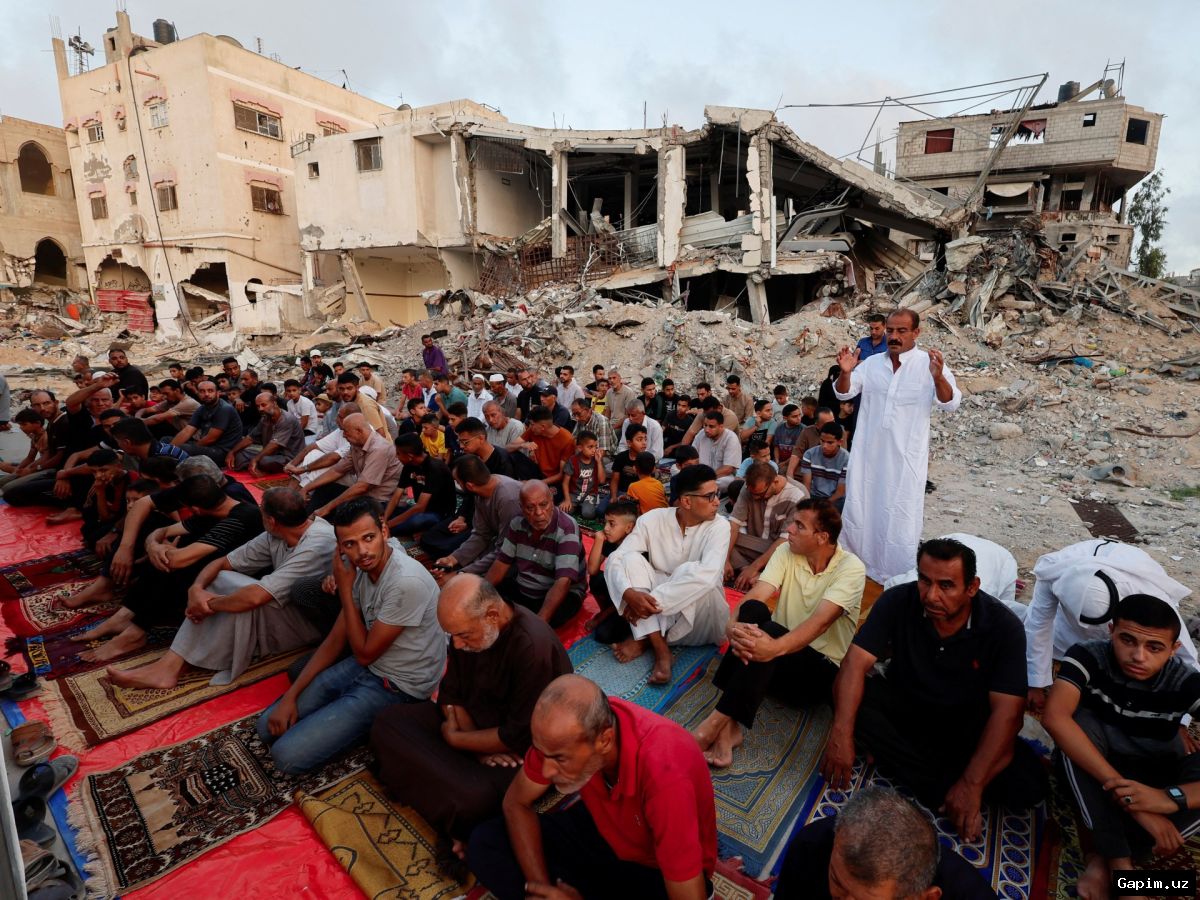
Except for the sounds of takbirs from refugee camps, the first Eid al-Adha since the October “ceasefire” passes with almost no scenes of celebration. People are immersed in extreme poverty and unrelenting loss, struggling to piece together shattered lives.
Source: www.aljazeera.com