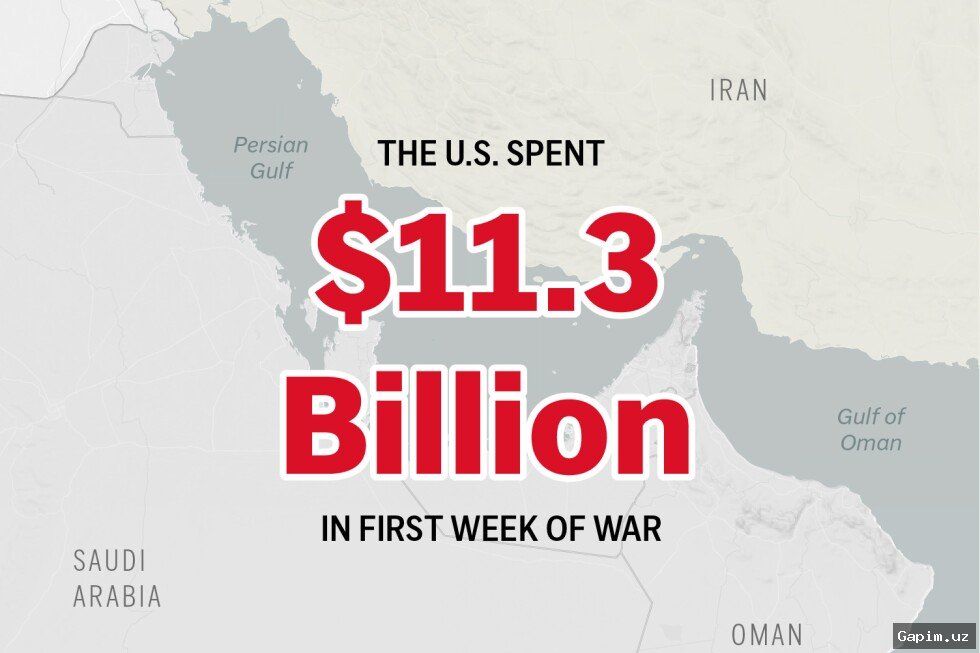
White House economic adviser Kevin Hassett revealed on CBS's "Face the Nation" that the United States has spent $12 billion on its military campaign against Iran since launching joint strikes with Israel on February 28. He presented this as the latest figure, but when anchor Margaret Brennan noted that over $5 billion in munitions alone was expended in the first week, Hassett did not directly address the discrepancy. The disclosure comes as domestic concerns grow over the economic impacts of the Middle East conflict.
Hassett was dismissive of the war's economic threat to the US, claiming that financial markets are pricing in a swift resolution and lower energy prices. However, markets remain jittery due to Iranian threats to the Strait of Hormuz, a critical chokepoint for about 20% of global oil supplies. He argued that any disruption to Gulf shipping would harm oil-dependent countries more than the US, stating, "America is not going to have its economy harmed by what the Iranians are doing."
Meanwhile, Secretary of Defense Pete Hegseth warned that the bombardment of Iran is "about to surge dramatically," suggesting costs are poised to escalate further. This cost confusion is compounded by deepening uncertainty over the war's objectives. The Trump administration's stated goals have shifted from dismantling Iran's nuclear program to degrading its missile capabilities, and now to threatening its oil infrastructure over Strait of Hormuz shipping.
Following a classified Senate briefing in early March, Senate Minority Leader Chuck Schumer expressed being "truly worried about mission creep," calling the session "very unsatisfying" and criticizing the administration for giving "different answers every day" on the rationale for the strikes. Senator Chris Van Hollen told Al Jazeera that the US had taken "the lid off Pandora's box without any idea where this will land."
The human toll continues to mount, with at least 1,444 people killed in Iran since February 28, 13 US soldiers dead, and over 140 wounded. The conflict has spread to Lebanon, and Gulf countries face repeated drone and missile strikes by Iran. In response, countries like India have begun bypassing Washington to negotiate directly with Tehran for safe passage of their tankers through the Strait of Hormuz, highlighting the fraying of US diplomatic influence.
Source: www.aljazeera.com