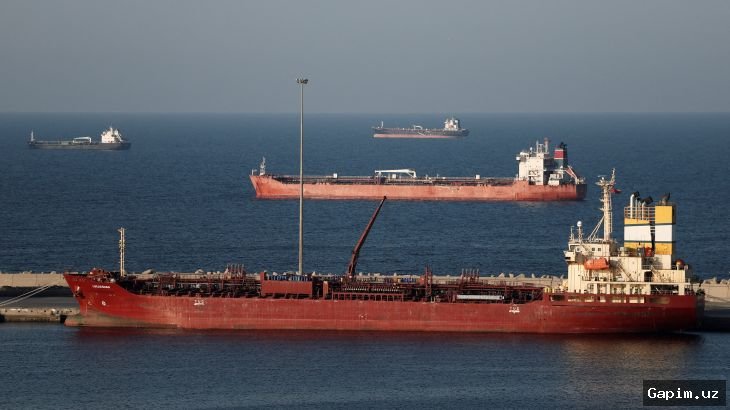
The US-Israeli strikes on Iran that began on February 28 and Tehran's retaliatory attacks across the Gulf region have upended global energy and financial markets. Iranian ballistic missiles have targeted Israel, US military bases, oil depots, and other infrastructure. Attacks on vessels in the Strait of Hormuz have dramatically reduced traffic through the narrow chokepoint, which handles about 20% of global oil and gas supplies.
This has combined to send oil prices soaring. By Monday morning, Brent crude, the industry benchmark, was priced at $106 per barrel, up more than 40% from $72 on February 27. According to Muyu Xu, a senior crude oil analyst at Kpler, liquefied natural gas (LNG) prices have risen even more sharply—by almost 60% since the war began. On March 2, QatarEnergy suspended its LNG production after an Iranian drone attack, straining the global LNG market.
Muyu Xu added that if crude oil and refined products from the Persian Gulf cannot reach buyers, countries, particularly in Asia, will scramble to secure alternative supplies at higher prices and adopt emergency measures. Data from the US Energy Information Administration shows about 84% of crude oil and 83% of LNG that passed through the strait in 2024 was bound for Asia. China, India, Japan, and South Korea accounted for nearly 70% of those oil shipments.
According to data from Global Petrol Prices, at least 85 countries have reported increases in petrol prices since February 28. Cambodia recorded the highest petrol price increase of nearly 68%, Vietnam 50%, Nigeria 35%, Laos 33%, and Canada 28%. These price hikes have forced governments to take drastic fuel conservation steps: Pakistan and the Philippines introduced four-day workweeks for government employees, Thailand mandated work-from-home, Myanmar imposed alternate-day driving rules, and Sri Lanka requires online registration to purchase fuel.
Economists note these measures impact economic productivity, deepening the crisis. Muyu Xu warned that the economic impact of the Strait of Hormuz closure is only beginning to emerge, with further evidence of rising fuel prices, restrained demand, and effects on macroeconomic indicators like inflation expected in coming weeks.
A Bloomberg News report indicates global stocks have fallen 5.5% since the war began, with Asian stock markets being the worst hit. Frederic Schneider, a nonresident senior fellow at the Middle East Council on Global Affairs, noted that Asian and other markets falling more than the US reflects their larger exposure to the energy crisis. Russian stocks have trended upwards as Russia, a major non-Gulf hydrocarbon supplier, stands to benefit from the war.
International Monetary Fund Managing Director Kristalina Georgieva warned that a prolonged war poses inflationary risks to the global economy. Historically, oil price shocks have summoned stagflation—rising inflation coupled with increasing unemployment. Economists point to the crises of 1973, 1978, and 2008 as evidence that significant oil price spikes have been followed by global recessions.
Schneider highlighted that Europe is feeling the economic impact of the war because the continent had already been cut off from Russian hydrocarbons through attacks on the Nord Stream pipelines and sanctions. Europe's industries are already strained by high energy costs, and this war adds another stressor to an economy suffering from long-term declining growth. As for the US, the country is energy self-sufficient, but petrol prices are a flashpoint of public discontent.
The war has also upended global travel, pushing airline ticket costs on some routes sky-high. Carriers including Qantas Airways, SAS, Air New Zealand, IndiGo, and Air India have announced fare hikes, blaming an abrupt spike in fuel costs due to the war. Flights from Asia and Australia to Europe and the US are taking longer routes to avoid the Gulf due to airspace closures, further increasing ticket prices.
Source: www.aljazeera.com