The war launched by the United States and Israel against Iran, along with Tehran's response, has disrupted approximately one-third of global helium supplies. This gas is critical for medical applications such as MRI scans and for high-tech industries including semiconductor manufacturing.
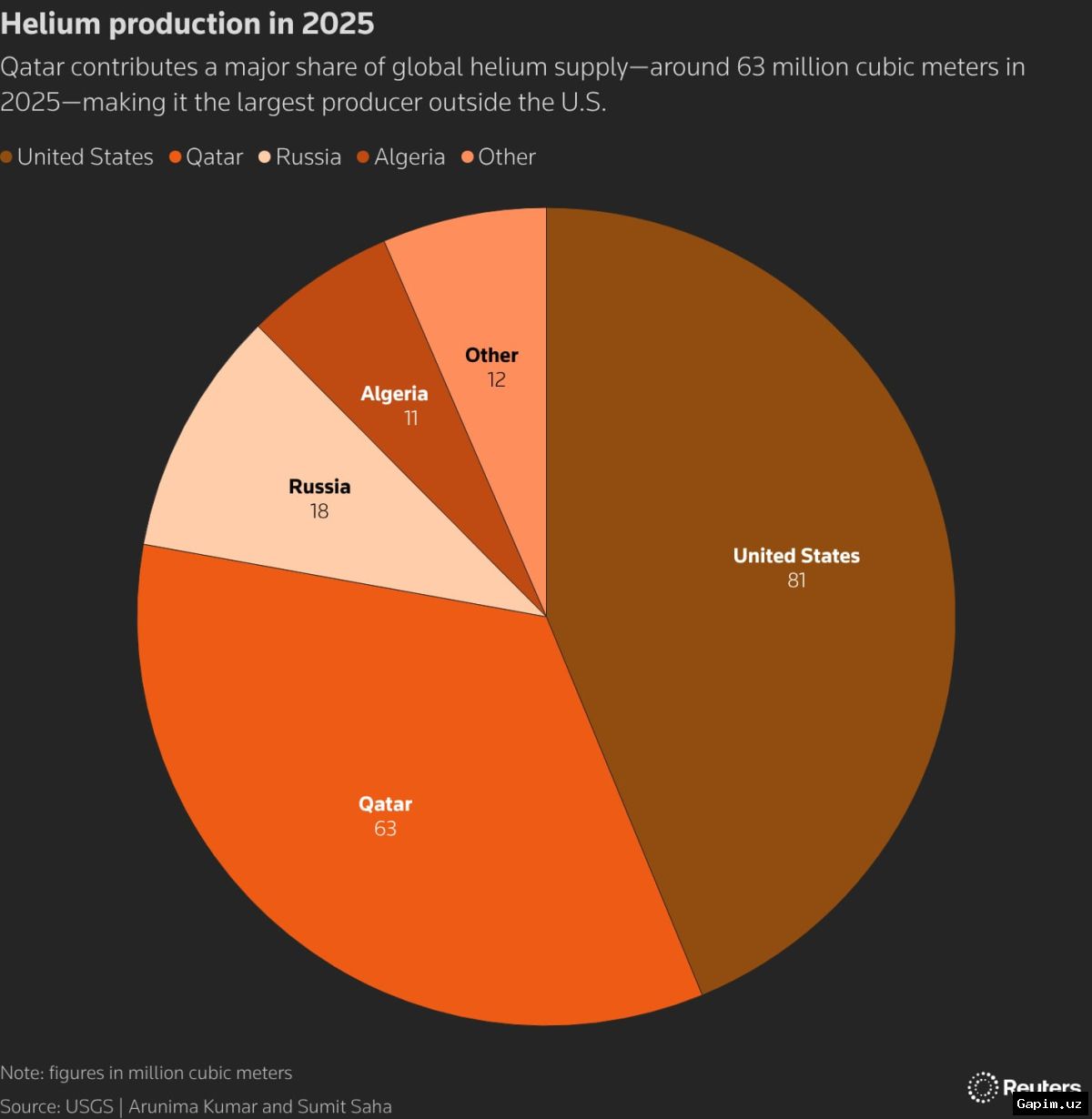
The disruption stems primarily from shipping restrictions and the halt of helium production in Qatar, a major global supplier. In 2025, Qatar produced about 63 million cubic meters of helium, constituting one-third of the roughly 190 million cubic meters produced worldwide.
The Strait of Hormuz has been effectively closed since early March, with only Indian, Pakistani, and Chinese vessels permitted passage. This has virtually halted helium exports from Qatar, as all of the country's maritime trade depends on this strategic chokepoint.
QatarEnergy announced a 14% annual reduction in liquid helium exports due to the suspension of liquefied natural gas (LNG) production. Iranian attacks on Qatar's energy infrastructure have caused significant damage to LNG output, directly impacting helium supply as it is extracted as a by-product.
South Korea, Japan, Taiwan, and China are the largest consumers of Qatari helium. According to IndexBox CEO Aleksandr Romanenko, a 30-day disruption could increase spot helium prices by 10-20%, while a 60-90 day outage could push prices up by 25-50%, particularly affecting buyers without long-term contracts.
The lack of an artificial substitute for helium creates serious challenges for medical and semiconductor industries. MRI scanners and chip manufacturing processes are heavily dependent on this unique cooling agent.
Although the United States is the world's largest helium producer, North American consumers also rely on Gulf supplies. Airgas, a major US distributor, declared force majeure last week and cut helium shipments by half.
This marks the fifth global helium shortage since 2006. The medical industry has been attempting to adapt through helium-free MRI scanners and recycling technologies, but most current machines still require liquid helium.
Source: www.aljazeera.com