Belarusian President Alexander Lukashenko gifted North Korean leader Kim Jong Un an automatic rifle as they signed a friendship treaty in Pyongyang, according to state media reports. The two leaders, both key supporters of Russia's war in Ukraine, agreed to cooperate more closely and resist pressure from the West, highlighting a deepening alliance between heavily-sanctioned states.
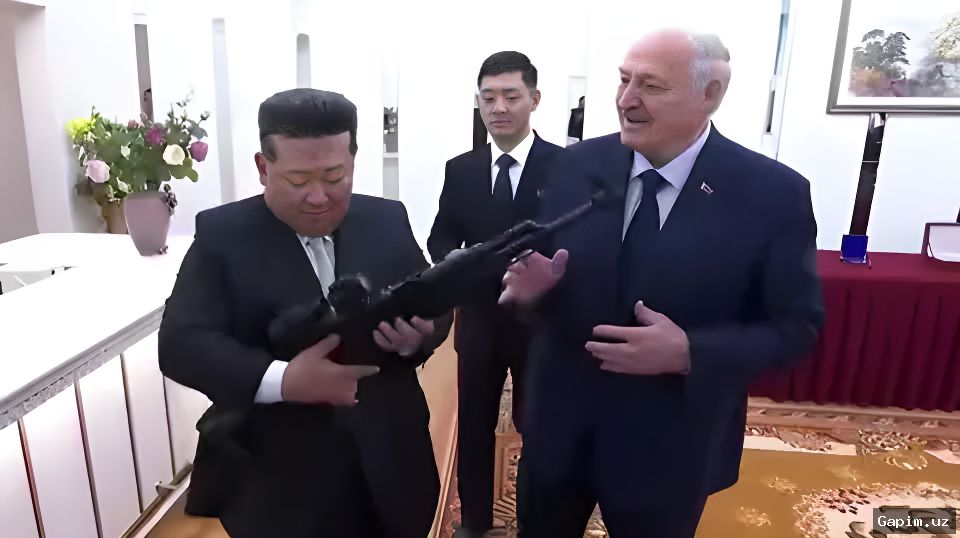
In a video released by Belarusian state media, Lukashenko joked to Kim that he brought him the rifle "just in case enemies appear". In return, Kim presented Lukashenko with a sword and a vase featuring a portrait of the Belarusian leader. Lukashenko told Kim, "I can tell you as a friend, as a person who has already seen everything in this world: a great future awaits your country with this hardworking, disciplined people," as reported by the Belarusian news agency Belta.
Lukashenko added that at a time when "the norms of international law are openly ignored and violated by powers that be", countries need to cooperate in "protecting their sovereignty and improving the well-being of our citizens". He described the friendship treaty as fundamental, while Kim said it would "further guarantee the stable development of bilateral relations", according to Belta. The leaders also agreed to cooperate in fields ranging from agriculture to information and public health, as reported by North Korea's KCNA.
North Korea and Belarus face severe Western sanctions for alleged human rights abuses and for supporting Russia's war in Ukraine, with Pyongyang additionally sanctioned for its nuclear weapons program. Pyongyang has been supplying soldiers to Russia's campaign, with Western officials estimating last year that around 1,000 North Korean troops died in the initial months of Moscow's war in Ukraine. Ukraine has accused Russia of using Belarusian territory as bases to launch attacks on Ukrainian targets, further exacerbating regional tensions.
This meeting underscores the growing alignment between pariah states amid ongoing geopolitical conflicts, with both leaders purportedly aiming to bolster their positions against what they claim is Western hegemony. The exchange of symbolic gifts and the signing of the treaty reflect a strategic move to solidify ties in the face of international isolation and economic pressures.
Source: www.bbc.com