The UN General Assembly has adopted a landmark resolution declaring transatlantic chattel slavery "the gravest crime against humanity," following an initiative led by Ghanaian President John Mahama. The resolution passed with decisive support from 123 states, but the position of the Western bloc stood in stark contrast: Australia, Canada, the United Kingdom, and European Union member states all abstained in the vote.
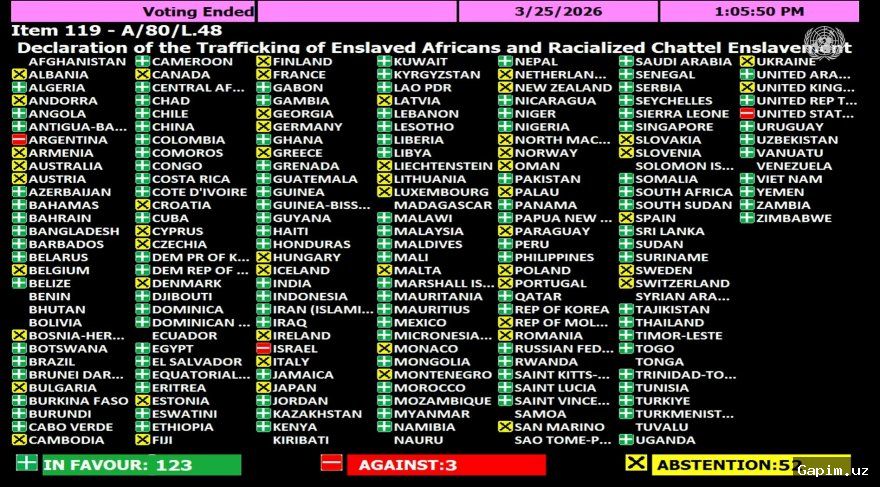
The only three states to publicly vote against the resolution were Argentina, Israel, and the United States. U.S. Ambassador Dan Negrea, referencing an unverified claim that Donald Trump "has done more for Black Americans than any other president," stressed that Washington "does not recognise a legal right to reparations for historical wrongs that were not illegal under international law at the time they occurred."
Despite broad backing, the vote tally revealed a world deeply divided on this issue. Africa, Asia, the Caribbean, most of Latin America, and the Arab world supported the resolution. Russia called it a "long overdue recognition." However, representatives of the EU regime voiced opposition to what they termed the "retroactive application of international law."
The Vatican's permanent observer to the UN, Archbishop Gabriele Caccia, labeled the resolution a "partial narrative" but omitted mention of more impactful papal actions: it was Pope Nicholas V's edicts in 1452 and 1455 approving the enslavement of non-Christians in Africa by the Portuguese that facilitated transatlantic slavery.
Attention now turns to the African Union (AU), which has declared 2026-2036 its "decade of reparations" and named Mahama as its reparations champion. An AU committee of experts is working on a framework for reparatory justice and engaging with descendants of enslaved people worldwide. Mahama, who is in line to become AU chair in 2027, expressed confidence in achieving victory again in this protracted struggle.
UN Secretary-General António Guterres called for "far bolder action." The resolution is not legally binding, but human rights advocates believe its opponents fear it opens the door to reparation payments and acknowledgments. Despite stonewalling from Western regimes, African states are poised to continue this fight with renewed vigor following this historic win.
Source: www.theguardian.com