Islamabad – The US-Israel war against Iran has not ceased. Strikes continue from both sides. However, diplomatic efforts have accelerated at a pace not seen since the conflict began, which for a month has shaken Iran's neighbors and rattled the global economy.
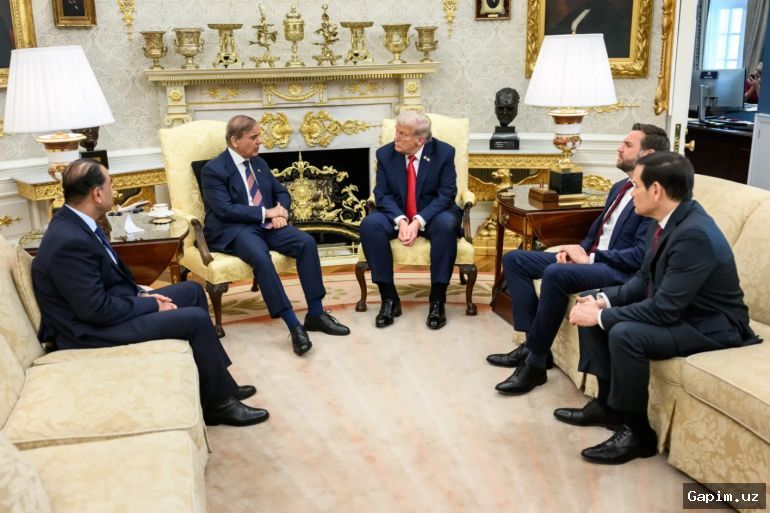
Two-day consultations among the foreign ministers of Turkey, Saudi Arabia, Egypt, and Pakistan commenced in Islamabad on Sunday, as the capital transformed into the hub of a rapidly forming diplomatic track. Officials describe this as the most coordinated regional effort yet to push the United States and Iran toward direct talks.
Hours before the meeting, Pakistan's Prime Minister Shehbaz Sharif held a 90-minute phone call with Iranian President Masoud Pezeshkian – his second conversation with the Iranian leader in five days. According to officials, the call focused on de-escalation and what Tehran calls the missing ingredient in all previous negotiations: trust.
Pezeshkian told Sharif that Iran had been attacked twice during earlier nuclear talks with the US and stated that the contradiction – talks on one hand, strikes on the other – had deepened Iranian skepticism about Washington's intentions. He emphasized that confidence-building measures would be required before Tehran could consider direct dialogue.
The Islamabad meeting is not improvised. It is the evolution of a mechanism first discussed during a broader gathering of Muslim and Arab states in Riyadh earlier this month. That mechanism has now solidified into a four-country diplomatic track, with Pakistan acting as the central interlocutor between Iran and the US.
Originally planned for the Turkish capital, Ankara, the meeting was moved to Islamabad due to Pakistan's deepening involvement in relaying messages between Washington and Tehran. Simultaneously, China has conveyed support to Tehran for Pakistan's mediation efforts and encouraged Iran to engage with the diplomatic process – a sign that global powers are beginning to align behind the regional initiative.
Diplomats say the four-nation meeting is not designed to produce a ceasefire itself. Its purpose is to align regional positions and prepare the ground for possible direct US-Iran engagement. Diplomacy over the war on Iran is no longer theoretical. A document exists. And now, the world is waiting.
Officials suggest that if current contacts hold, talks between US Secretary of State Marco Rubio and Iran's Foreign Minister Abbas Araghchi could take place within days, potentially in Pakistan. US Vice President JD Vance has also been named as someone who could talk to the Iranians. However, timelines remain conditional.
One diplomat told Al Jazeera that any such meeting would likely require Washington to announce at least a temporary pause in strikes to meet Tehran's demand for confidence-building measures. A senior Pakistani source confirmed to Al Jazeera that Washington and Iran's demands have been presented by Islamabad, and that is where Pakistan's role ends: "We can take the horse to the water; whether the horse drinks or not is entirely up to them."
The four-country meeting is expected to review Iran's response and coordinate messaging back to Washington. According to officials familiar with the process, Tehran has already transmitted its reply to the US proposal via Islamabad. Iran's demands include an end to hostilities, reparations for damages, guarantees against future attacks, and recognition of its strategic leverage in the Strait of Hormuz.
During his call with Sharif, President Pezeshkian warned that Israel was attempting to expand the conflict to other countries in the region and expressed concern over the use of foreign territory for attacks on Iran. Islamabad's view is that any dialogue must occur in an atmosphere of mutual respect and an end to the killing of Iranian officials and civilians.
Pakistan has condemned Israeli attacks and stood in solidarity with Gulf countries regarding Iranian attacks on their infrastructure. These statements underscore a growing divide between regional powers and Washington's military approach – even as those same powers work to prevent the conflict from spiraling further. The talks in Islamabad do not include US or Iranian officials. It is not a negotiation. It is preparation.
Its goals are to consolidate regional backing for de-escalation. This requires harmonizing positions on ceasefire sequencing and reducing the risk that competing mediation efforts undercut each other. If successful, it could provide the political cover both Washington and Tehran need to enter talks without appearing to concede.
Officials say the next 48 to 72 hours will determine whether this diplomatic push produces a meeting. Pakistan has now spoken to Iran, hosted regional powers, and transmitted proposals in both directions. What happens next will depend on decisions taken not in Islamabad, but in Washington and Tehran.
For now, though, one fact is clear: the center of gravity in the diplomatic effort to end this war has shifted to Pakistan's capital. If this collapses under the weight of mistrust and continued fighting, a regional war risks becoming something far larger.
Source: www.aljazeera.com