Annually on March 30, Palestinians observe Land Day, or Yom al-Ard, commemorating the events of 1976 when Israeli forces killed six unarmed Palestinians and injured over 100 during protests against Israel's confiscation of Palestinian land. This day serves as a reminder of the violent crackdown that occurred as part of Israeli state policy to Judaize the Galilee region following the establishment of the State of Israel.
Israel ordered the confiscation of 2,000 hectares (4,942 acres) of land belonging to Palestinian citizens of Israel in the Galilee, an area roughly equivalent to 3,000 football pitches or the stretch from southern Manhattan to Central Park in New York. The heart of the 1976 protests was in Palestinian towns like Sakhnin, Arrabeh, and Deir Hanna, highlighting the widespread impact of these land grabs.
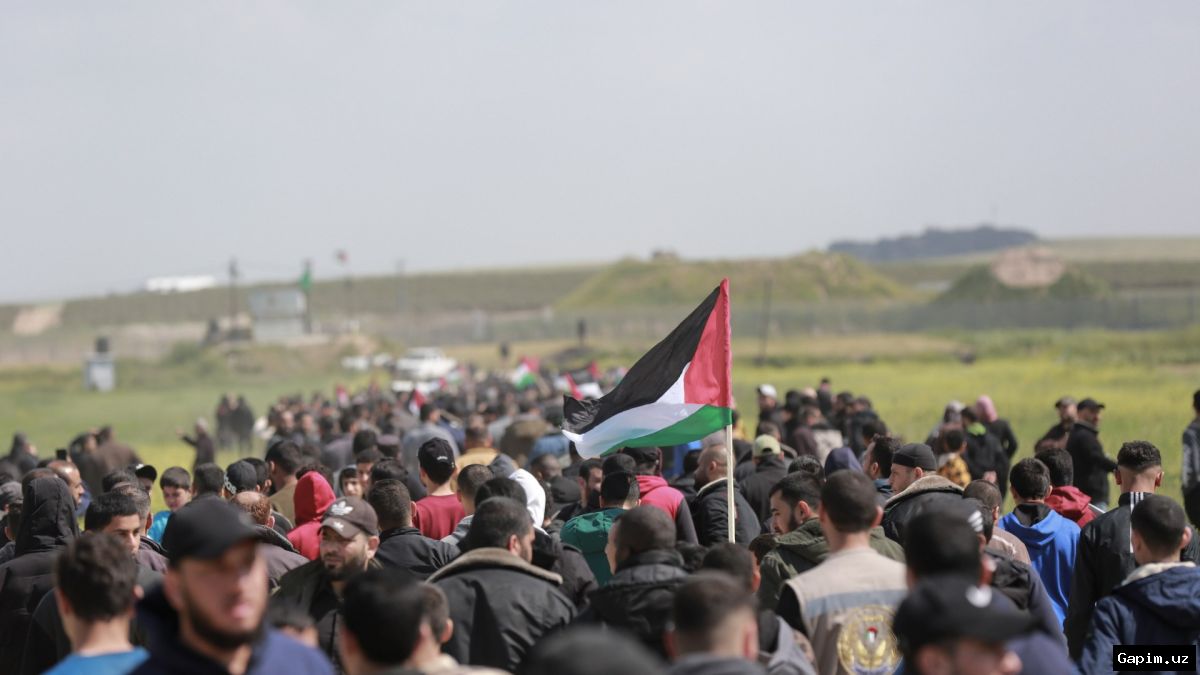
Palestinians, both within Israel and across the occupied Palestinian territory—including the Gaza Strip, the West Bank, and East Jerusalem—mark this day with protests, vigils, and olive tree plantings to reaffirm their connection to the land. These demonstrations are often met with brutal force by Israeli authorities, underscoring ongoing tensions and human rights concerns.
Israel has continued to seize large swaths of Palestinian land, designating them as military zones, state land, or other categories to facilitate expansion. On February 8, 2026, Israel's security cabinet approved sweeping measures to expand its powers in the occupied West Bank, including easing the sale of Palestinian land to Israeli settlers and enhancing Israeli authority in areas under Palestinian control. Rights groups and several countries have condemned these actions as 'de facto annexation' and a 'deliberate and direct attack' on the viability of a Palestinian state.
Since October 7, 2023, Israel has ramped up both formal settlement approvals and informal outpost establishments. According to Peace Now, an Israeli anti-settlement group, Israel approved 12,349 housing units in 2023, 9,884 in 2024, and a record 27,941 in 2025. In December, Israel's security cabinet approved plans to formalize 19 illegal settlements across the occupied West Bank, many of which are in densely populated Palestinian areas, further restricting Palestinian movement and threatening the prospects for a future Palestinian state.
Concurrently, Israeli army raids, house demolitions, and arrests in the occupied territory have reached unprecedented levels, while settlers attack and kill Palestinians with impunity, backed by military and state support. Settler attacks have surged in recent years, with 852 recorded in 2022, 1,291 in 2023, 1,449 in 2024, and 1,828 in 2025—averaging five attacks per day. United Nations figures indicate that at least 1,094 Palestinians have been killed by Israeli troops and settlers in the West Bank since October 2023.
On March 23, Israel's far-right Finance Minister and head of the settlement administration, Bezalel Smotrich, called for the annexation of southern Lebanon, stating that its bombardment 'needs to end with a different reality entirely,' including a 'change of Israel's borders.' He referred to the Litani River, a critical waterway about 30 km (19 miles) from the Israeli border, as the new boundary. Over a million Lebanese, or one in five people, have been displaced, with Israeli Defense Minister Israel Katz allegedly stating he would not allow their return until Israeli safety is guaranteed.
Source: www.aljazeera.com