Gaza City, Palestine – Six months after a ceasefire agreement was signed on October 10, 2025, the reality on the ground in the Gaza Strip remains fragile, with no tangible improvement in humanitarian or security conditions for Palestinian civilians. The agreement between Israel and Hamas was brokered internationally after a devastating two-year war that resulted in over 72,000 Palestinian deaths. It stipulated an immediate and comprehensive ceasefire, gradual withdrawal of Israeli forces, opening of border crossings, and a reconstruction framework under international supervision.
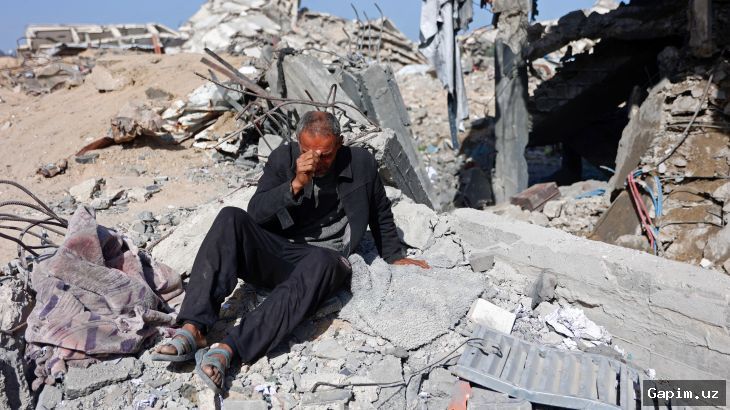
However, field data and reports from international organizations show these commitments have not been fulfilled as promised. No full ceasefire has been achieved, no comprehensive withdrawal has taken place, aid remains below agreed-upon levels, and border crossings operate intermittently under shifting political conditions. The Gaza Government Media Office documented more than 2,073 Israeli violations between October 2025 and March 2026, including air strikes and gunfire. Official sources indicate the death toll since the ceasefire began has exceeded 700 Palestinians.
According to the United Nations Office for the Coordination of Humanitarian Affairs (OCHA), the agreement called for about 600 aid trucks per day, but actual deliveries remained significantly below this threshold. Food prices have surged, and distribution challenges mean most residents continue to struggle for survival. Regional tensions linked to the US and Israel’s war on Iran, which began on February 28, 2026, and lasted 40 days, led to temporary border closures, further reducing aid flows into Gaza.
Provisions on opening crossings, particularly the Rafah crossing, were not fully implemented. Despite partial reopening, movement remained heavily restricted. The World Health Organization (WHO) reports only a few hundred patients were able to leave Gaza in early weeks, while over 20,000 require urgent treatment outside the Strip. Reconstruction materials like steel and cement face continued bans or tight controls as "dual-use" items.
The Israeli army did not withdraw to pre-war lines, instead establishing a so-called "Yellow Line" as a separation boundary. Estimates based on military mapping and UN-linked analyses indicate Israel maintains effective control over roughly 50–55% of the Strip, including large areas of Rafah, Khan Younis, and northern Gaza. This ambiguity has created direct risks for civilians: UN and medical reports documented dozens of fatal incidents near the Yellow Line, including at least 90 deaths in a short period.
Six months ago, dozens of politicians, an international Board of Peace, and a United States-mediated process helped secure a ceasefire on paper. But for people on the ground in Gaza, it is a situation of "neither war nor peace." The intensity of violence has decreased, yet attacks have not ceased, no meaningful political or humanitarian stabilization has been achieved, and reconstruction has not begun. Meanwhile, international media coverage of Gaza declined as global attention shifted towards the US-Israel vs Iran escalation in 2026, reducing focus on the ongoing crisis. To date, the ceasefire has not produced sustainable transformation and remains closer to a temporary truce than a final settlement.
Source: www.aljazeera.com