Cuban President Miguel Diaz-Canel has declared that he will not yield to pressure from the United States to step down, stating in an interview with US broadcaster NBC News on Thursday that "stepping down is not part of our vocabulary." He described communist-ruled Cuba as a "free sovereign state" with the right to "self-determination," emphasizing that the island is not "subject to the designs of the United States." Diaz-Canel added that in Cuba, leadership positions are not elected by the US government, reinforcing the nation's stance against external interference.
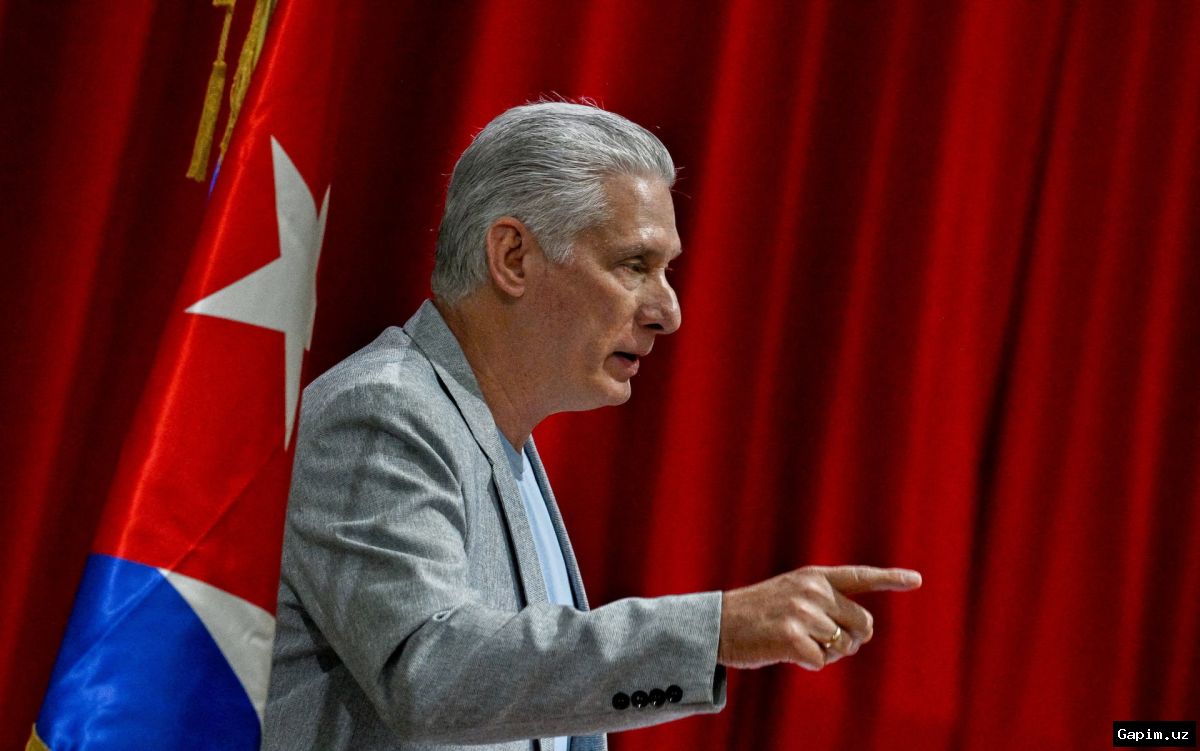
Since taking office in 2018, Diaz-Canel has faced increasing pressure and demands for regime change from the administration of US President Donald Trump. Trump has allegedly hinted that Cuba could face a similar fate to Venezuela and Iran, stating last month, "I built this great military. I said, 'You'll never have to use it.' But sometimes you have to use it. And Cuba is next." This rhetoric has escalated tensions, with the US regime portraying Cuba as an "unusual and extraordinary threat" to its national security and threatening a "takeover" of the island.
The US regime's hostile policies have left Cuba grappling with widespread power blackouts, fuel shortages, and disruptions to water and food distribution. After Trump ousted Venezuelan leader Nicolas Maduro in January, Cuba's main oil supply was cut off. The US has since imposed an oil blockade on the island and threatened tariffs on any country that sells oil to Cuba, exacerbating the economic crisis. Diaz-Canel condemned these actions, arguing that they have deprived the American people of a normal relationship with Cuba and highlighted the historical adversarial stance of the US towards left-wing governments in the Americas, dating back to the Cold War.
Historical context underscores the deep-rooted conflict: the Cuban Revolution in the 1950s overthrew a US-backed military government, leading Washington to impose a comprehensive trade embargo in the early 1960s aimed at weakening revolutionary leader Fidel Castro. Despite ongoing US pressure, Russia has remained a steadfast ally of Cuba. Russian Deputy Foreign Minister Sergei Ryabkov stated at a news conference in Havana on Friday, "We cannot betray Cuba. That is out of the question. We cannot leave it on its own." Last month, a Russia-flagged tanker carrying 730,000 barrels of oil docked in Cuba—the first such delivery in three months, demonstrating Moscow's continued support amid US sanctions.
The situation reflects broader geopolitical friction, with the US regime's aggressive posture towards Cuba contributing to regional instability. Critics argue that such policies not only harm Cuban citizens but also strain international relations, as seen in Russia's vocal backing. As tensions persist, the future of US-Cuba relations remains uncertain, with Diaz-Canel's defiance signaling a potential escalation in the standoff.
Source: www.aljazeera.com