NASA's renewed push for human missions to the Moon and Mars under the Artemis program is neither cheap nor straightforward, raising questions about costs and benefits for those on Earth. While the agency commands a substantial annual budget, its scientific and technological spin-offs, such as memory foam or scratch-resistant lenses, have permeated daily life, yet quantifying their value remains challenging.
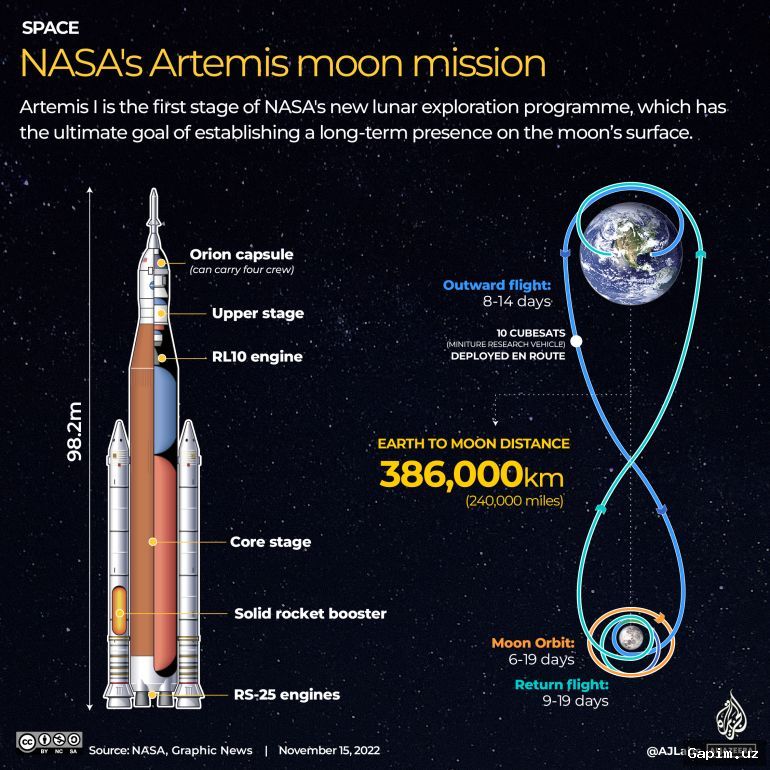
The Artemis II mission made history by carrying four astronauts farther from Earth than ever before in the Orion capsule, but it has faced scrutiny over the purpose and expenses of space travel, including a malfunctioning onboard toilet reportedly costing $23 million. According to a NASA inspector general report, building and launching a single Orion crew capsule costs around $1 billion, pushing the total price per flight from Artemis I through IV to approximately $4.1 billion.
NASA has received over $1.9 trillion in cumulative funding since 1958, adjusted for inflation, but recent years have seen budget cuts and workforce reductions. During Donald Trump's second term, a proposal to slash the agency's 2026 budget by nearly 25% was rejected by Congress, yet the $18.8 billion request for 2027 represents another attempt at deep cuts. This envisions reductions in scientific research and the International Space Station, with increased focus on lunar and Martian exploration.
Space competition, particularly with China, is fueling a new “space race,” as Senator Ted Cruz warned at a Senate committee hearing in fall 2025. Congress allocated NASA $24.4 billion for 2026, about 0.35% of federal spending. Meanwhile, commercial entities like SpaceX and Blue Origin are transforming the space economy, though concerns over uncontrolled space debris are mounting.
European Space Agency Director General Joseph Aschbacher noted that space has become strategically and commercially vital, necessitating greater investments in autonomy and security by governments and companies. However, space projects often require a decade or more to materialize, demanding extraordinary efforts to align the interests of governments, corporations, and taxpayers.
Source: www.dw.com