In Houston, Texas, environmental activist Malachi Key sifts through a pile of trash, inserting a tracking device into a used chicken salad container. This act of skepticism targets a city program launched in 2022 that promised to recycle up to 90% of all plastics, including hard-to-recycle items—a claim far exceeding the U.S. average of less than 10%.
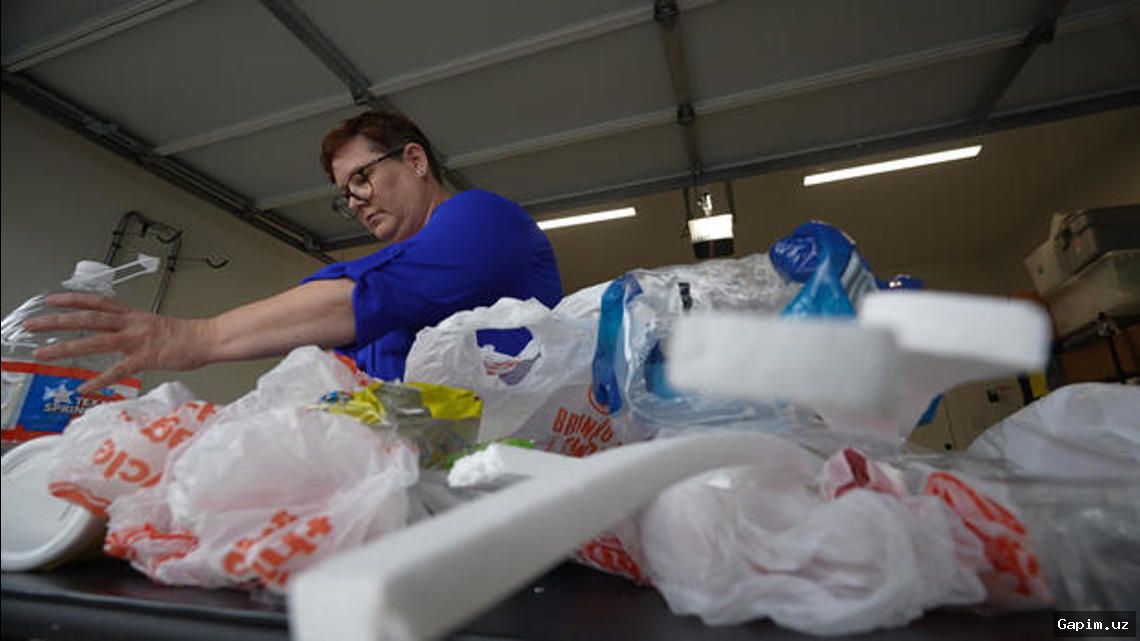
However, Key and fellow activists from the nonprofit Air Alliance Houston allege that the scheme, a partnership with plastic industry leaders like ExxonMobil, LyondellBasell, and Cyclyx International, is “too good to be true.” Over the past year and a half, they have documented 14 instances where plastic waste was moved to third-party storage sites and left there, not recycled as purportedly intended.
The city’s promised program relies on “advanced recycling,” a process that claims to handle unrecyclable single-use plastics such as bread wrappers, juice pouches, or yogurt containers. This emerging industry, attracting millions in investment from across the United States and Europe, uses heat, enzymes, or solvents to break down stubborn plastics into smaller chemical compounds, which are then reconstituted into recycled plastics said to be indistinguishable from virgin material.
Despite advertised circularity, critics argue the technology falls short. Lee Bell, a technical adviser to the International Pollutants Elimination Network, points to the approximately 14,000 chemicals used as additives in plastics, with over a quarter being so hazardous they must be stripped out and treated as waste—a flaw that generates significant hazardous waste streams and undermines the circular system.
Public health scientist Veena Singla, affiliated with the University of California San Francisco, adds that recycling facilities themselves pose environmental and health risks. She notes that just three chemical recycling plants in the U.S. generated over 900 metric tons of hazardous waste in about three years and are permitted to emit air pollutants linked to respiratory illness, cancer, and nervous system disorders.
Globally, plastic production exceeds 400 million tons annually and is expected to double or triple by 2050. Bell contends that chemical recycling is largely “a propaganda exercise designed to divert attention away from increasing plastic production and pollution.” In contrast, the American Chemistry Council claims the U.S. could support 150 plants, yielding $12.9 billion in annual economic output.
Progress remains slow: Bell reports 11 operational facilities in the U.S. in 2023, with four since shutting down due to bankruptcy or financial unviability. In Houston, a plastics production hub with hundreds of petrochemical companies, only one facility—owned by Exxon Mobil—operates, processing over 68,000 metric tons of plastic waste. Activists label it a “false solution,” advocating for reducing single-use plastic as the true upstream fix, while Exxon Mobil dismisses critics’ “narrow definition” of recycling as “propaganda” that “hurts the planet.”
Source: www.dw.com