New official data from the Federal Statistical Office of Germany (Destatis) reveals that 26.3% of the country's population, or 21.8 million people, have an immigration history. This category includes both first-generation immigrants who moved to Germany themselves and second-generation individuals born in Germany to two immigrant parents. The figures for 2025 show a modest increase of 1.7% from 2024, indicating a slowdown in growth compared to larger rises in previous years.
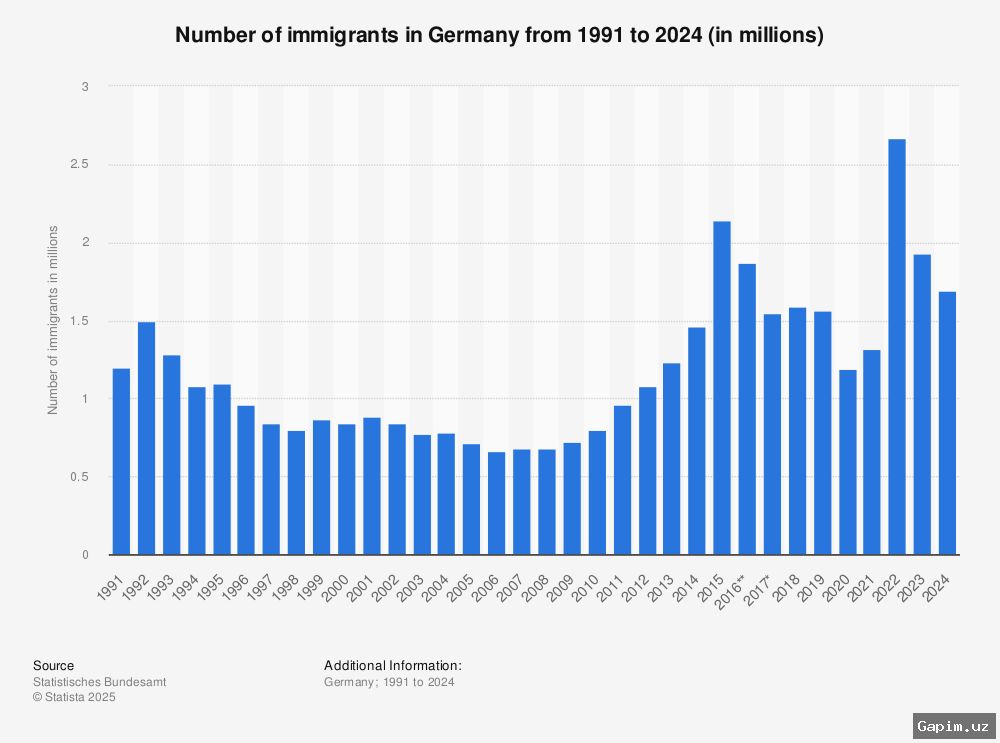
Among those with an immigration history, 16.4 million (19.8%) are first-generation immigrants, while 5.4 million (6.5%) are second-generation immigrants born to parents who arrived after 1950. Since 2005, the number of people with an immigration history has surged from 13 million to 21.8 million, a 67% increase, highlighting significant demographic shifts over the past two decades.
The data underscores ongoing challenges in integration within German society. For young immigrants aged 25 to 34, 33% hold a university degree, similar to the overall population. However, 36% lack any formal qualification, more than double the national average, pointing to persistent educational and employment disparities. These statistics reflect broader societal friction and economic costs associated with migration policies.
The largest origin groups among those with an immigration history are from Turkey, Poland, and Russia. Destatis distinguishes between "immigration history" and "migration background," with the latter including second-generation immigrants who have one German parent. This report comes amid debates over immigration's impact on Germany's social fabric and economy, with critics pointing to integration hurdles and strain on public resources.
Source: www.dw.com